No products in the cart.
Engine Driven Water Pump Sizing: 7 Best Steps
Size an engine-driven water pump using required flow, total dynamic head, suction lift, solids, hose loss, priming and duty cycle.
 Written byHarfanTools Editorial Team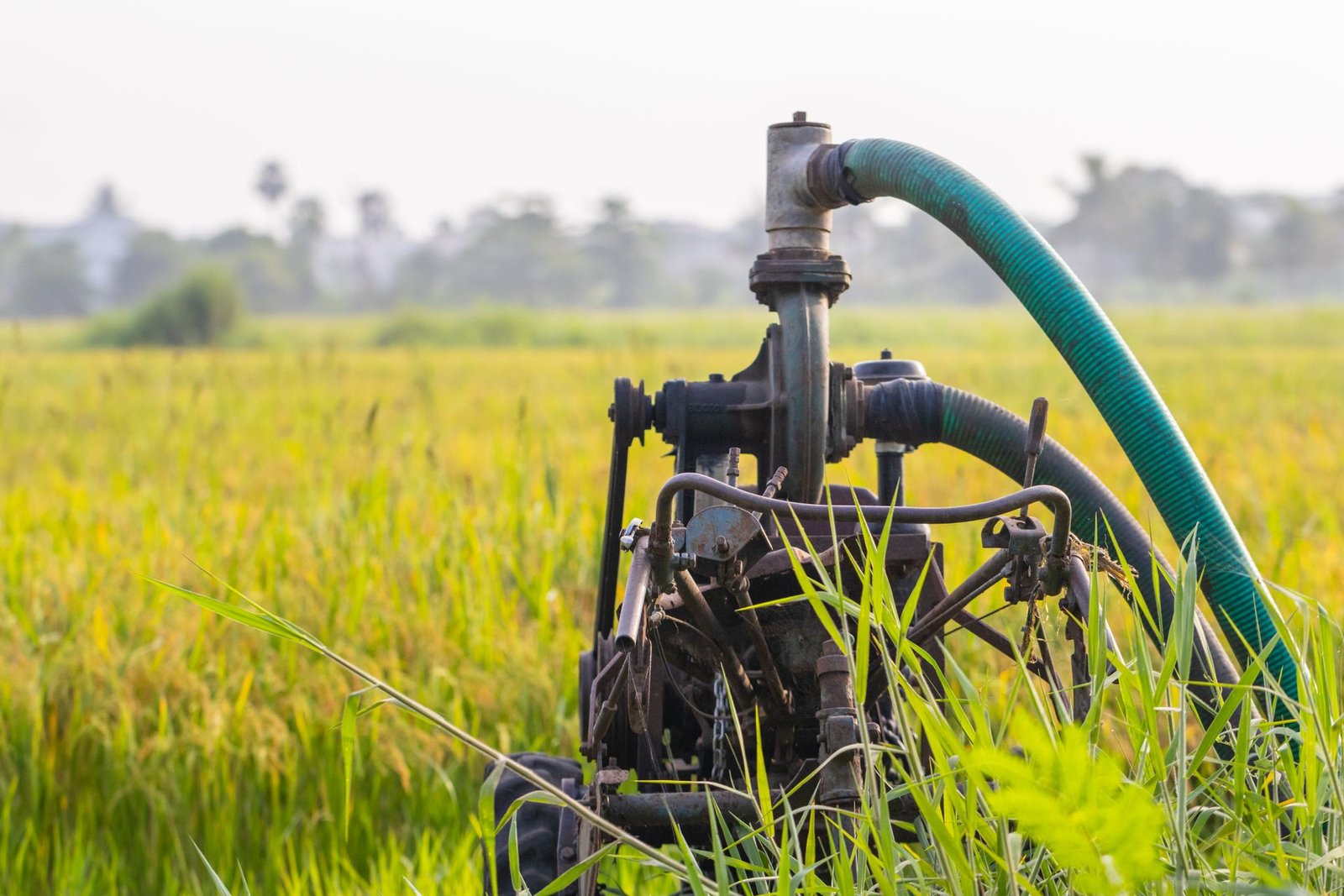
engine driven water pump sizing requires a duty point, not only an inlet diameter. Required flow and total dynamic head must intersect the pump curve while suction conditions, hose loss, elevation, water quality, solids, priming, engine derating, and runtime remain within limits.
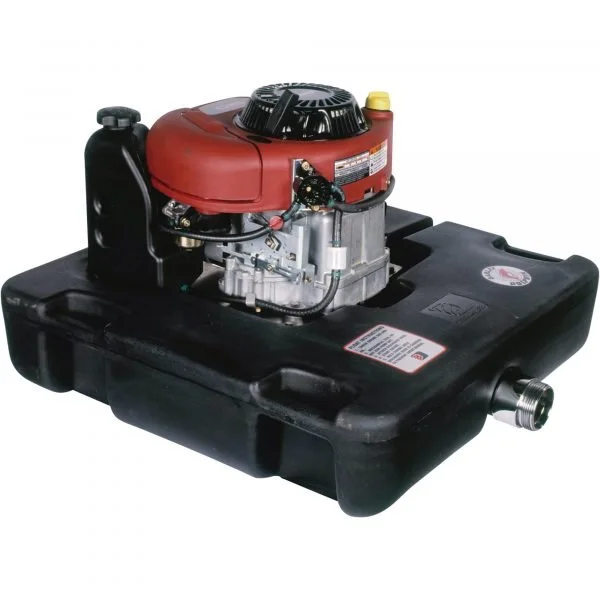
Portable engine pumps are widely used for irrigation, construction dewatering, flood response, and remote transfer across North America and Asia. The hydraulic method is universal, while units, fuel, emissions, climate, and service support differ by region.
Engine Driven Water Pump Sizing: Required Inputs
| Decision factor | What to check |
|---|---|
| Flow | Required gallons or liters per minute at the discharge point |
| Static head | Vertical difference between source and discharge level |
| Friction loss | Hose, pipe, fittings, valves, and nozzle loss at flow |
| Liquid and solids | Clean water, trash, slurry, chemicals, or temperature limits |
1. Define Required Flow
Start with the process need: irrigation zone demand, acceptable dewatering time, tank transfer target, or downstream equipment requirement. Convert every value to one unit system and include realistic simultaneous demand.
Oversizing flow can erode channels, overload filters, waste fuel, and require throttling. Undersizing extends runtime and may fail to control inflow.
2. Calculate Static and Total Dynamic Head
Static head is the vertical difference between source water and discharge elevation. Total dynamic head adds friction losses through suction and discharge hoses, fittings, valves, strainers, and equipment at the design flow.
Use the inside diameter, actual length, fitting equivalents, and liquid properties. Hose diameter often has a much greater effect than buyers expect.
3. Check the Pump Curve at the Duty Point
A pump curve shows the flow available at different heads. Plot required flow against total dynamic head and select a pump that operates in an efficient stable region with reasonable margin.
Do not size from maximum flow and maximum head simultaneously; those values occur at different points on the curve.
4. Manage Suction Lift and Priming
Locate the pump as close to water level as practical. Suction lift, warm water, altitude, hose restriction, and air leaks reduce performance and can cause cavitation. Use airtight reinforced suction hose, the correct strainer, and minimal fittings.
Self-priming does not mean dry-running indefinitely. Fill and prime according to the manual and never operate without adequate liquid flow.
5. Select Clean-Water, Trash, or Chemical Construction
Clean-water pumps suit relatively clear liquid. Semi-trash and trash pumps handle specified solids with service access. Slurry and abrasive liquids require purpose-built materials. Chemicals demand verified compatibility for casing, seals, elastomers, and hose.
Measure maximum solid size and concentration rather than describing liquid only as dirty.
6. Account for Engine, Fuel, and Duty Cycle
Confirm continuous engine output at local temperature and altitude, fuel availability, tank runtime, starting method, noise, emissions, and maintenance. Hot, high-elevation sites may require derating.
Plan refueling, spill control, ventilation, transport, guards, and shutdown. Combustion engines must not operate in occupied or poorly ventilated spaces.
Water Pump Sizing Worksheet
- Required flow at discharge
- Source and discharge elevations
- Suction and discharge hose diameter
- Total hose length and fittings
- Liquid temperature and solids
- Pump curve duty point
- Suction lift and priming plan
- Fuel runtime and service access
Frequently Asked Questions
Does a 2-inch pump always produce the same flow?
No. Flow depends on pump design, speed, head, hose, suction conditions, and engine output.
Can I use layflat hose on the suction side?
Ordinary layflat hose can collapse under suction. Use reinforced suction hose approved for vacuum service.
Why will a self-priming pump not prime?
Common causes include air leaks, insufficient priming liquid, excessive lift, blocked strainer, wrong rotation, worn seals, or a closed discharge path.
Trusted Resources and Next Steps
The US Department of Energy provides pumping systems resources explaining system-level efficiency and performance.
Bottom line: Choose the pump where required flow intersects total dynamic head, then verify suction, solids, materials, engine derating, runtime, and safe operation. Browse the engine-driven pump collection, or visit the HarfanTools knowledge center for more equipment guides.
Pump Sizing Units and Site Conditions by Region
US and Canadian pump curves often use gallons per minute and feet of head, while Asian catalogs frequently use liters per minute or cubic meters per hour and meters of head. Convert both flow and head consistently; mixing units can produce a seriously undersized pump. Cold climates require freeze protection and seasonal storage, while altitude can reduce engine performance. Confirm fuel storage and emissions requirements for the work site.
For monsoon drainage or irrigation in Asia, debris content, suction lift, priming time, and hose availability may be more decisive than nominal engine power. A clear-water pump is not a substitute for a trash pump when solids are present. Keep suction hose short and airtight, include friction loss, verify the duty point on the curve, and select local service support for seals, impellers, recoil parts, and filters. Never operate a gasoline engine in an enclosed or partly enclosed space.
HarfanTools product guidance
Need help choosing industrial equipment?
Compare professional tools, review specifications and find equipment suited to your operation.