No products in the cart.
Generator Extension Cord Size Guide: Amps, Length, and Voltage Drop
Choose a generator extension cord by load amps, voltage, length, conductor gauge, plug, grounding, outdoor rating, and manufacturer limits.
 Written byHarfanTools Editorial Team
generator extension cord size requires more than matching the plug. The cord must be approved for the environment, carry the load current over its full length without excessive voltage drop, include grounding conductors where required, and remain compatible with the generator outlet.
Longer conductors have more resistance, and lower supply voltage means more current for the same power. A cord that is adequate for a small 120-volt load may be unsuitable for a high-current tool or a long run. Local codes and equipment manuals control.
Quick answer: Read load nameplate amps, select a listed heavy-duty cord rated at or above that current and voltage, then use the manufacturer or electrical-code sizing method for the full one-way length and acceptable voltage drop. Use the shortest practical cord and never exceed the generator receptacle rating.
Generator extension cord size must be checked against load current, total length, voltage drop, plug configuration, and the equipment manual.
Cord Selection Checks
| Check | Required match | Reject when |
|---|---|---|
| Amp rating | At least the connected load under applicable rules | Cord or connector becomes warm or lacks rating |
| Length and gauge | Sized together for voltage drop | Gauge chosen without considering distance |
| Environment | Listed for outdoor/wet exposure as applicable | Damaged jacket or indoor-only cord outside |
| Connections | Correct voltage, grounding, and locking features | Improvised adapter or modified ground pin |
1. Start With the Load Nameplate
Record voltage, running amps, and motor-starting information. If several devices share a distribution cord, calculate the simultaneous current and ensure every connector, box, breaker, and branch is rated for it.
Watts divided by volts gives a basic current estimate for a simple load, but motor and electronic equipment can require additional considerations. Use the nameplate and manual when available.
2. Treat Gauge and Length as One Decision
American Wire Gauge numbers become larger as the conductor becomes smaller. A longer run generally requires a larger conductor to limit voltage drop. Do not copy one universal gauge chart without checking its assumptions for current, voltage, conductor, and allowable drop.
Use a recognized electrical calculation or have an electrician size demanding runs. Coiled cable, high ambient temperature, grouped cords, and continuous loading can change safe capacity.
3. Inspect the Cord Before Every Use
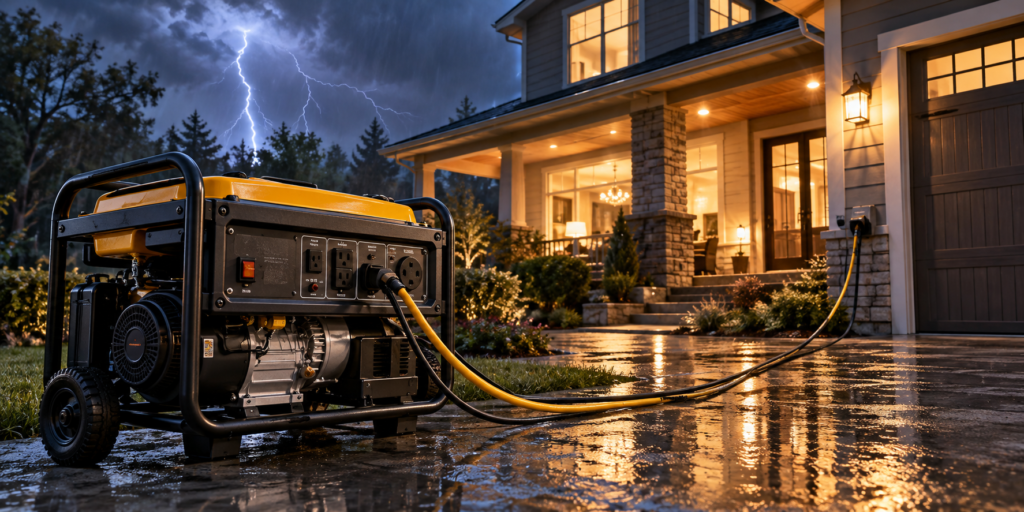
OSHA advises using undamaged, grounded heavy-duty extension cords with portable generators. Check the jacket, strain relief, blades, locking rings, grounding pin, and evidence of overheating.
Remove a damaged cord from service rather than wrapping a serious cut or loose connector with tape. Keep connections dry and protected from vehicles, sharp edges, and foot traffic.
4. Avoid Improvised Building Connections
An extension cord is for direct connection of compatible appliances unless a listed distribution system says otherwise. It is not a way to energize building wiring through an outlet.
Where a generator supplies building circuits, use professionally installed transfer equipment. This isolates utility power and provides an appropriate inlet and load-management arrangement.
5. Monitor the Load in Operation
After startup, check for low-voltage symptoms, nuisance trips, hot connectors, or abnormal tool behavior. Do not touch exposed conductors or open electrical equipment to troubleshoot.
Reduce load and shut down safely if overheating or damage appears. Correct the cable or distribution design before resuming work.
Cord Buying Checklist
- Record load voltage, amps, and starting needs.
- Measure the required one-way length.
- Choose the shortest practical listed cord.
- Size conductor gauge for current and voltage drop.
- Match receptacle, plug, grounding, and environment.
- Route away from water, damage, heat, and trip paths.
- Inspect before use and remove damaged cords from service.
Mistakes That Lead to a Poor Purchase
- Choosing by plug shape alone.
- Using a household light-duty cord for a heavy tool.
- Connecting multiple cords without recalculating length and load.
- Defeating a ground pin or backfeeding building wiring.
Frequently Asked Questions
Is a lower AWG number a thicker cord?
Yes. In the AWG system, a lower gauge number indicates a larger conductor. The correct size still depends on current, length, and installation conditions.
Can I connect two extension cords together?
Avoid it when one correctly sized cord can reach. Every added connection introduces resistance, weather exposure, and mechanical risk, and total length must be included in sizing.
Why does a tool struggle on a long cord?
Excessive voltage drop can reduce voltage at the tool, especially during motor starting. Verify load, conductor size, connector condition, and generator capacity.
Sources and Buying Next Step
For this generator extension cord size guide, manufacturer or government guidance provides the technical baseline. Always let the exact equipment manual, nameplate, applicable electrical code, and local safety requirements control the final decision.
Bottom line: Match current, length, conductor size, voltage, connectors, and environment as one system, and use transfer equipment for building circuits. Browse the portable generators and connection-ready models to compare real specifications after completing the checklist above.
HarfanTools product guidance
Need help choosing industrial equipment?
Compare professional tools, review specifications and find equipment suited to your operation.