
No products in the cart.
Gas vs Propane Generator: Output, Runtime, and Storage Compared
Compare gasoline and propane generators by rated output, runtime, fuel storage, cold weather, availability, maintenance, and outage planning.
 Written byHarfanTools Editorial Team
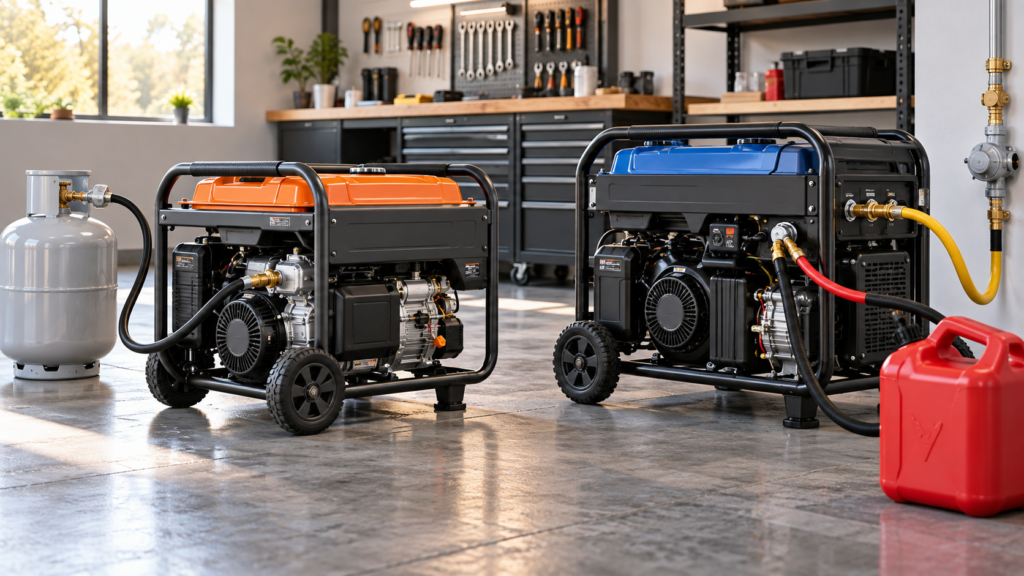
gas vs propane generator is a tradeoff between maximum rated output, local fuel access, storage behavior, runtime logistics, and the exact engine design. Dual-fuel units add flexibility, but their specifications must be checked separately for each fuel.
A generator can produce different continuous and peak output on gasoline and propane. Runtime claims also depend on load, tank size, ambient conditions, and test method. Compare official tables at the same percentage of rated load.
Quick answer: Choose gasoline when its model-specific output and widespread short-notice availability are priorities. Choose propane when long-term fuel storage and a cleaner handling routine fit the emergency plan. For dual-fuel equipment, size the loads using the lower fuel-specific rating you expect to use.
A gas vs propane generator comparison is most useful when both fuels are evaluated at the same electrical load and under realistic storage conditions.
Gasoline and Propane Decision Factors
| Factor | Gasoline | Propane |
|---|---|---|
| Rated output | Often the higher dual-fuel rating | May be lower; verify the data sheet |
| Storage | Ages and requires approved rotation | Stable in a maintained approved cylinder or tank |
| Refueling | Liquid handling after shutdown and cooling | Cylinder exchange or bulk supply connection |
| Emergency plan | Retail supply can be disrupted | Stored supply is known but finite |
1. Compare Fuel-Specific Ratings
Find continuous and surge watts for both fuels at the required voltage. Never size essential loads from the more favorable gasoline rating and then assume propane will deliver the same capacity.
Check whether full output is available from the outlet you will actually use. A total-watt claim may be divided across voltage legs or limited by receptacle and breaker ratings.
2. Calculate Runtime From the Official Load Point
Manufacturer runtime may be stated at 25 or 50 percent load. A larger fuel tank can create a longer claim even when engine efficiency is similar, so normalize comparisons by load and usable fuel quantity.
Actual consumption changes with cycling loads, temperature, maintenance, and fuel quality. Build an outage plan with reserve instead of expecting the brochure maximum.
3. Plan Safe Fuel Storage
Store gasoline only in approved containers and follow local quantity, ventilation, and fire rules. Rotate it on a documented schedule. Propane cylinders and bulk tanks also require approved locations, regulators, inspection, and protection.
Never refuel a running or hot portable generator. Keep fuel away from ignition sources, and follow the exact shutdown and cooldown directions in the operator manual.
4. Consider Weather and Starting
Cold weather affects vaporization, battery performance, oil viscosity, and starting. Propane supply pressure can become limiting as a small cylinder cools under a heavy draw. Use the manufacturer cold-weather guidance and correctly sized supply components.
High altitude and high ambient temperature can reduce available engine output. Apply published derating when planning close to generator capacity.
5. Decide Whether Dual Fuel Adds Real Resilience
Dual fuel is valuable when both fuels are actually stored, maintained, and available. If one connection is never tested or the operator does not know the changeover procedure, the extra capability may not help during an outage.
Exercise the generator on each approved fuel and record startup, stable voltage, and load behavior according to the manual.
Fuel Choice Worksheet
- List essential continuous and starting watts.
- Compare output on each fuel.
- Normalize runtime claims to a similar load.
- Map local fuel access during an outage.
- Check legal storage and safe refueling requirements.
- Apply weather and altitude derating.
- Test and document the chosen operating procedure.
Mistakes That Lead to a Poor Purchase
- Assuming dual-fuel output is identical on both fuels.
- Comparing runtime at different loads.
- Storing fuel without rotation or inspection.
- Operating or refueling in an unsafe location.
Frequently Asked Questions
Does propane last longer than gasoline in storage?
Propane does not degrade like gasoline when kept in a compliant, maintained container, but cylinders, valves, regulators, and storage conditions still require inspection.
Why does a generator make less power on propane?
Fuel energy and engine calibration can result in a lower model-specific propane rating. Use the manufacturer table rather than a universal percentage.
Can I switch fuel while the generator is loaded?
Only follow the procedure explicitly permitted by the exact model manual. Many operating changes require unloading or shutdown.
Sources and Buying Next Step
For this gas vs propane generator guide, manufacturer or government guidance provides the technical baseline. Always let the exact equipment manual, nameplate, applicable electrical code, and local safety requirements control the final decision.
Bottom line: Use fuel-specific output and comparable runtime data, then choose the storage and supply plan you can safely maintain. Browse the portable generator selection to compare real specifications after completing the checklist above.
HarfanTools product guidance
Need help choosing industrial equipment?
Compare professional tools, review specifications and find equipment suited to your operation.
One Comment
Comments are closed.