
No products in the cart.
Machine Tool Coolant Pump Selection Guide
Select a machine tool coolant pump by required flow, head, immersion depth, chips, coolant compatibility, filtration and electrical supply.
 Written byHarfanTools Editorial Team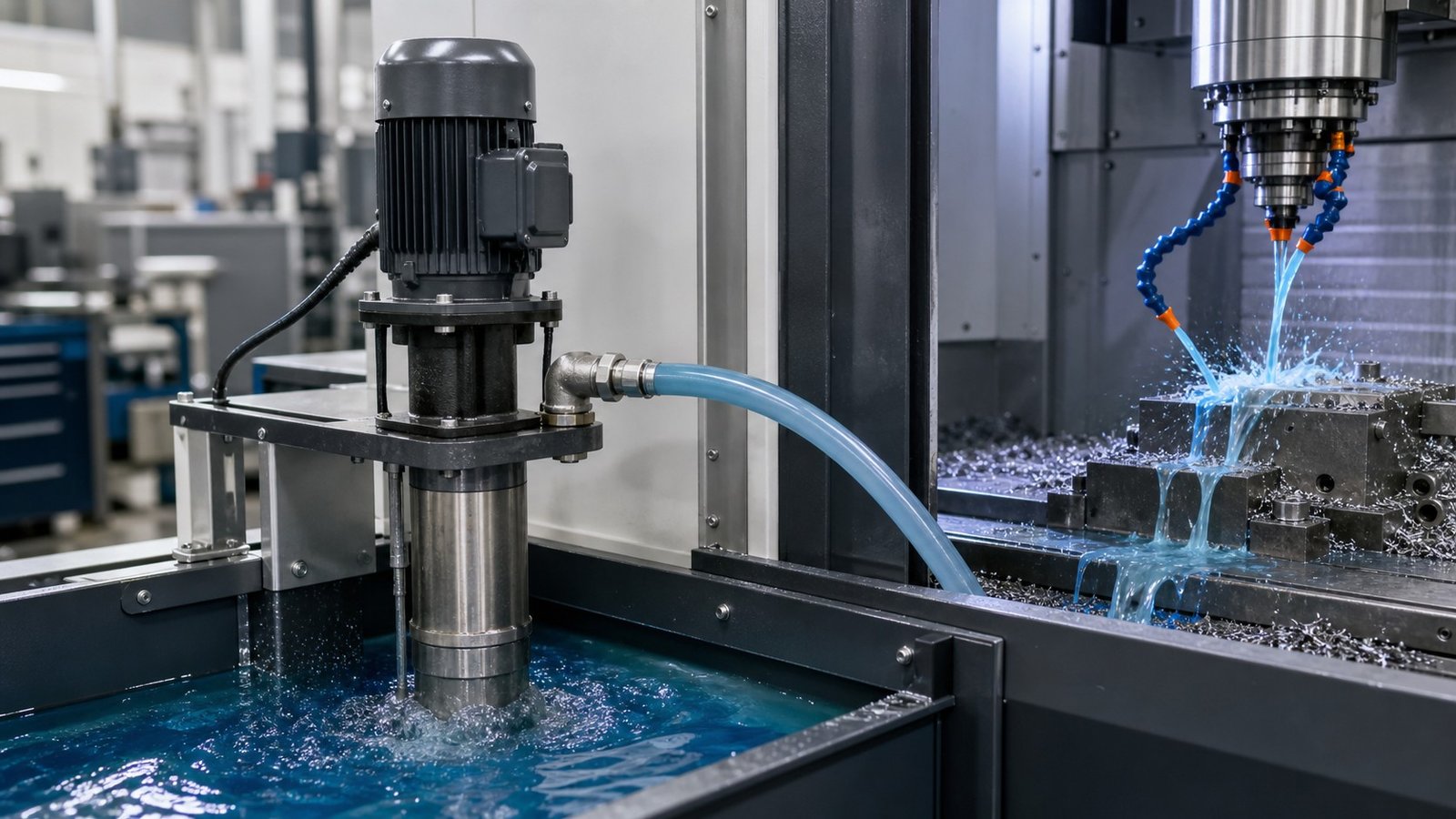
machine tool coolant pump selection starts with the nozzle flow and pressure needed at the cutting zone. Tank depth, vertical lift, hose loss, filtration, chip size, coolant chemistry, temperature, motor enclosure, and available electrical supply then determine the correct immersion pump.
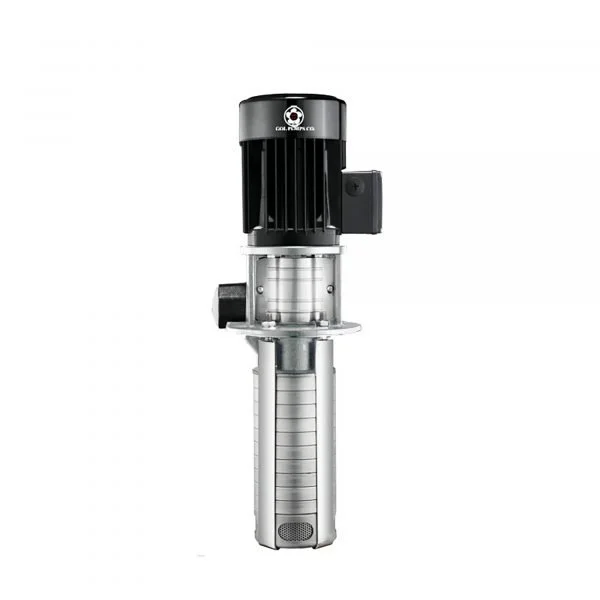
Machine shops in the US, Canada, and Asia often replace coolant pumps from a nameplate alone. That can fit mechanically while delivering the wrong duty point. Record system conditions and compare the full pump curve before purchase.
Machine Tool Coolant Pump Selection Inputs
| Decision factor | What to check |
|---|---|
| Required flow | Total nozzle demand with simultaneous outlets open |
| Required head | Vertical lift plus hose, valve, and nozzle loss |
| Immersion depth | Tank cover to operating liquid level and pump inlet |
| Contamination | Chip size, fines, tramp oil, and filtration level |
1. Calculate Nozzle Flow and Pressure
List every nozzle that operates simultaneously and obtain its flow at required pressure. Include through-tool coolant, washdown, chip flushing, and auxiliary circuits. Convert pressure to head using the coolant specific gravity.
More flow is not always better. Excess flow can create mist, foaming, splash, heat, and filter overload.
2. Add Static Lift and System Loss
Measure vertical distance from operating liquid level to the highest outlet. Add friction through hose, pipe, elbows, valves, manifolds, filters, and nozzles at the design flow. A restricted filter can increase required head during the service interval.
Select from the curve at the full duty point, not the pump free-flow rating.
3. Match Immersion Depth and Tank Level
An immersion pump mounts on the tank cover with the pump body below liquid. Confirm mounting flange, overall length, minimum and maximum liquid level, inlet clearance, and whether the motor remains outside coolant and mist.
Low tank level can expose the inlet and introduce air. Provide level monitoring where loss of coolant can damage tools or parts.
4. Plan Chips and Filtration
Standard centrifugal coolant pumps tolerate only specified particle sizes. Stringy chips, abrasive fines, and sludge can block or wear the impeller. Use screens, settling, magnetic separation, bag or cartridge filtration, or a purpose-built chip-handling pump.
Filter placement must protect the pump without starving it. Monitor differential pressure or establish a maintenance interval.
5. Verify Coolant and Material Compatibility
Water-soluble coolant, straight oil, synthetic fluid, cleaners, and process chemicals can affect seals, paint, plastics, and metals differently. Confirm viscosity, specific gravity, temperature, pH range, and material compatibility.
A pump sized for water may deliver less flow with viscous oil and require different motor power.
6. Confirm Electrical and Maintenance Requirements
Match voltage, phase, frequency, motor enclosure, cable, overload protection, and machine control. North American and Asian frequency or voltage differences can change motor speed and pump performance.
Provide safe isolation, accessible screens, spare seals or impellers, and a cleaning method that limits worker contact with coolant and sharp chips.
Coolant Pump Specification Checklist
- Total nozzle flow and required pressure
- Static lift and friction loss
- Operating tank level and immersion depth
- Chip type and maximum particle size
- Filter arrangement and service condition
- Coolant chemistry, viscosity, and temperature
- Voltage, phase, and frequency
- Mounting, controls, and maintenance access
Frequently Asked Questions
Why is coolant flow weak after replacing a pump?
The replacement may have the wrong curve, rotation, frequency, immersion depth, or impeller, or the filter and piping may be restricted.
Can a coolant pump handle metal chips?
Only within the manufacturer particle limit. Long or abrasive chips require separation or a pump designed for solids.
Can a 60 Hz pump run on 50 Hz?
Motor speed and pump output will change, and overheating or incompatibility may occur. Use only configurations approved by the manufacturer.
Trusted Resources and Next Steps
Review the OSHA metalworking fluids topic when planning coolant handling, mist control, and worker protection.
Bottom line: Specify the pump from the actual nozzle duty point, then verify immersion, filtration, coolant compatibility, electrical supply, and maintainability. Browse the immersible coolant pump range, or visit the HarfanTools knowledge center for more equipment guides.
Coolant Pump Selection Across 50-Hz and 60-Hz Systems
North American machine tools commonly use 60-Hz supplies, while many Asian installations use 50 Hz. Pump speed, flow, head, current, and motor cooling can change with frequency, so confirm the complete nameplate rather than matching voltage alone. Also verify phase, immersion depth, discharge connection, coolant chemistry, chip load, and the machine controller’s switching method. A pump that physically fits may still operate outside its safe curve.
Warm, humid shops increase the importance of enclosure rating, cable sealing, and corrosion-resistant materials. Fine grinding sludge may require filtration different from large milling chips, and foaming coolant can expose the pump inlet even when the tank appears full. Ensure replacement seals and motors are locally available, document the intended duty point, and follow regional rules for coolant handling and disposal. Good filtration and tank maintenance often improve pump life more than simply installing a larger motor.
HarfanTools product guidance
Need help choosing industrial equipment?
Compare professional tools, review specifications and find equipment suited to your operation.