
No products in the cart.
Horizontal vs Vertical Shaft Engine: Key Differences
Compare horizontal and vertical shaft engines by drive layout, mounting, crankshaft dimensions, rotation, torque, controls and replacement fit.
 Written byHarfanTools Editorial Team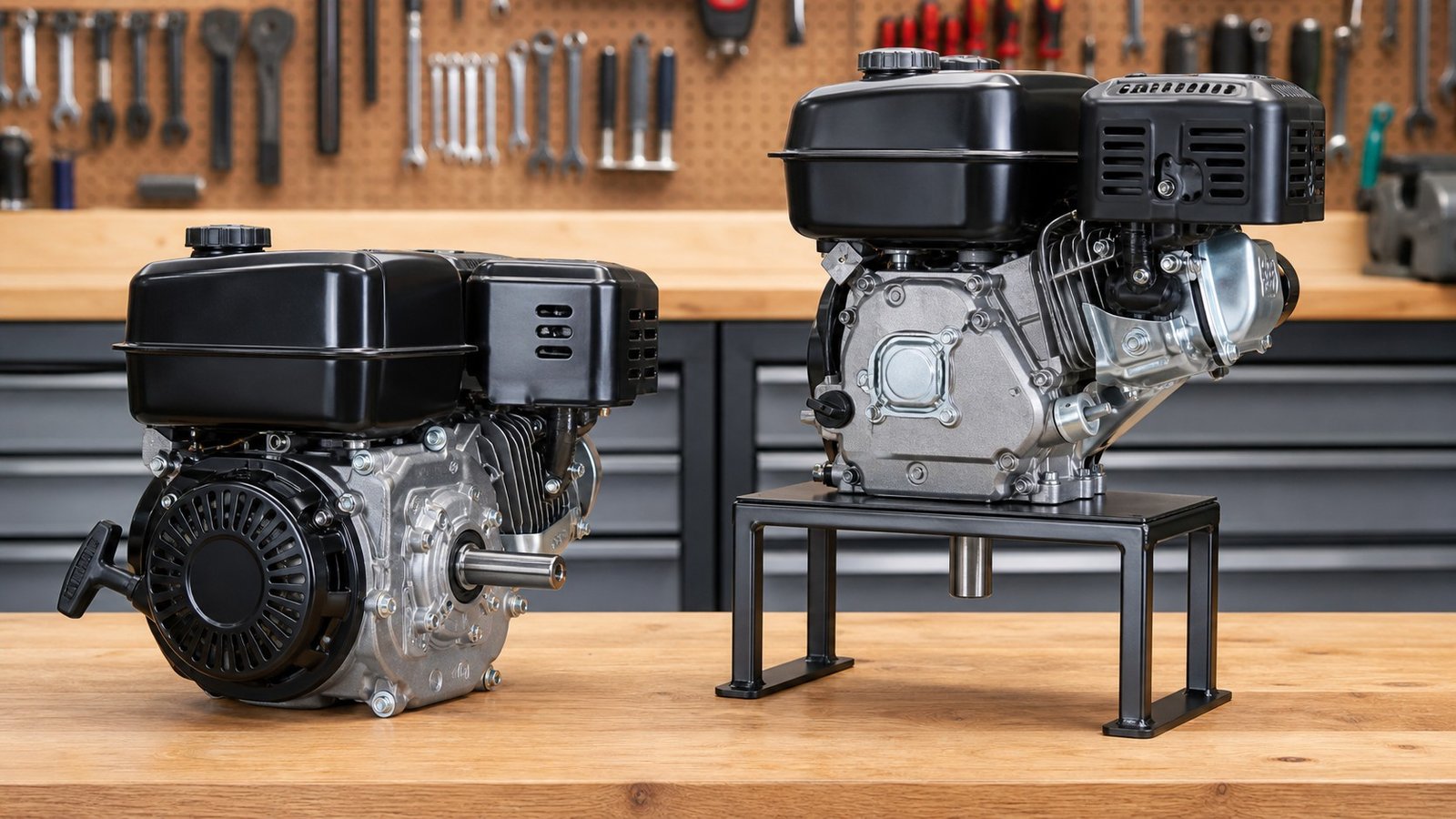
horizontal vs vertical shaft engine describes crankshaft orientation, but a replacement decision requires much more than orientation and horsepower. Shaft diameter, length, keyway, taper, rotation, mounting pattern, crankshaft height, controls, charging, exhaust, governor, torque curve, and safety systems must match the equipment.
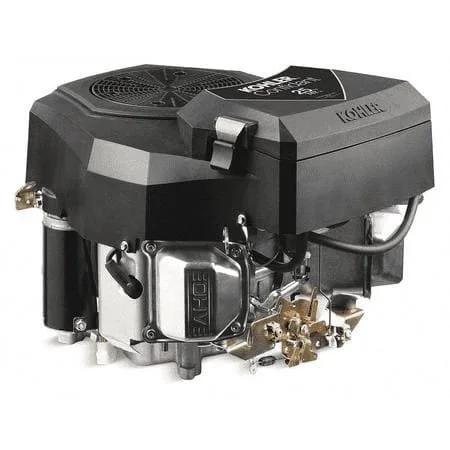
Horizontal engines are common on generators, pumps, compactors, pressure washers, and industrial equipment. Vertical engines dominate many walk-behind and riding mowers. Replacement specifications and emissions labels vary across US, Canadian, and Asian markets.
Horizontal vs Vertical Shaft Engine: Typical Uses
| Decision factor | What to check |
|---|---|
| Belt, chain, clutch, or direct side drive | Horizontal shaft |
| Mower deck driven below the engine | Vertical shaft |
| Pump or generator replacement | Match exact shaft and performance data |
| Repower project | Verify full mechanical, electrical, emissions, and safety fit |
1. Crankshaft Orientation and Drive Layout
A horizontal crankshaft exits the side of the engine and aligns naturally with pulleys, clutches, pumps, and generator heads. A vertical crankshaft exits the bottom and suits mower blades or transaxles located beneath the engine.
Changing orientation is not a simple matter of rotating an engine. Lubrication, carburetion, cooling, mounting, and internal design are engineered for the specified position.
2. Match Shaft Diameter, Length, and End Type
Measure shaft diameter, usable length, keyway width and position, threaded hole, taper, and shoulder. A small dimensional difference can prevent the clutch, pulley, blade adapter, or pump from seating correctly.
Use the original engine specification or equipment parts data. Do not rely only on a marketplace title saying compatible.
3. Confirm Rotation and Crankshaft Height
Rotation is viewed from a defined side and must match the driven equipment. Reversed rotation can prevent operation or create hazards. On horizontal engines, crankshaft center height must align with the pump, belt, clutch, or generator.
Mounting-hole location and base dimensions must maintain alignment without unsafe adapter plates.
4. Compare Power, Torque, and Governor Response
Engines with the same advertised horsepower can have different displacement, torque curve, governed speed, flywheel inertia, and transient response. Pumps and generators may need stable speed; mowers need torque through changing grass load.
Match the original continuous duty and governed RPM. Overspeeding driven equipment is dangerous.
5. Check Controls, Charging, and Starting
Confirm recoil or electric start, starter location, flywheel brake, ignition grounding, fuel shutoff, throttle and choke linkage, low-oil shutdown, charging amperage, connector, and battery requirements.
Equipment safety interlocks must continue to work. Do not bypass shutdown circuits simply because connectors differ.
6. Verify Exhaust, Cooling, Fuel, and Compliance
The muffler and heat shield must clear the frame, fuel system, wiring, and operator. Cooling-air inlet and hot-air discharge need open paths. Confirm tank location, fuel pump requirements, and line routing.
Use an engine certified and labeled for the market and application. A repower should maintain guards, emissions equipment, and manufacturer safety functions.
Replacement Engine Match Checklist
- Horizontal or vertical orientation
- Shaft diameter, length, keyway, and end
- Rotation and governed speed
- Mounting pattern and crankshaft height
- Torque and continuous-duty requirement
- Starter, charging, and connectors
- Controls and safety interlocks
- Exhaust, cooling, fuel, and emissions fit
Frequently Asked Questions
Can a vertical shaft engine be converted to horizontal?
Generally no. The lubrication, mounting, cooling, carburetion, and internal design are orientation-specific. Use the correct engine type.
Can I replace an engine with higher horsepower?
Only if the equipment maker approves the mechanical, speed, torque, frame, drive, braking, and safety implications.
How do I determine shaft rotation?
Use the engine documentation, which defines the viewing direction. Do not guess from a photo or starter location.
Trusted Resources and Next Steps
The US EPA publishes information about emission regulations for small equipment engines; also follow the equipment maker repower instructions.
Bottom line: Orientation narrows the category, but a safe replacement must match the full shaft, mounting, rotation, output, control, cooling, exhaust, and compliance specification. Browse the horizontal and vertical engine range, or visit the HarfanTools knowledge center for more equipment guides.
Engine Compatibility in US, Canadian and Asian Equipment
US and Canadian replacement engines must match more than horsepower. Measure shaft orientation, diameter, length, keyway, mounting pattern, crankshaft height, rotation, control linkage, muffler clearance, charging output, and emissions labeling. A horizontal-shaft engine generally drives pumps, generators, tillers, and similar equipment; a vertical-shaft engine commonly drives mower decks. Never assume an adapter can safely correct the wrong orientation.
For equipment sold or serviced in Asia, confirm parts support, fuel specification, recoil or electric-start requirements, and any local emissions or import rules. If the engine drives a generator or other frequency-sensitive machine, governed speed and 50/60-Hz requirements are critical. Bring the old engine model and dimensional measurements to the supplier. Photograph connectors, pulleys, guards, and control linkages before removal. The safest replacement preserves the equipment manufacturer’s geometry, guards, operating speed, balance, and control functions.
HarfanTools product guidance
Need help choosing industrial equipment?
Compare professional tools, review specifications and find equipment suited to your operation.