
No products in the cart.
Robotic Lawn Mower Buying Guide: Yard Size and Slopes
Compare robotic mower yard capacity, slope rating, boundary systems, navigation, charging, security, connectivity and maintenance.
 Written byHarfanTools Editorial Team
robotic lawn mower buying guide helps buyers decide whether an autonomous mower can reliably maintain their specific lawn. Coverage claims assume manageable terrain, correct installation, and regular mowing; complex zones, steep transitions, narrow passages, and weak connectivity can reduce real performance.
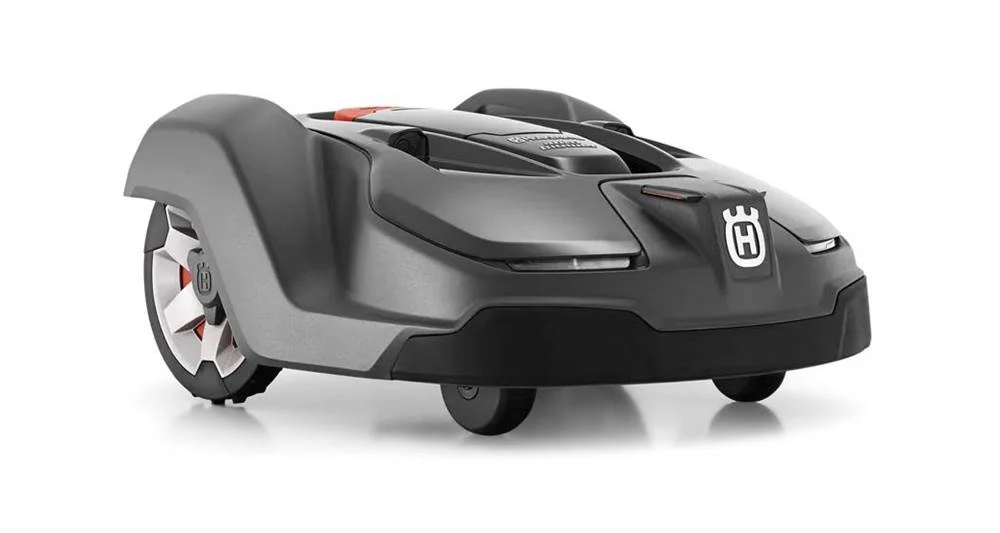
Robotic mowing is increasingly relevant for time-conscious homeowners in the US and Canada and for managed residential, hospitality, and commercial landscapes across Asia. Regional rain patterns, turf growth, cellular coverage, theft risk, and dealer support should be considered with the core specifications.
Robotic Lawn Mower Buying Guide: Quick Selection
| Decision factor | What to check |
|---|---|
| Lawn capacity | Choose above measured mowable area, not total lot size. |
| Slope rating | Check maximum and boundary-wire slope separately. |
| Navigation | Compare wire, RTK, vision, GPS, and obstacle detection. |
| Multiple zones | Verify passages, charging access, and zone scheduling. |
1. Measure Mowable Area and Daily Capacity
Measure only turf the robot can reach. Exclude buildings, paving, pools, planting beds, and inaccessible strips. Select a model with capacity above the measured area so weather delays, seasonal growth, and charging cycles do not force it to operate continuously.
A mower rated for a large simple rectangle may struggle on the same acreage divided into narrow zones. Review maximum working time, charging time, cutting width, and recommended schedule.
2. Map Slopes, Edges, and Narrow Passages
Record the steepest sustained slope and sharp transitions near paths or retaining edges. Manufacturers may publish different limits for the middle of the lawn and for operation close to a boundary. Wet grass can reduce traction well below the laboratory maximum.
Measure corridors between zones and confirm turning clearance. Islands, raised roots, drainage channels, and soft ground may require landscaping adjustments.
3. Choose Boundary Wire, RTK, or Vision Navigation
Boundary-wire systems are mature and dependable when installed correctly, but wire repairs add maintenance. RTK satellite systems reduce buried wire and allow virtual zones, yet need a clear sky view and reliable reference signal. Vision-based systems simplify installation in suitable layouts but depend heavily on recognizable boundaries.
Ask how the mower behaves when positioning or connectivity is lost. Confirm whether mapping, cellular service, or software features require a subscription.
4. Evaluate Cutting System and Turf Finish
Robots remove small clippings frequently rather than collecting long grass. Compare cutting-height range, blade type, weather scheduling, edge performance, and whether the mower can handle the local turf species during peak growth.
Regular blade replacement maintains a clean cut and reduces energy use. Robotic mowing does not remove leaves, branches, toys, irrigation heads, or pet waste; the lawn still needs inspection.
5. Review Safety, Security, and Connectivity
Look for lift and tilt shutoff, collision sensing, PIN protection, alarms, geofencing, tracking, and user permissions. Store recovery details securely and confirm whether theft protection works without an active cellular subscription.
Connected features are useful, but the mower should remain safe if Wi-Fi or cellular service fails. Review privacy settings and update support.
6. Plan Installation and Seasonal Maintenance
Installation quality determines reliability. Plan charging-station power, drainage, signal coverage, cable routes, and access for cleaning. In Canada and cold US regions, follow winter storage and battery guidance. In tropical Asia, prioritize drainage, corrosion resistance, cleaning, and lightning protection.
Budget for blades, battery replacement, wheels, wire repair, subscriptions, and professional setup where needed.
Robotic Mower Site Survey Checklist
- Measure mowable square footage or square meters.
- Record maximum slopes and boundary slopes.
- Measure narrow passages and separate zones.
- Confirm charging-station power and drainage.
- Check wireless, cellular, or RTK coverage.
- Review security and subscription costs.
- Confirm local installation and repair support.
Frequently Asked Questions
Do robotic mowers collect grass?
Most mulch tiny clippings back into the turf. They work best when mowing frequently rather than cutting overgrown grass.
Can a robotic mower handle multiple lawns?
Some can manage multiple connected or mapped zones, but paths, gates, and charging access must be compatible with the navigation system.
What happens when it rains?
Many models are weather resistant and may use rain sensors or forecasts. Soil traction, drainage, and turf protection should determine whether mowing continues.
Trusted Resources and Next Steps
Review the mower manufacturer installation and safety instructions, and use the CPSC lawn mower safety center for general mowing risk awareness.
Bottom line: Select a robotic mower from a measured site survey, then verify navigation, slopes, charging, safety, security, and long-term support. Browse the robotic lawn mower collection, or visit the HarfanTools knowledge center for more equipment guides.
Robotic Mower Requirements Vary by Region
US and Canadian buyers should verify property-wide cellular or Wi-Fi coverage if the mower depends on cloud features, and should confirm winter battery-storage instructions before temperatures fall. Satellite-guided models need a clear view of the sky and may require a reference station with reliable power. Boundary-wire systems can be simpler for tree-covered yards, but wire repair and later landscaping changes add maintenance. Check whether theft tracking and warranty service operate in your country.
In tropical and subtropical Asia, heavy rain, fast grass growth, standing water, leaf litter, and heat can challenge a robotic mower. Compare ingress protection, rain behavior, wheel traction, cutting-frequency limits, and access to replacement blades and batteries. Compact urban gardens may benefit most from quiet scheduled mowing, while fragmented lawns separated by steps or public paths can require manual relocation. Map obstacles and charging-station placement before buying; app features cannot solve a physically unsuitable lawn.
HarfanTools product guidance
Need help choosing industrial equipment?
Compare professional tools, review specifications and find equipment suited to your operation.
3 Comments