Zero Turn Mower Buying Guide: 9 Features That Matter

Compare zero turn mower deck size, engine power, terrain capability, comfort, transmission, serviceability and lifetime operating cost.

Zero Turn Mower Buying Guide: 9 Features That Matter

zero turn mower buying guide helps homeowners, landscapers, schools, and property managers match cutting capacity to acreage, terrain, gates, transport, and weekly workload. The best machine is not automatically the widest or most powerful; it is the mower that completes the property efficiently without sacrificing cut quality, control, or service access.
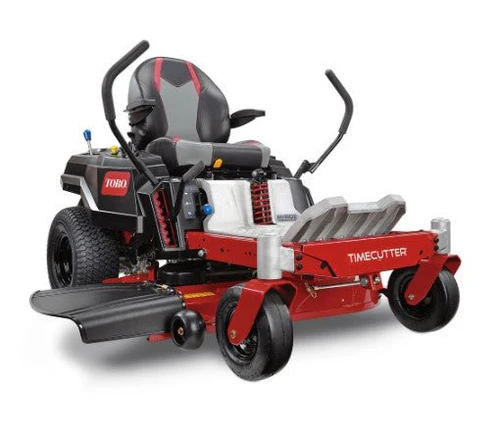
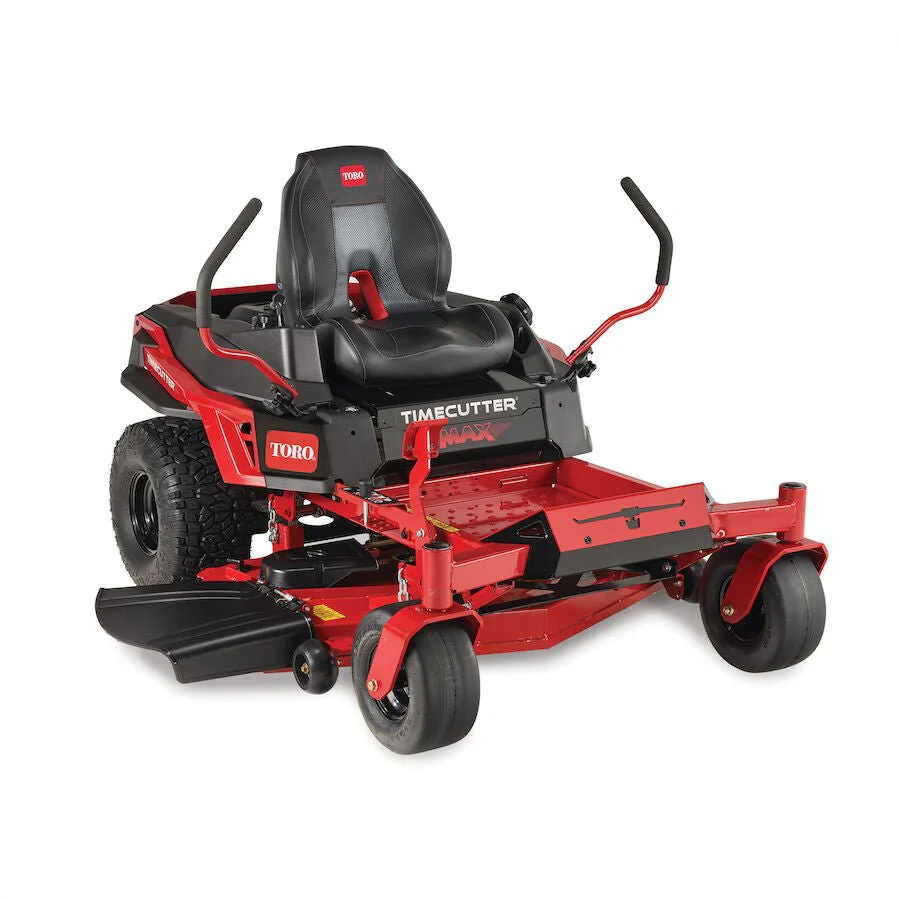
Toro TimeCutter 42 Zero Turn Mower | MyRIDE Suspension — example equipment relevant to zero turn mower buying guide
Toro TimeCutter 42 Zero Turn Mower | MyRIDE Suspension — view product

Demand is strongly seasonal in the United States and Canada, while commercial buyers across Asia often prioritize durability, fuel availability, parts support, and performance in hot or humid conditions. This guide uses the same core sizing method for every region and highlights the specifications that should be confirmed locally.

Table of Contents

Zero Turn Mower Buying Guide: Quick Decision Table

Decision factorWhat to check
Property sizeMatch deck width and fuel capacity to actual weekly mowing hours.
TerrainChoose traction, tire design, and slope capability for the site.
AccessMeasure gates, trailers, storage doors, and narrow passages.
WorkloadSeparate residential-duty use from daily commercial operation.

1. Match Deck Width to Acreage and Access

A wider deck reduces passes on open ground, but it may scalp uneven lawns, miss narrow gates, and require a larger trailer. Decks around 42 to 48 inches suit many residential properties; 54 to 60 inches are common for larger open areas; and wider commercial decks make sense only when access and transport allow them. Measure the tightest opening before comparing models.

Deck construction also matters. Fabricated steel decks generally tolerate commercial impacts better, while stamped decks can be lighter and provide smooth airflow. Compare steel thickness, spindle design, anti-scalp wheels, washout access, and how quickly blades can be serviced.

2. Choose Engine Power for Real Cutting Conditions

Horsepower should support the deck, blade speed, and expected grass load. Thick, wet, or fast-growing turf places more demand on the engine than a dry, regularly maintained lawn. Compare displacement, torque characteristics, cooling, filtration, fuel capacity, and manufacturer-approved operating temperature—not horsepower alone.

For North America, confirm fuel type and emissions compliance. In hot Asian climates, prioritize cooling airflow, debris management, and access to filters. A reputable local service network often creates more value than a small difference in advertised power.

3. Compare Residential and Commercial Transmissions

Hydrostatic transaxles determine how smoothly the mower accelerates, turns, and handles long work periods. Residential sealed units suit moderate weekly use. Serviceable commercial pumps and wheel motors generally handle more heat and are easier to maintain during a long ownership cycle.

Ask for the transmission model, oil-change procedure, cooling requirements, and rated machine weight. A heavy mower with an entry-level drive system may feel strong during a short demonstration but run hot during continuous work.

4. Evaluate Slopes, Traction, and Ground Conditions

Zero turn mowers are exceptionally maneuverable on level ground, but they are not automatically the best choice for steep slopes. Follow the manufacturer slope limit, mow only when conditions provide traction, and avoid sudden turns near drop-offs, retaining walls, water, or drainage channels.

For rolling properties, compare tire width, center of gravity, wheelbase, rollover protection, and braking behavior. A steering-wheel zero turn or lawn tractor may provide more predictable control on some slopes.

5. Check Operator Comfort and Control Layout

Seat suspension, armrests, foot room, control-lever adjustment, vibration isolation, and visibility affect productivity during multi-hour work. Test whether the operator can enter and exit safely, reach the deck lift without strain, and maintain a neutral posture.

Commercial crews should also compare rollover protection, seat switches, parking-brake interlocks, lighting, and the ease of daily inspection. Comfort is not cosmetic when fatigue affects cut quality and safe control.

6. Calculate Serviceability and Total Cost

Review blade access, grease points, belt routing, filter locations, tire sizes, battery access, and maintenance intervals. Price replacement blades, belts, spindles, filters, and tires before purchase. Downtime during peak season can cost more than the original price difference.

Calculate cost per mowing hour using purchase price, financing, fuel or electricity, maintenance, transport, and expected resale value. For a contractor, include labor saved compared with the current mower.

Nine-Point Zero Turn Mower Checklist

  • Measure acreage and the narrowest gate.
  • Map slopes, soft ground, obstacles, and drainage.
  • Choose a deck width that fits transport and storage.
  • Verify engine cooling and filtration for local conditions.
  • Identify the hydrostatic transmission model.
  • Test seat comfort and control adjustment.
  • Confirm rollover and operator-presence safety features.
  • Price common maintenance parts.
  • Confirm dealer service and warranty coverage.

Frequently Asked Questions

What deck size is best for two acres?

A 48- to 54-inch deck is a practical starting range for many two-acre properties, but gates, obstacles, terrain, and desired mowing time can change the best choice.

Is a zero turn mower good on hills?

It can handle moderate slopes within the manufacturer limit, but traction and steering behavior differ from a lawn tractor. Never exceed the published slope guidance.

How many hours is high for a zero turn mower?

Condition and maintenance history matter more than one number. Commercial machines can deliver thousands of hours when serviced correctly, while neglected low-hour machines can require expensive repairs.

Trusted Resources and Next Steps

Review the US Consumer Product Safety Commission guidance on riding mower safety and follow the exact operator manual supplied with the mower.

Bottom line: Choose from property constraints and weekly workload first, then compare deck, drive system, safety, comfort, service parts, and dealer support. Browse the zero turn mower collection, or visit the HarfanTools knowledge center for more equipment guides.

Regional Buying Notes for the United States, Canada and Asia

In the United States, zero-turn mower buyers should compare dealer coverage, deck width against gate access, and local emissions or noise rules. Northern US and Canadian owners also need a practical winter-storage plan: stabilize or drain fuel as the manual specifies, protect the battery, clean the deck, and confirm that service parts will still be available next spring. Canadian buyers should check whether specifications and warranties apply in Canada rather than assuming a US listing is identical.

Across Asia, frequent mowing, high humidity, monsoon rain, and uneven dealer networks can matter more than headline speed. Prioritize cooling airflow, corrosion protection, washable deck access, tire grip, and local availability of belts, blades, filters, and hydrostatic-service parts. Measure narrow paths and transport access before choosing a wide commercial deck. In every market, compare total ownership cost and verified support instead of selecting only by engine horsepower or advertised acreage.

Practical Review for zero turn mower buying guide

When researching zero turn mower buying guide, start with the real operating requirement rather than a headline specification. This is especially important for large residential grounds, commercial routes, and properties with obstacles. Record the normal workload, peak demand, available utilities, operating environment, operator skill level, and the result the equipment must deliver. A written requirement makes supplier quotations easier to compare and reduces the risk of paying for capacity that the application cannot use.

Use zero turn mower buying guide as a decision framework, then verify deck width, terrain, slope limit, transmission rating, fuel capacity, and service access. Published ratings should be checked at the same operating point and under comparable conditions. Ask the supplier to identify assumptions, included accessories, consumables, installation needs, and any derating that applies. A short demonstration with representative material or loads is more valuable than comparing a single maximum number.

Pre-purchase verification checklist

  • Measure gates, storage space, narrow passages, and typical mowing area.
  • Match the deck and transmission to terrain and weekly operating hours.
  • Review rollover protection, slope guidance, traction, and discharge control.
  • Compare dealer support, blade availability, warranty, and routine service points.

A complete zero turn mower buying guide review should also compare total ownership cost. Include planned maintenance, wear parts, energy or fuel, downtime, training, inspection, and service response—not only the purchase price. For buyers in the United States and Canada, verify electrical certification, emissions rules, safety documentation, parts availability, and warranty coverage. Buyers across Asia should additionally confirm local voltage and frequency, ambient-temperature performance, import support, freight dimensions, and regional service capability.

Before approving the order, document the chosen zero turn mower buying guide specification and the evidence behind it. Keep the supplier data sheet, test result, capacity calculation, accessory list, delivery scope, and acceptance criteria together. This creates a practical record for purchasing, commissioning, operator training, and future replacement decisions.

Complete Buying and Implementation Playbook for zero turn mower buying guide

A defensible zero turn mower buying guide decision connects the application, site, operator, supplier, and service plan. Begin by describing what a successful work cycle looks like: the input condition, expected output, time available, operating hours, environmental limits, and acceptable variation. Record both the routine case and the most demanding credible case. This prevents a vendor from sizing only for an easy demonstration and gives purchasing teams in the United States, Canada, and Asia a common basis for evaluating different brands.

1. Establish a measurable operating baseline

Observe the current process before requesting quotations. Measure cycle time, delays, rework, labor involvement, energy or fuel use, consumable use, material variation, and the frequency of peak conditions. Interview the operator, maintenance technician, safety representative, and production owner separately; each person sees a different constraint. Photographs, sketches, utility readings, and a short sample log help suppliers understand the site without relying on assumptions.

Convert observations into minimum, normal, and peak requirements. Minimum values protect quality and safety; normal values determine efficiency; peak values show whether reserve capacity is required. Avoid combining unrelated maximum values into an impossible worst case. Instead, identify realistic duty cycles and simultaneous events. This produces a specification that is demanding enough to protect the buyer without forcing every supplier toward an unnecessarily large and expensive model.

2. Turn requirements into a supplier-ready specification

The specification for zero turn mower buying guide should separate mandatory requirements from preferences. Mandatory items include capacity at the stated operating point, site utilities, safety provisions, physical interfaces, environmental range, and required documentation. Preferences may include lower noise, easier controls, remote monitoring, or a particular accessory. Ask vendors to mark every requirement as compliant, noncompliant, or requiring clarification and to attach evidence for important ratings.

Do not compare a catalog maximum from one vendor with a continuous rating from another. Request the curve, test condition, tolerance, derating rule, and applicable standard behind each important number. Identify whether accessories, guards, filters, hoses, batteries, chargers, controls, foundations, fluids, software, freight, installation, and training are included. A clear boundary-of-supply table often prevents more cost and delay than negotiating a small discount.

3. Investigate the four application-critical checks

Check 1: Measure gates, storage space, narrow passages, and typical mowing area

Measure gates, storage space, narrow passages, and typical mowing area. Ask the supplier to show the source of its claim and explain the conditions that would change the result. Record the model, configuration, accessory, test material or load, measurement method, and responsible person. If the item affects capacity, safety, or product quality, place it in the acceptance plan rather than leaving it as a sales discussion. Evidence can be a certified data sheet, calculation, reference installation, sample result, or witnessed demonstration.

Check 2: Match the deck and transmission to terrain and weekly operating hours

Match the deck and transmission to terrain and weekly operating hours. Ask the supplier to show the source of its claim and explain the conditions that would change the result. Record the model, configuration, accessory, test material or load, measurement method, and responsible person. If the item affects capacity, safety, or product quality, place it in the acceptance plan rather than leaving it as a sales discussion. Evidence can be a certified data sheet, calculation, reference installation, sample result, or witnessed demonstration.

Check 3: Review rollover protection, slope guidance, traction, and discharge control

Review rollover protection, slope guidance, traction, and discharge control. Ask the supplier to show the source of its claim and explain the conditions that would change the result. Record the model, configuration, accessory, test material or load, measurement method, and responsible person. If the item affects capacity, safety, or product quality, place it in the acceptance plan rather than leaving it as a sales discussion. Evidence can be a certified data sheet, calculation, reference installation, sample result, or witnessed demonstration.

Check 4: Compare dealer support, blade availability, warranty, and routine service points

Compare dealer support, blade availability, warranty, and routine service points. Ask the supplier to show the source of its claim and explain the conditions that would change the result. Record the model, configuration, accessory, test material or load, measurement method, and responsible person. If the item affects capacity, safety, or product quality, place it in the acceptance plan rather than leaving it as a sales discussion. Evidence can be a certified data sheet, calculation, reference installation, sample result, or witnessed demonstration.

4. Review failure modes before selecting a model

Risk review is a practical part of zero turn mower buying guide, even for a small purchase. The wrong mower can scalp uneven ground, lose traction on slopes, miss narrow gates, overload a light transmission, or create unacceptable discharge near people and vehicles. Rate each failure by safety impact, production impact, likelihood, and ease of detection. Then decide whether the response belongs in equipment design, an accessory, a site control, operator training, preventive maintenance, or a spare-parts plan.

Ask what happens after a sensor fault, blocked flow, overload, utility interruption, empty consumable, emergency stop, or incorrect operator setting. Safe recovery should be clear and repeatable. Also examine the consequences of foreseeable misuse and the method for isolating stored energy during service. Include alarms, interlocks, protective devices, and inspection points in the quotation comparison so that a low purchase price does not hide an incomplete safety scope.

5. Compare total cost rather than purchase price

Build a three-to-five-year ownership model using expected annual hours. Include delivered price, tax or duty, freight, rigging, installation, utility upgrades, training, energy or fuel, consumables, scheduled parts, wear items, calibration, inspections, software fees, and disposal. Estimate downtime cost separately because service response can be more important than a small difference in efficiency. State every assumption so the model can be revised when workload or local prices change.

Request a recommended spare-parts list with price, lead time, shelf life, and replacement skill level. Distinguish parts the buyer should stock from parts a regional service center promises to hold. Ask for labor rates, travel charges, warranty exclusions, preventive-maintenance options, and escalation contacts. For imported equipment, evaluate exchange-rate exposure and freight for heavy or hazardous components. These details make the zero turn mower buying guide comparison financially realistic.

6. Validate regional compatibility

Check rollover protection, local dealer coverage, engine-emissions status, transport width, replacement blade supply, and warranty service for the intended operating area. Never assume that a model sold under the same name has identical motors, controls, emissions equipment, plugs, manuals, warranties, or certifications in every market. Put the destination country and installation address on the quotation and require the supplier to confirm the exact regional configuration in writing.

For the United States, verify the applicable electrical listing, workplace-safety documentation, engine or environmental requirements, pressure or lifting rules where relevant, and access to authorized service. Canadian buyers should additionally confirm Canadian certification marks, bilingual documentation where required, cold-weather suitability, and provincial inspection or occupational requirements. The final authority depends on the equipment and jurisdiction, so use a qualified local professional for regulated installations.

Across Asia, voltage and frequency vary by country and sometimes by region. Confirm phase, plug or disconnect, control voltage, ambient temperature, humidity, altitude, dust or rain exposure, fuel quality, language, communications bands, and import documentation. Check whether warranty work is performed locally or requires international approval. A distributor with technicians and stocked parts near the installation can provide more value than a lower-priced unit with no practical support route.

7. Design the acceptance test before issuing the order

The acceptance plan for zero turn mower buying guide should state who supplies the test load or material, which instruments are used, the operating sequence, warm-up period, sampling duration, pass limits, allowed adjustments, and the evidence delivered afterward. For this application, Mow a representative section with turns, slopes, obstacles, and normal grass height; inspect cut quality; and confirm safe transport, braking, visibility, and discharge control. Both sides should approve the procedure before shipment whenever failure would cause costly installation delays.

Separate factory acceptance, delivery inspection, installation checks, site acceptance, and operator handover. At delivery, record packaging condition, serial numbers, configuration, accessories, manuals, and damage. Before operation, confirm foundations, clearances, utilities, fluids, guards, fasteners, alignment, and settings. During the site test, use representative conditions and record measured values. Close every deviation with a named owner and due date before final payment or handover.

8. Prepare maintenance and support before commissioning

Plan blade sharpening, deck cleaning, spindle and belt inspection, tire-pressure checks, engine service, hydraulic service, battery care, and seasonal storage. Convert manufacturer intervals into calendar or operating-hour tasks and assign each task to a role. Identify special tools, lubricants, calibration equipment, safe-isolation steps, and environmental disposal needs. Load the schedule, part numbers, inspection forms, and service contacts into the site maintenance system before production begins.

Stock only the spares justified by failure impact, usage rate, lead time, and shelf life. Critical low-cost items usually deserve local stock; expensive assemblies may be better covered by a service agreement or confirmed regional inventory. Review maintenance records after the first month and again after the first full service interval. Early data often reveals unrealistic intervals, training gaps, difficult access, or consumable usage that was not visible during selection.

9. Train operators around decisions, not only controls

Training should explain correct setup, normal indicators, operating limits, quality checks, safe shutdown, emergency response, daily inspection, and the symptoms that require maintenance. Include hands-on practice with the real material or load. Ask each operator to demonstrate the task rather than only signing an attendance sheet. Supervisors need enough knowledge to recognize when production pressure is pushing equipment outside its intended duty.

Create a concise workstation guide using photographs of the installed configuration. Show acceptable and unacceptable conditions, required personal protective equipment, inspection points, adjustment limits, and escalation contacts. Keep the full manual available but do not expect operators to search it during a developing problem. Refresher training should follow incidents, major repairs, configuration changes, long shutdowns, or repeated quality deviations.

10. Preserve evidence for the next purchasing cycle

Close the zero turn mower buying guide project with a controlled equipment record: approved specification, quotation clarifications, drawings, calculations, certificates, test results, serial numbers, software versions, spare-parts list, warranty terms, training records, and maintenance baseline. Record why the selected option won and which compromises were accepted. This information speeds troubleshooting and gives the organization a stronger starting point when expanding or replacing the equipment.

After three to six months, compare actual capacity, quality, downtime, consumable use, energy or fuel, operator feedback, and maintenance hours with the business case. Share the result with purchasing, operations, maintenance, and the supplier. A short post-implementation review turns one purchase into reusable knowledge and prevents the same sizing, contracting, or support mistakes from appearing at another site.

Final Questions About zero turn mower buying guide

What evidence completes the review?

A complete zero turn mower buying guide file contains the approved operating requirement, supplier compliance response, regional configuration, total-cost comparison, risk controls, acceptance result, training record, and maintenance baseline. The final zero turn mower buying guide recommendation should cite measured or published evidence for every requirement that affects capacity, safety, quality, or regulatory compliance.

When should the decision be reviewed again?

Revisit zero turn mower buying guide whenever the workload, material, site utility, accessory, control software, safety rule, supplier support, or installation environment changes. Also review the zero turn mower buying guide record after the first major service interval. Actual operating data can reveal a better setting, spare-parts policy, inspection frequency, or specification for the next purchase.

\n
HarfanTools expert support

Need help choosing industrial equipment?

Compare professional tools, review specifications and find equipment suited to your operation.
Leave a Reply

Your email address will not be published. Required fields are marked *