Push vs Self Propelled Lawn Mower: 7 Best Differences

Compare push and self-propelled lawn mowers by yard size, slope, effort, traction, control, maintenance and total cost.

Push vs Self Propelled Lawn Mower: 7 Best Differences

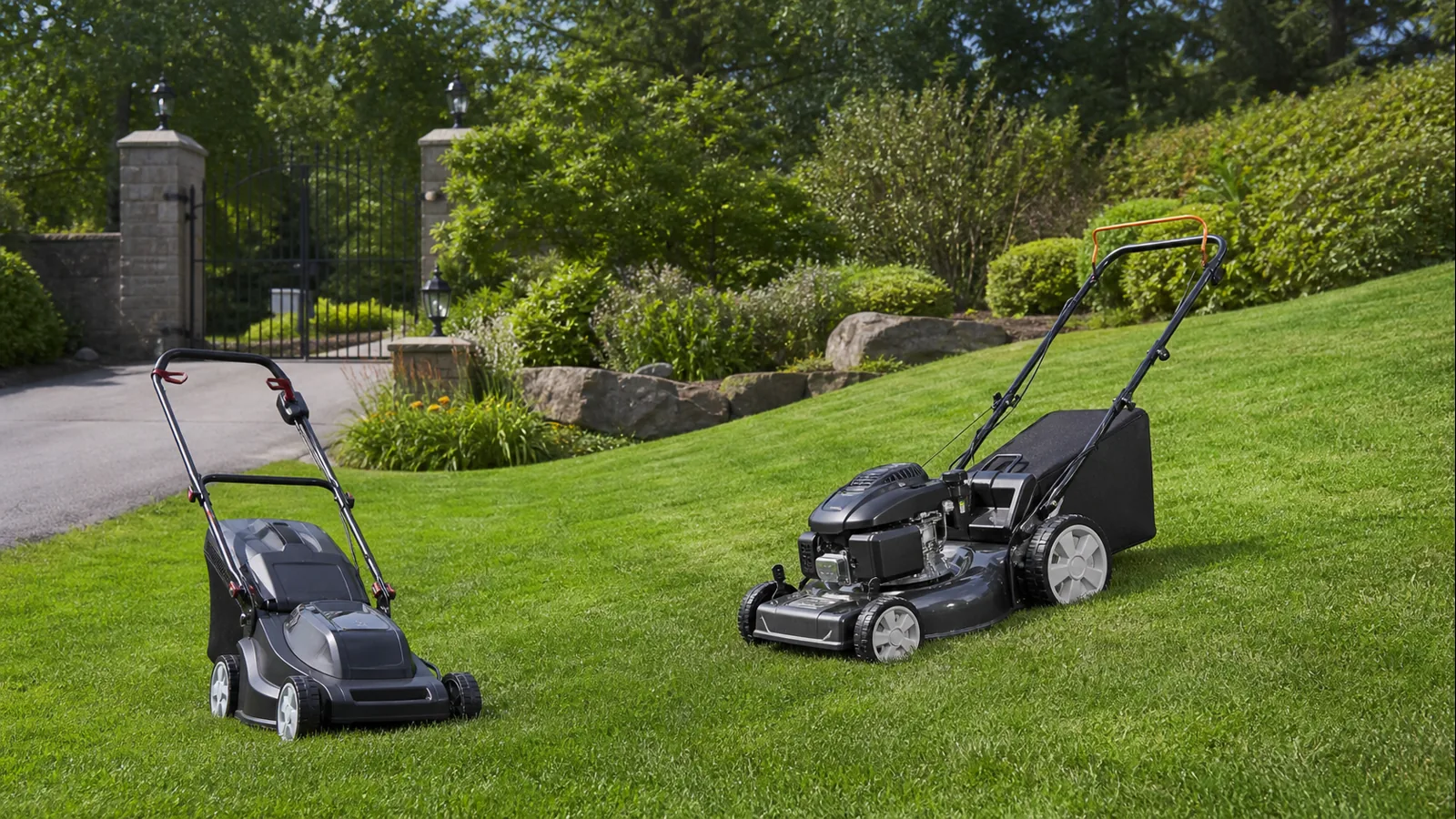
push vs self propelled lawn mower comes down to how much work the wheel-drive system should remove from the operator. Both types power the blade; a push mower relies on the operator for forward motion, while a self-propelled mower drives its wheels at one or more selectable speeds.
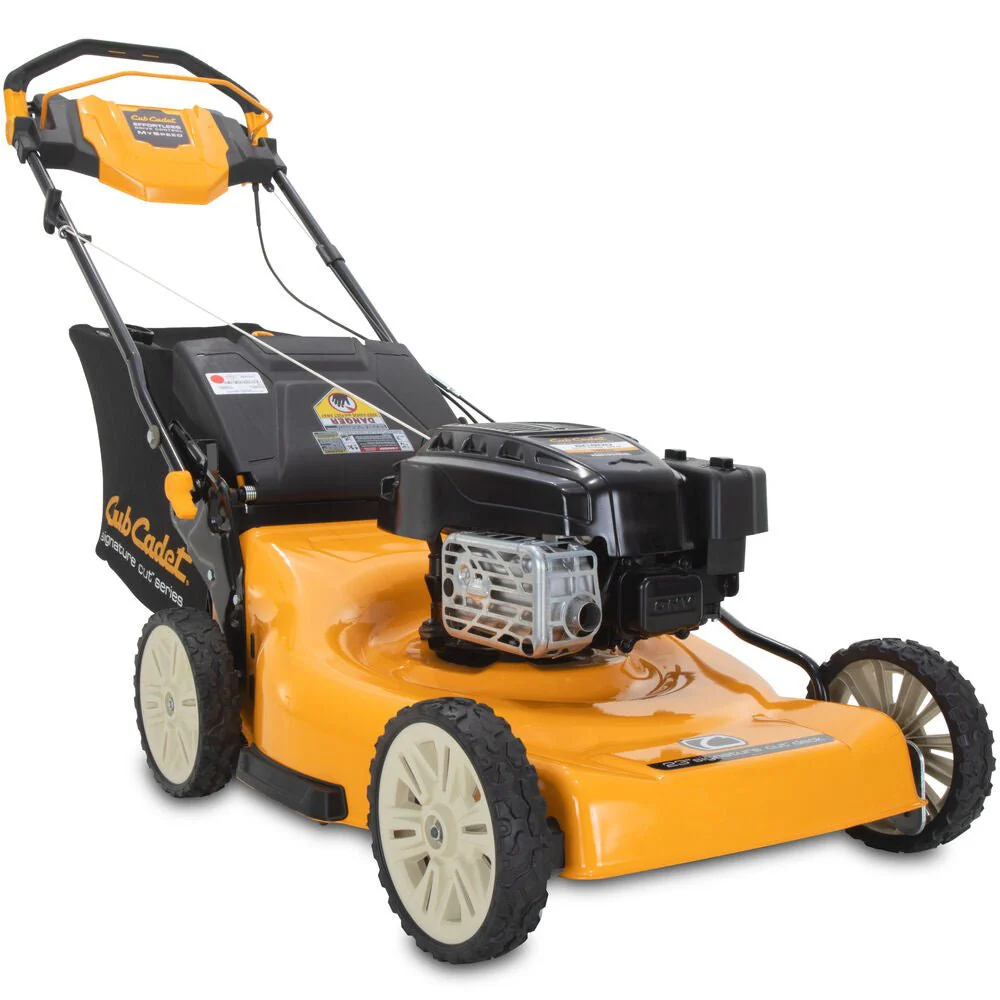
Cub Cadet SC900 21 in Signature Cut Self-Propelled Mower — example equipment relevant to push vs self propelled lawn mower
Cub Cadet SC900 21 in Signature Cut Self-Propelled Mower — view product

Property size matters, but slope, turf condition, obstacles, operator strength, machine weight, transport, and weekly frequency are equally important. The best choice for a small flat US lawn may not suit a wet Canadian slope or a tightly landscaped tropical property in Asia.

push vs self propelled lawn mower: Quick Answer

Choose a push mower for small, level lawns where low weight, simple maintenance, and precise manual control are priorities. Choose self-propelled for larger areas, slopes, dense grass, heavier machines, or multi-hour work. Variable-speed rear-wheel or all-wheel drive deserves a test on the actual terrain.

Decision factorBest-fit guidanceVerify before buying
Small flat lawnPush mowerTotal weight and turning effort.
Slope or long routeSelf-propelled mowerTraction, speed range, and slope limits.
Tight beds and frequent backingLight push or easy-disengage driveReverse drag and wheel resistance.
Commercial walk mowingVariable-speed self-propelledTransmission duty and service parts.

1. Yard Size and Mowing Time

A push mower can be efficient on a compact open lawn, especially when it is light and the grass is cut regularly. As area, obstacles, or travel distance increase, the physical work of moving the machine becomes a larger share of the job.

Time a representative section rather than relying on acreage labels. Include turns, emptying the bag, repositioning, trimming, and transport. A self-propelled drive can reduce fatigue, but an excessively fast minimum speed may reduce cut quality or control.

2. Slopes, Traction, and Drive Layout

Front-wheel drive turns easily because the operator can lift the front wheels, but it may lose traction when the bag adds rear weight or the lawn climbs. Rear-wheel drive usually maintains better traction on slopes. All-wheel drive can help on varied terrain but adds complexity and cost.

No drive layout makes a steep or wet slope safe. Follow the mower manual, work across or up and down slopes only as directed for that machine type, wear suitable footwear, and stop when traction is uncertain.

3. Operator Effort and Ergonomics

Self-propel drive reduces pushing force, particularly with a heavy steel deck, full catcher, or thick turf. The operator still steers, turns, stabilizes, and controls the machine. Test handle height, bail force, speed control, vibration, and whether the mower pulls faster than a comfortable walking pace.

A light push mower can be easier to maneuver around beds and load into a vehicle. For crews with different heights and abilities, adjustable handles and variable speed may create more value than maximum drive speed.

4. Control Around Obstacles and Edges

Push mowers respond directly to the operator and can be easy to feather around trees, corners, and narrow strips. Some self-propelled systems continue pulling briefly or resist rolling backward until the drive fully disengages.

During a demonstration, make repeated three-point turns, back away from a wall, cross a path, and mow along a bed edge. Inspect turf for wheel scuffing and verify that the drive lever can be modulated without an awkward grip.

5. Machine Weight, Transport, and Storage

Drive components add weight. Battery packs, larger engines, steel decks, and bagging systems add more. Measure the storage door, vehicle opening, ramp angle, and lifting requirement before choosing.

A foldable handle saves space only when controls and cables tolerate repeated folding. Commercial buyers should inspect tie-down points and avoid securing the mower through fragile handles or control cables.

6. Maintenance and Repair Differences

A push mower has fewer drivetrain parts. A self-propelled model adds belts, cables, gears, transmissions, wheel drives, or electronic controls. These parts are reliable when correctly used but require inspection and may be damaged by pulling the mower backward with the drive engaged.

Ask for the drive-system model, adjustment procedure, lubricant requirements, wheel replacement cost, and common failure parts. Test whether belts and cables can be serviced without removing most of the deck.

7. Purchase Price and Lifetime Value

The self-propelled premium is justified when it saves meaningful time or fatigue. It may not pay back on a tiny flat yard where a lighter push machine is faster to move and store.

Compare cost per mowing hour across the expected ownership period. Include drive repairs, fuel or batteries, blades, bags, maintenance labor, and the value of a machine that every regular operator can control confidently.

Bagging, Mulching, and Side Discharge

Drive choice does not determine clipping performance. Deck airflow, blade design, grass condition, bag capacity, and ground speed matter more. A self-propelled mower can help maintain a steady pace, but driving too quickly through dense grass can still leave clumps or uncut blades.

Confirm whether the mower changes modes without loose plugs or tools. For humid regions, inspect how easily the deck clears and how safely it can be cleaned after use.

How to Compare push vs self propelled lawn mower Options Objectively

Start with a written duty profile instead of a brand shortlist. Record the property or workpiece, normal and peak workload, operating hours, access limits, available utilities, climate, operator experience, and the result that must be achieved. For this push vs self propelled lawn mower decision, the most useful quotation is one that states its assumptions and identifies every included battery, charger, cord, blade, bit, accessory, guard, transfer device, or consumable.

Compare ratings at the same operating point. Maximum values are often measured under conditions that do not represent a full shift, tall wet grass, reinforced concrete, thick steel, motor starting current, or repeated production cycles. Ask for continuous output, duty cycle, runtime at a stated load, recharge or refuel time, environmental derating, service intervals, and the exact test method behind any noise, vibration, capacity, or efficiency claim.

Then run a representative acceptance test. Use the regular operator, typical material or turf, the accessories that will be used in production, and enough time to expose heat, battery, filtration, traction, or duty-cycle limits. Record setup time, productive time, interruptions, finish quality, consumable wear, energy or fuel use, and operator feedback. A short controlled test makes push vs self propelled lawn mower comparisons more defensible than a catalog specification alone.

Finally, calculate total ownership cost. Include purchase price, freight, tax or duty, installation, batteries, chargers, fuel, electricity, approved accessories, wear parts, maintenance labor, training, storage, downtime, and expected resale value. Confirm who performs warranty work and how quickly common parts can reach the site. The lowest initial price is not automatically the lowest cost per acre, hole, cut, weld, or delivered kilowatt-hour.

push vs self propelled lawn mower for the United States, Canada and Asia

United States buying notes

US suburban buyers often compare a light push mower for compact lots with self-propelled machines for larger or sloped lawns. Measure gates and storage, check local noise windows, and review the CPSC walk-behind mower safety guidance. Commercial crews should include route time and operator exposure in the decision.

Canada buying notes

Canadian spring growth, damp turf, rolling properties, and seasonal storage can favor additional traction, but wet slopes remain hazardous. Confirm cold-storage instructions for batteries, stabilize or drain fuel as directed, and verify Canadian warranty support before buying a US model.

Asia buying notes

Compact urban gardens may reward a light, maneuverable push mower, while resorts, campuses, and tropical estates may justify self-propelled commercial duty. High humidity, monsoon rain, tight paths, corrosion, and parts availability should be checked with drive type and deck width.

Do not treat an imported listing as proof of local compatibility. Confirm the exact model suffix, voltage, frequency, plug or outlet, certification mark, emissions status, warranty territory, parts channel, and manual language. Asia is not one electrical or regulatory market: for example, Japan uses 100 V and both 50 Hz and 60 Hz regions, while many Southeast Asian installations use approximately 220–240 V at 50 Hz. The machine name can remain the same while its motor, charger, receptacles, firmware, or compliance package changes.

Seven-Step Push vs Self Propelled Selection Checklist

  1. Measure lawn area and the longest continuous pass.
  2. Map slopes, soft ground, and obstacles.
  3. Test the regular operator at every speed.
  4. Check turning, backing, and transport effort.
  5. Inspect drive-system service access.
  6. Compare cut quality at a realistic pace.
  7. Calculate total cost per mowing hour.

Keep the completed checklist with the quotation, product data, acceptance record, and maintenance baseline. This gives the next buyer or technician evidence of why the equipment was selected and which assumptions must be revisited when the workload changes.

Frequently Asked Questions About push vs self propelled lawn mower

Does self-propelled mean the mower cuts by itself?

No. The drive moves the wheels, but the operator must steer, control speed, avoid hazards, and manage the cutting path.

Is a self-propelled mower worth it for a small yard?

It can be if the yard is sloped, the mower is heavy, or pushing is difficult. A light push mower is often simpler on a small flat lawn.

Which drive is best for hills?

Rear-wheel or all-wheel drive may provide better traction than front-wheel drive, but the mower manual and site conditions control what slopes are safe.

Can a self-propelled mower be pushed manually?

Most can, but resistance varies. Test the exact model with the engine or motor off and while pulling backward.

Does self-propelled use more battery?

Yes, wheel drive consumes energy. The effect depends on speed, slope, machine weight, grass, and how often the drive is engaged.

Trusted Resources and HarfanTools Next Steps

Read the CPSC walk-behind mower fact sheet and CCOHS rotary mower safety guidance. Compare walk lawn mowers and use the riding mower vs zero turn comparison when the property may justify a riding platform.

Bottom line: A push mower rewards light weight and simplicity; a self-propelled mower earns its premium through lower effort and steadier travel on larger or more difficult lawns.

Final Review of push vs self propelled lawn mower

Before approving a push vs self propelled lawn mower decision, compare the written requirement with the supplier quotation line by line. Confirm the exact regional model, capacity at the intended duty, included accessories, safety controls, utilities, warranty territory, service contact, and acceptance test. Any exception should be recorded and resolved before payment or deployment.

The strongest push vs self propelled lawn mower recommendation also identifies who will operate, inspect, maintain, and store the equipment. Give that team the manual, baseline settings, approved consumables, spare-parts list, inspection frequency, and escalation path. Review the push vs self propelled lawn mower file after commissioning and again after the first major service interval so measured operating data can improve the next purchase.

Push vs self propelled lawn mower: regional procurement workbook

A high-confidence purchase comes from a documented job test, not a feature-count contest. Use this workbook after reading the comparison above. It turns the push vs self propelled lawn mower decision into evidence that a homeowner, contractor, buyer, or safety lead can review later. The objective is to choose the smallest practical system that completes regular cutting around gates, beds, slopes, trees, and other residential obstacles without transferring hidden cost or risk to the operator.

1. Write a one-page job profile before requesting prices

Record the material or site, task frequency, maximum continuous session, access restrictions, storage conditions, available power or fuel, operators, transport limits, and acceptable downtime. Add the worst normal condition—not an extreme misuse case—so the shortlist is not built around an easy demonstration. For this walk-behind mower, the useful measures are operator walking effort, turning time, traction on a representative slope, clipping control, gate clearance, and total minutes per completed lawn. Keep units consistent and take notes during the same work cycle.

Separate a requirement from a preference. A requirement is a gate width, input voltage, minimum hole diameter, runtime, safety control, or locally available wear part that determines whether the equipment can do the job. A preference is color, an unused mode, or a theoretical maximum that does not affect the route. This distinction prevents a premium option from disguising a poor operational fit.

2. Score the shortlist with weighted evidence

Decision factorSuggested weightEvidence to collectReject when
Job performance30%Timed trial on representative workThe core task needs workarounds
Safety and exposure control20%Manual, guards, controls, placement, PPE and local assessmentA required control is missing or impractical
Serviceability15%Written parts list, dealer response and repair pathCritical wear parts have no reliable source
Operating fit15%Access, transport, storage, power and weather checkThe unit does not fit the real environment
Total cost15%Three-year cost model with downtimeAssumptions depend on missing prices or unrealistic life
Operator acceptance5%Structured feedback after equal trialsControls cannot be used consistently

Score every row from one to five, multiply by its weight, and attach the evidence. Adjust weights before—not after—the trial if a factor is genuinely more important. A transparent worksheet makes a push vs self propelled lawn mower recommendation easier to challenge and improve without relying on memory.

3. Adapt the test for the United States, Canada, and Asia

United States field note

For a US property, measure the narrowest gate and the longest slope before comparing drive systems. Flat compact yards may reward the lighter push design; larger or inclined lots often justify variable-speed propulsion. Check the current product manual, safety notices, and applicable workplace or electrical requirements for the exact use.

Canada field note

For Canada, include damp spring turf, leaf-heavy autumn work, and storage space in the test. Check whether drive cables, wheels, belts, and batteries can be serviced locally before the growing season. Confirm bilingual documentation, approved electrical components where applicable, and a support route that operates in the province or territory.

Asia field note

For Asian properties, test maneuverability in compact gardens and traction in humid, fast-growing turf. Dealer support and correct charger input can matter more than a headline feature that cannot be serviced locally. Asia is not one electrical or regulatory market; document the destination country, facility rules, grid conditions, language needs, and authorized service before ordering.

These regional notes are screening prompts, not substitutes for local law, an equipment manual, or a site risk assessment. If a supplier cannot answer a region-specific compatibility question in writing, treat that uncertainty as a cost and risk rather than assuming the machine will work.

4. Run a controlled acceptance trial

  1. Inspect the unit, accessories, guards, labels, connectors, serial number, and manual before energizing or starting it.
  2. Use the same operator, route, material, measurement method, and safe work procedure for each candidate where practical.
  3. Record baseline conditions, including temperature, moisture, task dimensions, load, battery state, fuel level, or supply voltage as relevant.
  4. Complete a normal work cycle. Do not defeat a guard, overload the machine, or improvise a connection to make a candidate pass.
  5. Log output quality, time, interruptions, consumables, exposure controls, operator comments, and remaining energy or fuel.
  6. Repeat any surprising result. A single fast run is not enough evidence for a fleet or household backup decision.
  7. Document defects and supplier responses before acceptance, then retain the worksheet with purchase and warranty records.

Pay special attention to operator fatigue, wheel slip, drive-system downtime, poor gate access, and buying more machine than the site needs. The best push vs self propelled lawn mower choice is the one that controls these foreseeable problems while meeting the real duty cycle. An impressive no-load demonstration does not prove production performance or safe integration.

5. Compare three-year cost, not only checkout price

Build a simple annual model for purchase price, drive-belt or cable service, wheels, blades, batteries or fuel, operator time, transport, and storage. Use local quotes, measured consumption, the planned number of work cycles, and the organization’s real labor rate. Keep tax, freight, finance, and resale assumptions visible. For batteries or high-wear components, model a reasonable replacement case and a stress case instead of promising a fixed life.

Downtime deserves its own line. Estimate lost production or the cost of a rental, backup unit, delayed job, spoiled material, or missed service window. Then ask the supplier for current stock and lead time on the five parts most likely to stop work. This often changes a push vs self propelled lawn mower ranking more than a small difference in purchase price.

6. Questions that deserve written answers

  • Which exact configuration was quoted, including model, voltage, battery, charger, guard, accessory, and country version?
  • What task limits, duty cycle, environment, storage range, and maintenance intervals does the manual specify?
  • Which consumables and safety-critical parts are locally stocked, and what are their current lead times?
  • Who performs warranty diagnosis and repair, and what evidence is required to support a claim?
  • What operator training, inspection record, or commissioning check is recommended?
  • Which claim in the proposal comes from a controlled test, and which is only an estimate?

Save the completed worksheet and revisit it after 30 and 90 days. Compare forecast runtime, output, consumable use, incidents, and downtime with actual results. That feedback closes the loop: the next push vs self propelled lawn mower purchase starts with site evidence instead of repeating an assumption.

HarfanTools expert support

Need help choosing industrial equipment?

Compare professional tools, review specifications and find equipment suited to your operation.
Leave a Reply

Your email address will not be published. Required fields are marked *