Portable Power Station vs Generator: 8 Best Buying Tips

Compare portable power stations and generators by watts, watt-hours, surge, runtime, noise, emissions, charging, weather and backup use.

Portable Power Station vs Generator: 8 Best Buying Tips

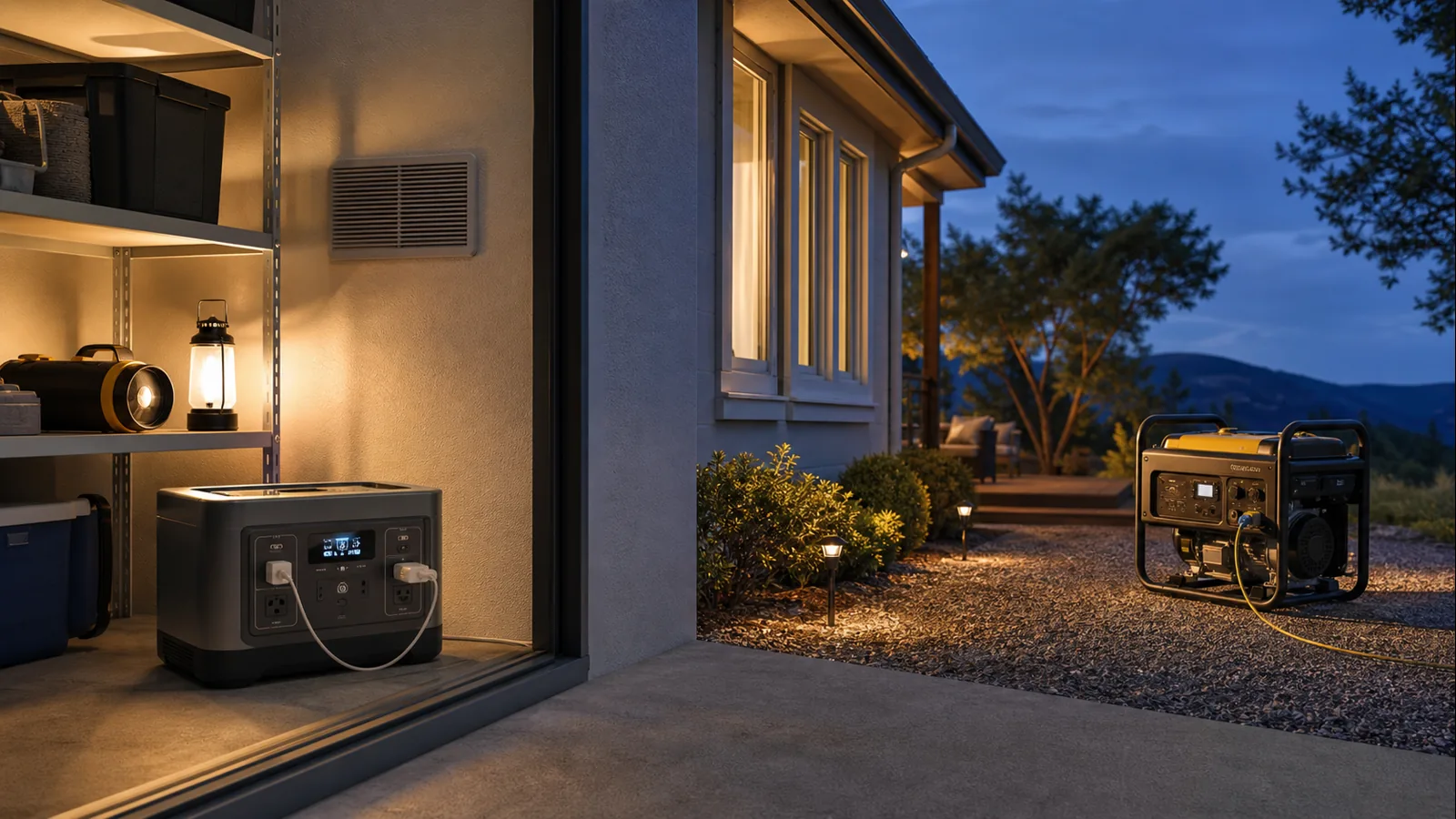
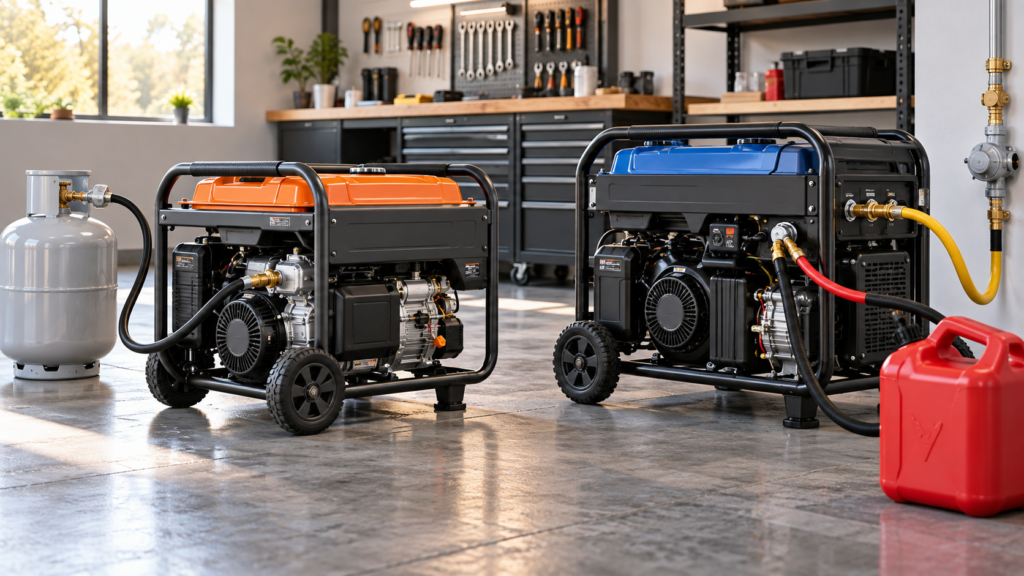
portable power station vs generator compares stored battery energy with on-demand engine generation. A power station is quiet at the point of use and can safely power suitable devices without exhaust; a fuel generator can deliver longer runtime through refueling but creates deadly carbon monoxide and must remain outdoors far from openings.
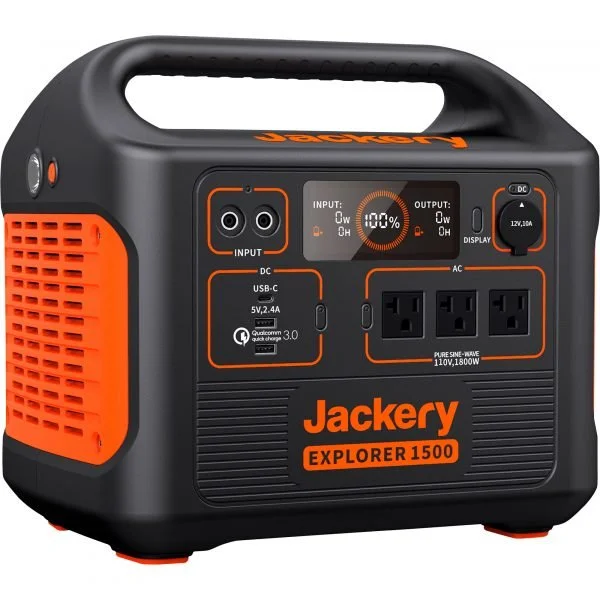
Jackery Explorer 1500 (G1534A1800AH) Portable Power Station (1800W Rated / 3600W Surge) — example equipment relevant to portable power station vs generator
Jackery Explorer 1500 (G1534A1800AH) Portable Power Station (1800W Rated / 3600W Surge) — view product

Choose from measured running watts, motor surge, required watt-hours, outage duration, charging sources, fuel availability, weather, portability, transfer method, and local voltage. Homes, camps, mobile crews, and remote businesses in the US, Canada, and Asia need different combinations.

portable power station vs generator: Quick Answer

Use a portable power station for electronics, communications, lighting, medical-device planning with professional advice, and short quiet backup within its rating. Use a generator for extended high-energy loads when safe outdoor placement and fuel are available. A hybrid plan can recharge batteries during limited generator windows, but only with manufacturer-approved connections.

Decision factorBest-fit guidanceVerify before buying
Indoor point of usePower stationBattery fire safety and load rating.
Multi-day high-energy outageGeneratorOutdoor placement, fuel, CO, and transfer.
Sensitive electronicsQuality inverter from either systemWaveform and voltage specification.
Solar-supported remote workPower station or hybridSolar input and recharge time.

1. Separate Watts from Watt-Hours

Watts describe instantaneous power; watt-hours describe stored energy. A 1,500 W power station may start a load but run it briefly if battery capacity is small. A generator’s runtime depends on fuel tank, load, efficiency, and refueling.

Build a load table with running watts, starting surge, hours per day, and priority. Include inverter losses and reserve. Verify motor surge with manufacturer data or measurement.

2. Compare Starting Surge and Output Quality

Refrigerators, pumps, compressors, and power tools can draw several times running power at startup. Confirm surge watts and duration, not just a large marketing number.

For electronics, compare waveform, voltage regulation, frequency stability, and grounding or neutral configuration. An inverter generator and a quality battery inverter can both provide suitable power when correctly specified.

3. Calculate Runtime and Energy Replenishment

A power station must be recharged from grid, vehicle, solar, or another approved source. Solar output varies with panel rating, sun, angle, shade, temperature, and controller limits. A generator can refuel quickly but depends on safely stored fuel.

Model a poor-weather case and the longest credible outage. Protect critical loads by scheduling high-demand equipment rather than running everything simultaneously.

4. Treat Carbon Monoxide as a Decisive Difference

Fuel generators produce carbon monoxide that can kill within minutes. CPSC says to operate portable generators outside only, at least 20 feet from the home, with exhaust directed away from buildings and openings. Health Canada specifies at least six metres.

A garage, shed, porch, or partially enclosed area is not safe, even with doors open. Install working CO alarms and follow the exact manual. Battery power stations do not create engine exhaust at the unit, but they still require fire-safe charging and use.

5. Compare Noise and Operating Windows

Battery systems are nearly silent except for cooling fans and connected loads. Generators create engine, exhaust, and vibration noise that varies with load, enclosure, distance, and test method.

Check campsite, residential, workplace, and municipal limits. Compare published sound at the same distance and load, and never solve noise by moving a generator into an unsafe enclosure.

6. Evaluate Weather, Storage, and Transport

Power stations and exposed connectors require dry use within their ingress rating. Lithium batteries need protection from impact, extreme temperature, moisture, and incompatible chargers. Fuel generators need approved storage, cooling before refueling, spill control, and maintenance.

Record total carried weight including fuel, solar panels, cables, chargers, and transfer equipment. Wheels and handles matter on stairs, soft ground, and evacuation routes.

7. Use Safe Building Connections

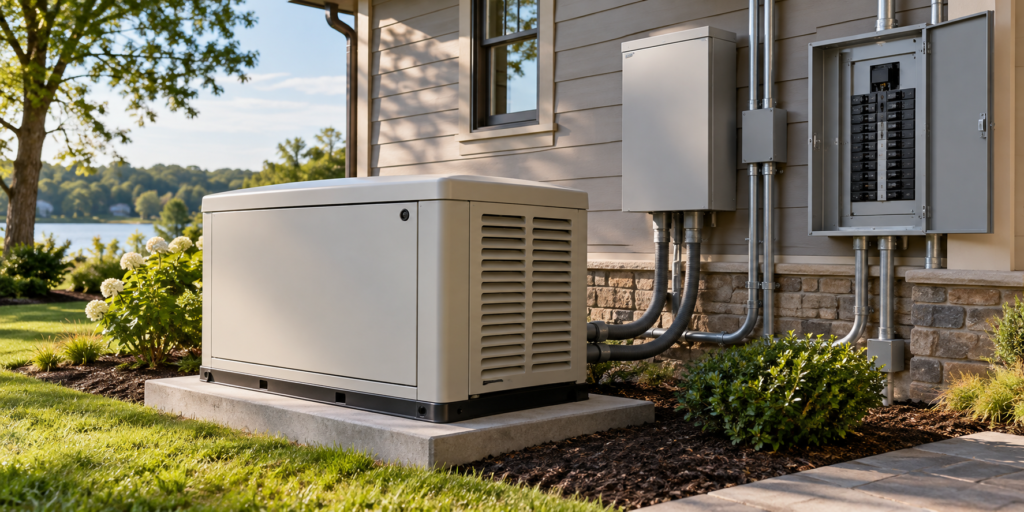
Neither device should backfeed building wiring through an improvised cord. A qualified electrician must select transfer equipment, inlet, overcurrent protection, grounding, and load management under local code.

Some power stations offer manufacturer-designed home integration. Verify exact compatibility and installation; a household outlet is not a generator inlet.

8. Compare Lifecycle Cost and Readiness

Power-station cost includes battery degradation, replacement, solar panels, chargers, and capacity expansion. Generator cost includes fuel, oil, filters, spark components, storage, exercise, repairs, and transfer equipment.

Readiness matters more than theoretical cost during an outage. Test the system under load, rotate fuel, maintain charge within manufacturer guidance, label cables, and train household or site users.

How to Compare portable power station vs generator Options Objectively

Start with a written duty profile instead of a brand shortlist. Record the property or workpiece, normal and peak workload, operating hours, access limits, available utilities, climate, operator experience, and the result that must be achieved. For this portable power station vs generator decision, the most useful quotation is one that states its assumptions and identifies every included battery, charger, cord, blade, bit, accessory, guard, transfer device, or consumable.

Compare ratings at the same operating point. Maximum values are often measured under conditions that do not represent a full shift, tall wet grass, reinforced concrete, thick steel, motor starting current, or repeated production cycles. Ask for continuous output, duty cycle, runtime at a stated load, recharge or refuel time, environmental derating, service intervals, and the exact test method behind any noise, vibration, capacity, or efficiency claim.

Then run a representative acceptance test. Use the regular operator, typical material or turf, the accessories that will be used in production, and enough time to expose heat, battery, filtration, traction, or duty-cycle limits. Record setup time, productive time, interruptions, finish quality, consumable wear, energy or fuel use, and operator feedback. A short controlled test makes portable power station vs generator comparisons more defensible than a catalog specification alone.

Finally, calculate total ownership cost. Include purchase price, freight, tax or duty, installation, batteries, chargers, fuel, electricity, approved accessories, wear parts, maintenance labor, training, storage, downtime, and expected resale value. Confirm who performs warranty work and how quickly common parts can reach the site. The lowest initial price is not automatically the lowest cost per acre, hole, cut, weld, or delivered kilowatt-hour.

portable power station vs generator for the United States, Canada and Asia

United States buying notes

US buyers should follow CPSC generator placement, CO alarm, and transfer guidance, then verify 120 V or 120/240 V requirements. Hurricanes, wildfire shutoffs, winter storms, and remote work create different load priorities. Check recall status and local fuel storage rules.

Canada buying notes

Health Canada advises keeping a fuel generator at least six metres from the home and openings, using CO shutoff where available, and letting it cool before refueling. Cold reduces some battery performance, so protect power stations according to the manual and verify Canadian certification and warranty.

Asia buying notes

Asia includes 100 V, 110 V, 220–240 V, 50 Hz, 60 Hz, and several plug systems. Confirm exact output, grounding, solar input, charger, heat derating, monsoon protection, fuel availability, and local building-connection rules. Dense sites may make safe generator separation difficult, increasing the value of a properly sized battery system.

Do not treat an imported listing as proof of local compatibility. Confirm the exact model suffix, voltage, frequency, plug or outlet, certification mark, emissions status, warranty territory, parts channel, and manual language. Asia is not one electrical or regulatory market: for example, Japan uses 100 V and both 50 Hz and 60 Hz regions, while many Southeast Asian installations use approximately 220–240 V at 50 Hz. The machine name can remain the same while its motor, charger, receptacles, firmware, or compliance package changes.

Eight-Step Backup Power Checklist

  1. List running watts, surge, and daily watt-hours.
  2. Separate critical from optional loads.
  3. Calculate recharge or refueling logistics.
  4. Plan safe outdoor generator placement.
  5. Verify noise and operating restrictions.
  6. Check weather, temperature, and storage.
  7. Use qualified building transfer equipment.
  8. Load-test and document the system.

Keep the completed checklist with the quotation, product data, acceptance record, and maintenance baseline. This gives the next buyer or technician evidence of why the equipment was selected and which assumptions must be revisited when the workload changes.

Frequently Asked Questions About portable power station vs generator

Can a portable power station run a refrigerator?

It can when inverter continuous and surge ratings fit the refrigerator and battery watt-hours support the required runtime. Measure the actual appliance cycle.

Can a power station replace a generator?

For short, moderate, quiet loads it may. Extended heating, large pumps, and high-energy outages can require more stored capacity or a generator.

Can a generator be used in a garage with the door open?

No. CPSC and Health Canada warn against indoor or partly enclosed operation. Use it outside far from doors, windows, and vents.

Is a solar generator the same as a generator?

The term usually describes a battery power station charged by solar panels. It stores energy rather than generating fuel-based power continuously.

Can either system connect directly to a house outlet?

No improvised backfeeding. Use manufacturer-approved integration and transfer equipment installed under local code by a qualified electrician.

Trusted Resources and HarfanTools Next Steps

Follow CPSC generator and CO guidance, Health Canada generator safety, and Health Canada battery safety. Compare portable power stations, generators, the generator wattage guide, and inverter generator comparison.

Bottom line: Size from watts and watt-hours, make carbon-monoxide safety non-negotiable, and choose a replenishment plan that still works during the longest credible outage.

Final Review of portable power station vs generator

Before approving a portable power station vs generator decision, compare the written requirement with the supplier quotation line by line. Confirm the exact regional model, capacity at the intended duty, included accessories, safety controls, utilities, warranty territory, service contact, and acceptance test. Any exception should be recorded and resolved before payment or deployment.

The strongest portable power station vs generator recommendation also identifies who will operate, inspect, maintain, and store the equipment. Give that team the manual, baseline settings, approved consumables, spare-parts list, inspection frequency, and escalation path. Review the portable power station vs generator file after commissioning and again after the first major service interval so measured operating data can improve the next purchase.

Portable power station vs generator: regional procurement workbook

A high-confidence purchase comes from a documented job test, not a feature-count contest. Use this workbook after reading the comparison above. It turns the portable power station vs generator decision into evidence that a homeowner, contractor, buyer, or safety lead can review later. The objective is to choose the smallest practical system that completes supplying selected essential loads during outages, remote work, travel, or temporary site operations without transferring hidden cost or risk to the operator.

1. Write a one-page job profile before requesting prices

Record the material or site, task frequency, maximum continuous session, access restrictions, storage conditions, available power or fuel, operators, transport limits, and acceptable downtime. Add the worst normal condition—not an extreme misuse case—so the shortlist is not built around an easy demonstration. For this backup-power system, the useful measures are continuous and starting watts, watt-hours or fuel consumed, runtime at measured loads, recharge or refuel time, noise, weather protection, and safe placement. Keep units consistent and take notes during the same work cycle.

Separate a requirement from a preference. A requirement is a gate width, input voltage, minimum hole diameter, runtime, safety control, or locally available wear part that determines whether the equipment can do the job. A preference is color, an unused mode, or a theoretical maximum that does not affect the route. This distinction prevents a premium option from disguising a poor operational fit.

2. Score the shortlist with weighted evidence

Decision factorSuggested weightEvidence to collectReject when
Job performance30%Timed trial on representative workThe core task needs workarounds
Safety and exposure control20%Manual, guards, controls, placement, PPE and local assessmentA required control is missing or impractical
Serviceability15%Written parts list, dealer response and repair pathCritical wear parts have no reliable source
Operating fit15%Access, transport, storage, power and weather checkThe unit does not fit the real environment
Total cost15%Three-year cost model with downtimeAssumptions depend on missing prices or unrealistic life
Operator acceptance5%Structured feedback after equal trialsControls cannot be used consistently

Score every row from one to five, multiply by its weight, and attach the evidence. Adjust weights before—not after—the trial if a factor is genuinely more important. A transparent worksheet makes a portable power station vs generator recommendation easier to challenge and improve without relying on memory.

3. Adapt the test for the United States, Canada, and Asia

United States field note

For a US home, inventory essential loads with a meter where practical and separate energy capacity from power output. A combustion generator stays outdoors at least 20 feet from the home, with exhaust directed away, following CPSC guidance. Check the current product manual, safety notices, and applicable workplace or electrical requirements for the exact use.

Canada field note

For Canada, plan for cold-weather battery performance and generator starting, safe fuel storage, carbon-monoxide alarms, and an approved transfer method. Never connect a generator directly to household wiring without suitable equipment and qualified work. Confirm bilingual documentation, approved electrical components where applicable, and a support route that operates in the province or territory.

Asia field note

For Asian locations, confirm voltage, frequency, plug types, heat derating, monsoon weather protection, ventilation, and fuel availability. A locally supported unit may be safer to maintain than an unmatched import. Asia is not one electrical or regulatory market; document the destination country, facility rules, grid conditions, language needs, and authorized service before ordering.

These regional notes are screening prompts, not substitutes for local law, an equipment manual, or a site risk assessment. If a supplier cannot answer a region-specific compatibility question in writing, treat that uncertainty as a cost and risk rather than assuming the machine will work.

4. Run a controlled acceptance trial

  1. Inspect the unit, accessories, guards, labels, connectors, serial number, and manual before energizing or starting it.
  2. Use the same operator, route, material, measurement method, and safe work procedure for each candidate where practical.
  3. Record baseline conditions, including temperature, moisture, task dimensions, load, battery state, fuel level, or supply voltage as relevant.
  4. Complete a normal work cycle. Do not defeat a guard, overload the machine, or improvise a connection to make a candidate pass.
  5. Log output quality, time, interruptions, consumables, exposure controls, operator comments, and remaining energy or fuel.
  6. Repeat any surprising result. A single fast run is not enough evidence for a fleet or household backup decision.
  7. Document defects and supplier responses before acceptance, then retain the worksheet with purchase and warranty records.

Pay special attention to carbon-monoxide poisoning, backfeeding, overload, wet operation, depleted batteries, stale fuel, incompatible voltage, and unrealistic runtime assumptions. The best portable power station vs generator choice is the one that controls these foreseeable problems while meeting the real duty cycle. An impressive no-load demonstration does not prove production performance or safe integration.

5. Compare three-year cost, not only checkout price

Build a simple annual model for power unit, batteries, solar or mains charging, fuel, transfer equipment, cables, protective storage, maintenance, replacement cells, and outage downtime. Use local quotes, measured consumption, the planned number of work cycles, and the organization’s real labor rate. Keep tax, freight, finance, and resale assumptions visible. For batteries or high-wear components, model a reasonable replacement case and a stress case instead of promising a fixed life.

Downtime deserves its own line. Estimate lost production or the cost of a rental, backup unit, delayed job, spoiled material, or missed service window. Then ask the supplier for current stock and lead time on the five parts most likely to stop work. This often changes a portable power station vs generator ranking more than a small difference in purchase price.

6. Questions that deserve written answers

  • Which exact configuration was quoted, including model, voltage, battery, charger, guard, accessory, and country version?
  • What task limits, duty cycle, environment, storage range, and maintenance intervals does the manual specify?
  • Which consumables and safety-critical parts are locally stocked, and what are their current lead times?
  • Who performs warranty diagnosis and repair, and what evidence is required to support a claim?
  • What operator training, inspection record, or commissioning check is recommended?
  • Which claim in the proposal comes from a controlled test, and which is only an estimate?

Save the completed worksheet and revisit it after 30 and 90 days. Compare forecast runtime, output, consumable use, incidents, and downtime with actual results. That feedback closes the loop: the next portable power station vs generator purchase starts with site evidence instead of repeating an assumption.

HarfanTools expert support

Need help choosing industrial equipment?

Compare professional tools, review specifications and find equipment suited to your operation.
Leave a Reply

Your email address will not be published. Required fields are marked *