
 22297
22297  22225
22225  22298
22298 Subtotal: $4,652.00
Commercial Air Compressors for Automotive Shops: Buying Guide
Compare five commercial air compressors for automotive shops, including CFM sizing, duty cycle, electrical and maintenance requirements.
 Written byHarfanTools Editorial Team

Selecting a commercial air compressor for an automotive shop starts with simultaneous tool demand, required pressure, duty cycle, air quality, and local electrical supply. This guide compares five configurations for repair bays, collision centers, tire shops, dealerships, and mobile service teams.
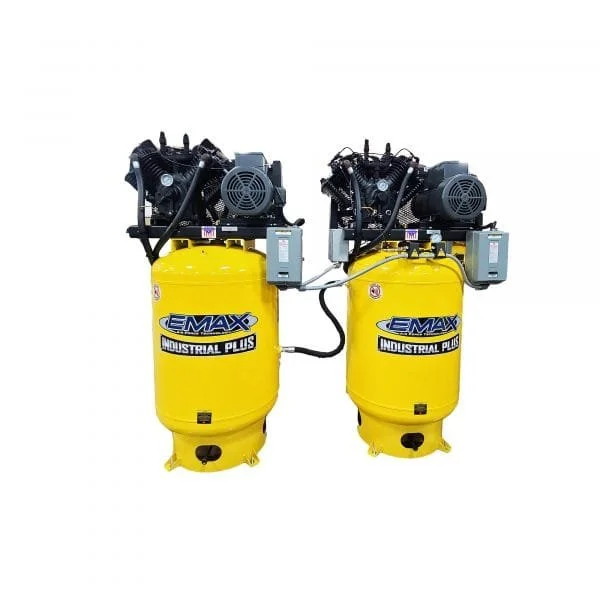
Choosing a commercial air compressor for an automotive shop is primarily a sizing decision. The right machine must supply enough CFM at the required PSI for every tool that may run at the same time, while maintaining a duty cycle suited to the shop’s daily workload. A compressor that looks powerful on paper can still cause pressure drops, poor paint finishes, and lost technician time when it is undersized.
This guide compares five practical compressor configurations for independent garages, tire shops, collision centers, dealership service departments, and mobile fleet teams. It also explains electrical requirements commonly encountered in the United States, Canada, and Asian markets so buyers can create a useful shortlist before requesting a formal equipment specification.
Quick Comparison: Commercial Air Compressors for Auto Shops
| Compressor configuration | Best application | Typical advantage | Important limitation |
|---|---|---|---|
| Two-stage reciprocating, 80 gallon | Independent repair and tire shops | Strong PSI and good value | Not designed for nonstop operation |
| 10–15 HP rotary screw | Busy multi-bay service centers | Continuous airflow and low noise | Higher initial investment |
| Variable-speed rotary screw | Shops with changing air demand | Lower energy use at partial load | Requires professional sizing |
| Gas-powered portable compressor | Mobile tire and fleet service | Works away from grid power | Outdoor operation and ventilation required |
| Oil-free or scroll compressor | Painting, detailing, and clean-air tasks | Reduced oil contamination risk | Lower capacity can cost more per CFM |
1. Two-Stage Reciprocating Compressor for General Repair
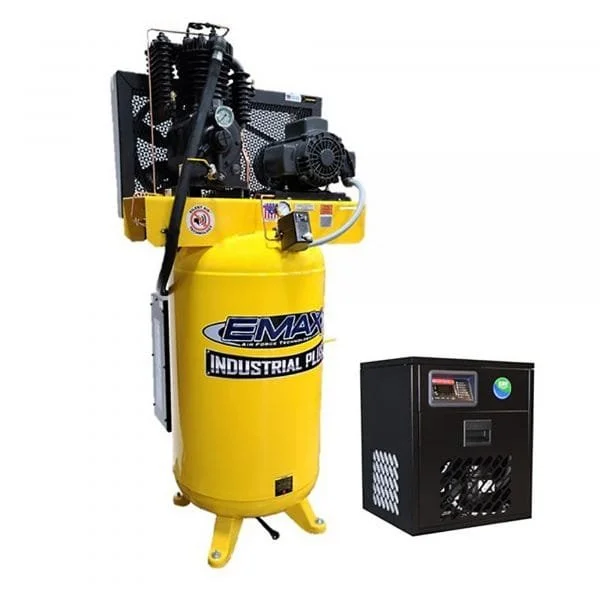
An 80-gallon, two-stage reciprocating compressor is a dependable starting point for many independent workshops. It can support impact wrenches, ratchets, tire inflators, small grinders, and other tools used intermittently. Two-stage compression also provides the higher pressure required by demanding pneumatic equipment more efficiently than a small single-stage unit.
This configuration is best when technicians do not operate high-CFM tools continuously. The motor needs recovery time, so compare the rated duty cycle—not only peak horsepower. Select a unit with a real delivered-CFM rating at 90 PSI that exceeds the simultaneous demand of the busiest work period.
2. Rotary Screw Compressor for a Multi-Bay Shop
A rotary screw compressor is usually the stronger choice for collision centers, dealership workshops, and fleet facilities where air demand continues throughout the day. These machines deliver steady airflow, operate more quietly than large piston units, and are commonly designed for a 100% duty cycle.
A 10–15 HP package may suit a moderate multi-bay operation, but horsepower alone is not a sizing method. Add the CFM requirements of tools likely to run together, include air used by dryers or other treatment equipment, and add a reasonable growth allowance. For related buying fundamentals, read the industrial air compressor buying guide.
3. Variable-Speed Rotary Screw for Changing Demand
Automotive shops rarely consume the same amount of compressed air every minute. A variable-speed-drive rotary screw compressor can reduce motor speed when demand falls, which may lower energy use compared with a fixed-speed machine that repeatedly unloads. It is most valuable in facilities with long operating hours and a wide variation between base and peak demand.
The controls and installation are more sophisticated, so ask the supplier to evaluate the shop’s actual demand profile. In humid locations, also confirm that the dryer and condensate-management system can handle local ambient conditions.
4. Gas-Powered Portable Compressor for Mobile Service
Mobile tire service, roadside repair, and remote fleet maintenance require compressed air without relying on a customer’s electrical supply. A truck-mounted or wheeled gas-powered compressor provides that flexibility and can run impact tools, inflation equipment, and selected pneumatic accessories in the field.
Combustion-powered equipment must be operated outdoors with safe exhaust clearance. Account for fuel storage, transport rules, noise limits, and cold- or hot-weather starting requirements. Never operate an engine-driven compressor inside an occupied service bay.
5. Oil-Free or Scroll Compressor for Clean-Air Work
Paint preparation, detailing, electronics work, and some calibration tasks benefit from exceptionally clean compressed air. An oil-free or scroll compressor reduces the risk of lubricant entering the air stream. A properly designed oil-lubricated system with filtration can also serve many paint applications, but the complete air-treatment package is critical.
Install a correctly sized refrigerated or desiccant dryer, particulate filters, and coalescing filters according to the required air-quality class. Locate treatment equipment where it can be serviced and drain condensate in accordance with local environmental rules.
How to Calculate the CFM Your Automotive Shop Needs
- List each pneumatic tool and its required CFM at the specified PSI.
- Identify which tools can operate at the same time during the busiest shift.
- Add their CFM requirements.
- Multiply the result by 1.25 to provide a practical operating margin.
- Add planned future equipment before choosing the final compressor size.
For example, two impact wrenches using 5 CFM each, a tire changer using 4 CFM, and an intermittent grinder averaging 8 CFM create a simultaneous requirement of 22 CFM. Adding a 25% margin produces a target of at least 27.5 delivered CFM at the required pressure. Always use delivered CFM rather than displacement CFM.
Electrical and Installation Considerations by Region
Commercial compressors may require single-phase or three-phase power. North American facilities commonly use 208, 230, 460, or 575 volts depending on the building and location. Markets across Asia use several voltage and frequency standards, including both 50 Hz and 60 Hz systems. Confirm voltage, phase, frequency, full-load current, disconnect requirements, and motor-starting method with a licensed electrician before ordering.
Place the compressor on a stable surface with service clearance and adequate ventilation. Use correctly sized piping in a loop where practical, slope lines toward drainage points, and avoid long runs of undersized flexible hose. A receiver tank located near intermittent high-demand equipment can reduce short pressure fluctuations.
Maintenance Checklist for Reliable Shop Air
- Check oil level and inspect for leaks according to the manufacturer’s schedule.
- Drain the receiver and verify automatic condensate drains.
- Clean coolers and maintain unobstructed ventilation.
- Replace inlet, oil, and separator filters at specified intervals.
- Inspect belts, electrical connections, hoses, and safety valves.
- Record operating hours, temperature, pressure, and abnormal noise.
- Service air dryers and downstream filters before pressure loss increases.
Frequently Asked Questions
Is an 80-gallon compressor enough for an automotive shop?
u003c!u002du002d /wp:heading u002du002du003enu003cpu003eIt can be enough for a small shop using pneumatic tools intermittently, provided its delivered CFM exceeds simultaneous demand. Tank size does not compensate for an undersized pump.u003c/pu003ennu003c!u002du002d wp:heading {u0022levelu0022:3} u002du002du003e
Is a rotary screw compressor better than a piston compressor?
u003c!u002du002d /wp:heading u002du002du003enu003cpu003eA rotary screw compressor is generally better for continuous, high-use operations. A piston compressor can offer better value for intermittent demand and smaller facilities.u003c/pu003ennu003c!u002du002d wp:heading {u0022levelu0022:3} u002du002du003e
What PSI do automotive air tools require?
u003c!u002du002d /wp:heading u002du002du003enu003cpu003eMany automotive tools are rated around 90 PSI, but requirements vary. Size the system using each tool manufacturer’s specified pressure and account for pressure loss through piping, filters, and dryers.u003c/pu003ennu003c!u002du002d wp:heading u002du002du003e
Final Recommendation
Choose the compressor from measured airflow demand, duty cycle, air-quality requirements, local electrical supply, and expected growth. Small repair shops often start with a properly sized two-stage reciprocating unit, while busy multi-bay operations usually benefit from rotary screw technology. Browse the HarfanTools compressor range and confirm final sizing with a qualified equipment specialist before purchase.
Commercial Air Compressors for Automotive Shops: Next Steps
Use the industrial air compressor buying guide to validate CFM, PSI, duty cycle, and treatment requirements. The US Department of Energy compressed-air resource also explains why leaks, pressure loss, controls, and system design matter to long-term operating cost.
HarfanTools product guidance
Need help choosing industrial equipment?
Compare professional tools, review specifications and find equipment suited to your operation.
One Comment