
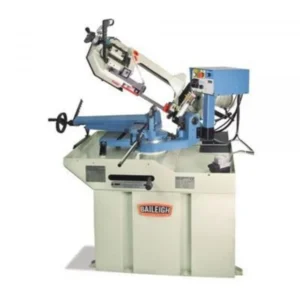
 BS-260M
 Subtotal: $5,494.00
Commercial Air Purifier vs Air Scrubber: Key Differences
Compare a commercial air purifier vs air scrubber by filtration, airflow, pressure control, workspace, contaminants and operating cost.
 Written byHarfanTools Editorial Team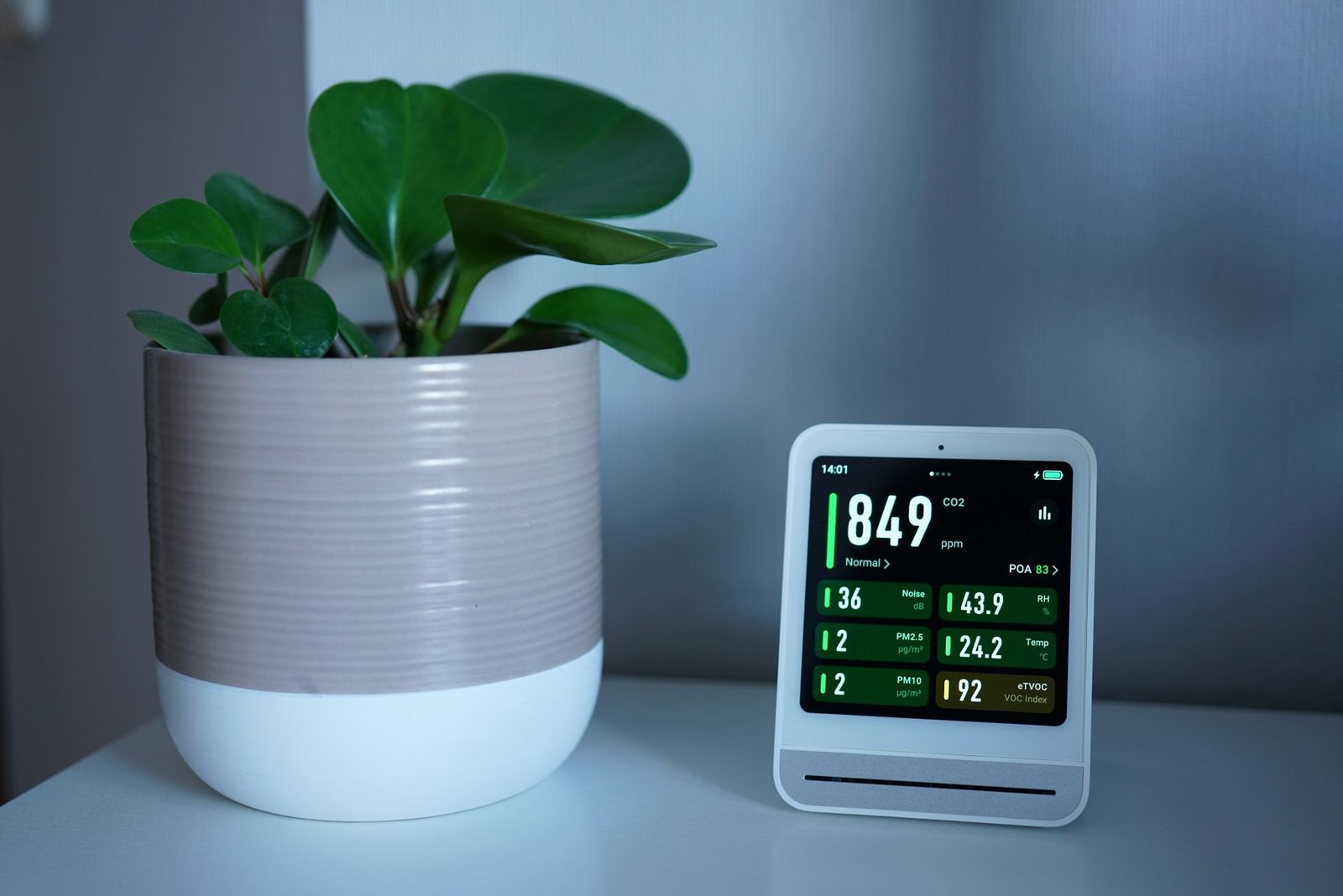
Choosing between a commercial air purifier and an air scrubber starts with the job: continuous air-quality improvement in an occupied space, or aggressive capture and containment during restoration, construction, smoke cleanup, or dust-producing work.
The most common question is simple: should you buy a commercial air purifier or an industrial HEPA air scrubber? The answer depends on whether you need continuous air quality improvement in an occupied room, or aggressive source containment for dust, mold, smoke, concrete debris, welding fumes, and renovation contaminants.
This guide compares both systems, explains sizing logic, places internal HarfanTools links directly inside the article, and references external authority resources such as EPA guidance for indoor air quality in offices and large buildings, OSHA respirable crystalline silica requirements, OSHA welding ventilation rules, and ASHRAE ventilation and indoor air quality standards.
Quick Answer: Use a Purifier for Occupied Spaces, Use an Air Scrubber for Containment
- Choose a commercial air purifier when the room is occupied, relatively clean, and needs continuous recirculated filtration. A model such as the IDEAL AP80 Pro Commercial Air Purifier is designed for offices, clinics, classrooms, retail spaces, meeting rooms, and medium commercial rooms where low noise, compact placement, and daily air turnover matter.
- Choose an industrial air scrubber when the air is actively contaminated or when the job requires negative air pressure. A machine such as the XPOWER AP-2500D MEGA 3-Stage HEPA Air Scrubber is built for restoration projects, construction dust control, mold cleanup, smoke remediation, and containment work where high airflow and jobsite durability are more important than quiet aesthetics.
📌 Quick Selection Summary:
- Use a commercial air purifier for offices, clinics, schools, retail showrooms, hotel rooms, customer areas, and long-term occupied indoor spaces.
- Use an air scrubber for demolition, concrete grinding, water damage restoration, smoke damage, mold work, asbestos or lead abatement support, and high-dust renovation zones.
- Use ventilation fans and ducting when you must move air out of a confined zone or create a controlled pressure relationship between dirty and clean areas. Refer to ourVentilation Equipment Suppliesfor heavy-duty options.
- Use portable generators when the jobsite needs stable off-grid power for air scrubbers, fans, lights, pumps, and diagnostic tools. Explore theHarfanTools Generatorscategory for reliable power options.
What Is a Commercial Air Purifier?
A commercial air purifier is a recirculating filtration unit designed to improve ambient air quality in an occupied indoor space. It draws room air through internal filters and returns cleaner air back to the same room. The goal is not to isolate a dirty work zone; the goal is to maintain better daily air quality for people, products, and sensitive activities. This setup is excellent for standard workspaces, but a deeper look at a commercial air purifier vs air scrubber is needed when heavy construction begins.
In a procurement context, the best commercial units combine pre-filtration, HEPA filtration, activated carbon, a multi-speed fan system, and a design that can run for long periods without disrupting the room. HarfanTools lists the IDEAL AP80 Pro as a commercial air purifier for spaces up to 968 sq ft, with HEPA and activated carbon filtration, 5-speed control, and quiet operation for offices, clinics, classrooms, retail shops, hotels, and meeting rooms.
This makes commercial purifiers valuable for facilities that want cleaner air but do not have active contamination events. The EPA indoor air quality guidance frames IAQ improvement around source control, ventilation, and filtration. When evaluating a commercial air purifier vs air scrubber, remember that a purifier supports the ambient filtration layer, but it should not be treated as the only control when a process is generating hazardous dust or fumes.
Best Use Cases for Commercial Air Purifiers:
- Medical clinics and waiting rooms that need silent commercial air purifier clinic performance.
- Offices, coworking spaces, and classrooms that need low-noise air cleaning without ducting.
- Retail spaces, showrooms, hotel rooms, and conference rooms where odors, dust, and allergens affect customer experience.
- Light woodworking, printing, packaging, or inspection rooms where fine airborne dust must be reduced after primary collection systems are already in place.
- Cleanliness-sensitive spaces that need daily air turnover but do not require negative pressure containment.
What Is an Industrial Air Scrubber?
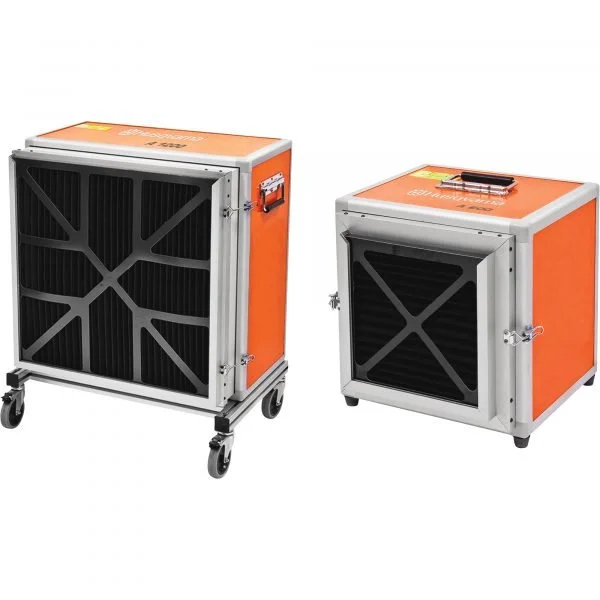
An industrial air scrubber is a portable, high-airflow filtration machine used to remove airborne contaminants from active work zones. Unlike a standard commercial purifier, an air scrubber is designed for rough environments, high particle loads, ducting, and containment support. Consequently, analyzing a commercial air purifier vs air scrubber becomes necessary to determine if your project requires certified hazardous material control.
The XPOWER AP-2500D MEGA 3-Stage HEPA Air Scrubber is listed by HarfanTools as delivering up to 1,800 CFM for spaces up to 3,000 sq ft, with pre-filtration, true HEPA filtration, activated carbon, continuous-duty performance, a portable stackable design, and negative air containment support. That specification profile is built for restoration contractors, construction teams, HVAC professionals, and industrial hygiene teams that need rapid air exchange in contaminated spaces.
The most important difference is pressure control. An air scrubber can recirculate air inside a room, but it can also be connected to ducting so filtered air is exhausted outside the containment zone. That creates negative pressure, meaning air flows from cleaner adjacent areas into the dirty work zone instead of allowing contaminants to escape outward.
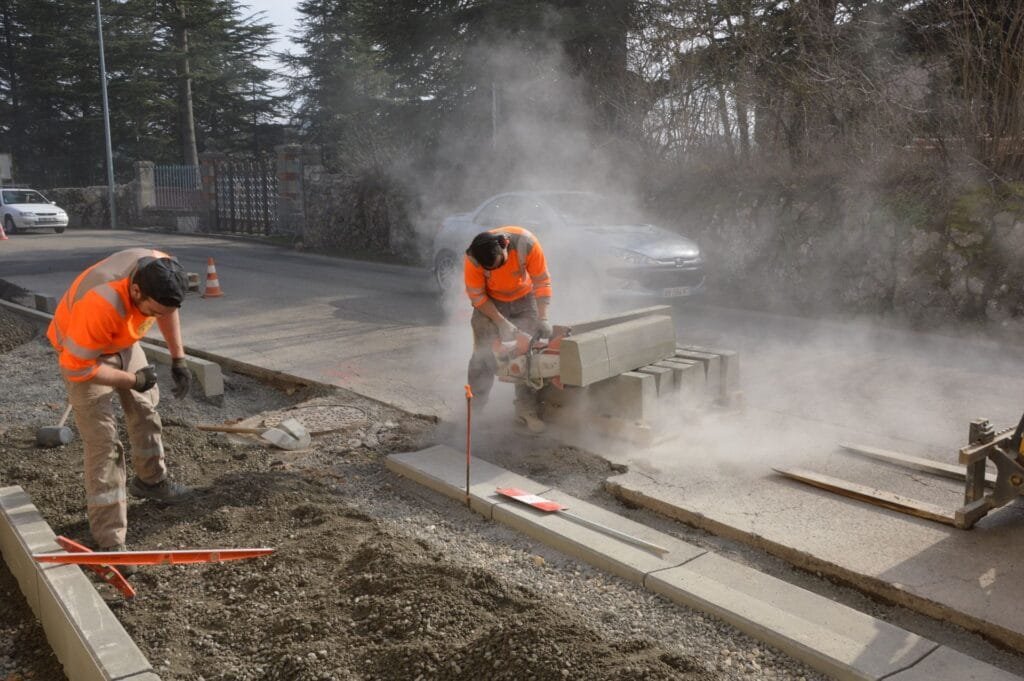
This matters for concrete grinding, silica dust, mold remediation, fire restoration, and other high-risk jobs. OSHA lists a permissible exposure limit for respirable crystalline silica under its silica standard, and NIOSH recommends safe work practices and engineering controls for silica-generating tasks. For welding, OSHA also addresses mechanical or local exhaust ventilation in confined spaces, and NIOSH describes welding fumes as contaminants generated by joining or cutting metal with heat, pressure, or both. Understanding the operational boundaries of a commercial air purifier vs air scrubber ensures you comply with these strict safety protocols.
Best Use Cases for Industrial Air Scrubbers:
- Concrete dust containment air scrubber projects during wall grinding, floor cutting, demolition, and core drilling.
- High CFM air scrubber asbestos or lead abatement support when used under a qualified abatement plan.
- Mold remediation, fire damage restoration, and smoke odor cleanup jobsites.
- Water damage restoration projects where air scrubbers work with air movers and dehumidification.
- Construction dust control in hospitals, schools, hotels, offices, retail stores, and occupied buildings undergoing renovation.
- Temporary negative pressure rooms for renovation, containment, and industrial contamination control.
Commercial Air Purifier vs Air Scrubber: Side-by-Side Comparison
| Selection Factor | Commercial Air Purifier | Industrial Air Scrubber |
| Primary Goal | Continuous air quality improvement in occupied spaces. | Rapid contaminant removal and containment in active work zones. |
| Airflow Profile | Moderate airflow optimized for comfort and low noise. | High CFM airflow designed for fast air exchange and particle loading. |
| Pressure Control | Recirculates air inside the same room only. | Can recirculate or exhaust through ducting to create negative air pressure. |
| Typical Users | Facility managers, clinics, offices, schools, hospitality, retail. | Restoration contractors, construction crews, remediation teams, HVAC. |
| Best Contaminants | Dust, allergens, odors, VOCs, light smoke particles. | Construction dust, mold spores, heavy smoke, concrete dust, remediation debris. |
| Portability | Portable or semi-portable, designed for clean interiors. | Rugged, stackable, jobsite-ready, built for transport and harsh handling. |
| Best HarfanTools Path | Air Purifiers Category (e.g., IDEAL AP80 Pro) | Air Scrubbers & Ventilation (e.g., XPOWER AP-2500D) |
When comparing a commercial air purifier vs air scrubber, industrial buyers must evaluate both the CFM capacity and the specific filtration stages required for their local environmental regulations.
Sizing the System: CFM, ACH, Room Volume, and Negative Pressure
When calculating air volume for a commercial air purifier vs air scrubber, you must always prioritize the required Air Changes per Hour (ACH). Sizing should start with the room volume, not just floor area. A 1,000 sq ft workshop with a 10 ft ceiling contains 10,000 cubic feet of air. If you want 6 air changes per hour (ACH), you need to calculate the target Cubic Feet per Minute (CFM) using the formula below:
$$ACH = frac{text{CFM} times 60}{text{Room Volume}}$$
To find the required CFM for your desired ACH, you can rearrange the formula:
$$text{CFM} = frac{text{ACH} times text{Room Volume}}{60}$$
For occupied rooms, the target ACH depends on room use, ventilation system design, contaminant source, and local requirements. For dirty work zones, the target may be driven by containment rules, work method, duct losses, and how quickly contaminants are generated.
Ducting changes the calculation significantly. Long duct runs, bends, undersized outlets, dirty filters, and sealed containment pressure all increase static pressure. That is why a high-CFM air scrubber may not deliver its free-air rating when connected to long ducting. For negative pressure setups, always verify pressure with a manometer or pressure monitor instead of assuming that airflow alone is enough.
For broader ventilation planning, review ASHRAE Standards 62.1 and 62.2. For construction and silica-generating work, pair your selected commercial air purifier vs air scrubber unit with source control methods, wet methods, shrouds, tool-mounted extraction, and documented exposure control practices.
US and Asia Buyer Scenarios: Which Equipment Fits the Job?
Different regions have unique compliance guidelines that affect your choice when comparing a commercial air purifier vs air scrubber for commercial properties.
1. Offices, Clinics, Classrooms, Hotels, and Retail Spaces
For occupied spaces where noise, appearance, and daily comfort matter, start with a commercial air purifier. The IDEAL AP80 Pro is a better match for medium-sized offices and clinics than a loud construction-grade air scrubber. Use a purifier as part of a broader IAQ program that also checks outdoor air ventilation, filter maintenance, humidity control, cleaning practices, and source control.
2. Construction Renovation in Occupied Buildings
For renovation inside offices, malls, hospitals, schools, and hotels, choose an air scrubber with ducting and containment. Use construction equipment planning around dust barriers, poly sheeting, zipper doors, sticky mats, and pressure monitoring. A concrete dust containment air scrubber setup is especially important when grinding, cutting, drilling, or demolishing mineral materials that may generate respirable silica dust.
3. Welding, Grinding, and Fabrication Shops
Fabrication shops should prioritize source capture first, then general ventilation, and then ambient filtration. Use local exhaust ventilation for welding fumes where possible, supported by high capacity axial fan ventilation or air scrubbers when the space layout requires additional air movement. HarfanTools also maintains a Welding Equipment Category for buyers evaluating fabrication shop needs.
For welding fume context, compare your control plan with OSHA welding ventilation requirements and the NIOSH Pocket Guide entry for welding fumes. The goal is to reduce welding fumes fabrication teams inhale, not simply move smoke from one worker to another.
4. Warehouses, Logistics Hubs, and Humid Tropical Facilities
Air filtration alone will not fix humidity. In warehouses across coastal US markets and humid Asia-Pacific regions, a commercial dehumidifier for warehouse storage may be needed to protect cardboard packaging, metal parts, textiles, electronics, and inventory labels. In this context, comparing a commercial air purifier vs air scrubber is secondary to managing the actual moisture load. Air scrubbers can reduce particles, while dehumidification manages moisture load. Keep relative humidity stable enough to reduce mold risk and corrosion risk, and verify actual RH with calibrated sensors.
5. Water Damage Restoration and Storm Recovery
After flood events, pipe bursts, roof leaks, or monsoon-driven water intrusion, drying speed matters. Restoration contractors commonly combine extraction, commercial carpet drying fan setups, dehumidification, and HEPA air scrubbers. Use XPOWER air movers water damage workflows to break the boundary layer over wet surfaces, while air scrubbers help capture airborne particles released during demolition, carpet removal, drywall cutting, and cleanup.
6. Remote Worksites and Unstable Grid Areas
Air scrubbers, fans, pumps, and lights need reliable power. On remote jobsites, compare the HarfanTools Generators Category for the best heavy duty portable generator options, portable inverter generator worksite needs, dual fuel vs gas industrial generator planning, emergency power backup industrial operations, electrical safety gear jobsite generator workflows, and three phase power generator heavy machinery requirements. Match running watts and surge watts before mobilizing equipment.
7. Metal Fabrication and Cutting Operations
Air quality, cutting accuracy, and machine uptime are connected. Fabrication shops should build preventive workflows around industrial metal bandsaw maintenance, metal cutting bandsaw blade selection, and cold saw vs bandsaw metal fabrication decisions. Buyers can start with the HarfanTools Band Saws Category when planning metalworking upgrades, while also checking dust, mist, fume, and coolant management around the cutting zone.
Step-by-Step Air Scrubber Negative Air Machine Setup
A negative air setup should be planned before demolition or remediation begins. The following field sequence works as a practical starting point, but projects involving asbestos, lead, hazardous mold, chemical contamination, or regulated materials require a qualified professional and a job-specific control plan.
- Define the dirty zone: Mark the work area, adjacent clean areas, access points, and exit path for workers and debris.
- Seal openings: Use poly sheeting, tape, zipper doors, and temporary barriers to reduce uncontrolled leakage while still allowing planned makeup air.
- Place the air scrubber inside: Position the unit inside the containment zone. Keep the intake clear and position the exhaust toward the ducting path.
- Attach ducting to the exhaust side: Route filtered air outdoors or to an approved exhaust location without contaminating clean occupied spaces.
- Create pressure differential: Start the machine and verify that air flows from clean areas toward the dirty zone, not outward from the dirty zone.
- Monitor pressure and filter load: Use pressure monitoring, inspect prefilters, and replace filters when airflow drops or pressure changes.
- Document the setup: Keep photos, readings, filter change logs, and daily checks for client reporting and insurance documentation.
Maintenance Checklist: Preventive Maintenance for Industrial Air Systems
Preventive maintenance checklist air systems content should be part of every facility SOP. Dirty filters, blocked intakes, damaged ducting, and overloaded motors reduce capture efficiency and can create a false sense of safety. A system that looks powerful but is starved of airflow will not protect a work zone.
| Frequency | Maintenance Action | Why It Matters |
| Daily during jobs | Check prefilters, duct connections, airflow direction, pressure monitor, and power cords. | Keeps negative pressure stable and prevents accidental contaminant escape. |
| Weekly | Vacuum exterior surfaces, inspect seals, clean intake grilles, check wheels, handles, and stacked units. | Protects airflow and reduces jobsite damage. |
| Monthly | Inspect HEPA filter condition, carbon stage condition, fan motor sound, clamps, and control panel operation. | Supports consistent CFM and avoids unplanned downtime. |
| Quarterly | Review filter replacement records, calibration records, staff training, and site-specific risk assessment. | Creates documentation for procurement, safety, and client reporting. |
| Before storage | Dry equipment, clean housing, remove damaged ducting, protect filters, and store in a clean space. | Prevents odor, mold growth, and motor corrosion between jobs. |
Frequently Asked Questions (FAQ)
Is an air scrubber the same as a commercial air purifier?
u003c!u002du002d /wp:heading u002du002du003ennu003c!u002du002d wp:paragraph u002du002du003enu003cpu003eNo. While comparing a u003cstrongu003ecommercial air purifier vs air scrubberu003c/strongu003e reveals similar filtration technologies, their designs are different. A commercial air purifier is usually designed for occupied indoor spaces and recirculates air through filters quietly. An air scrubber is a more rugged, high-airflow machine used for contaminated work zones and can support negative air pressure with ducting.u003c/pu003enu003c!u002du002d /wp:paragraph u002du002du003ennu003c!u002du002d wp:heading {u0022levelu0022:3} u002du002du003e
When should a business use a negative air machine?
u003c!u002du002d /wp:heading u002du002du003ennu003c!u002du002d wp:paragraph u002du002du003enu003cpu003eUse a negative air machine when contaminants must stay inside a controlled work zone, such as renovation dust, mold remediation, smoke cleanup, concrete cutting, or containment work. Always follow project-specific safety and regulatory requirements.u003c/pu003enu003c!u002du002d /wp:paragraph u002du002du003ennu003c!u002du002d wp:heading {u0022levelu0022:3} u002du002du003e
Can a commercial purifier remove welding fumes?
u003c!u002du002d /wp:heading u002du002du003ennu003c!u002du002d wp:paragraph u002du002du003enu003cpu003eA commercial purifier may reduce some airborne particles, but welding fume control should prioritize source capture, local exhaust ventilation, and a qualified industrial hygiene plan. Do not rely on a room purifier as the only welding fume control.u003c/pu003enu003c!u002du002d /wp:paragraph u002du002du003ennu003c!u002du002d wp:heading {u0022levelu0022:3} u002du002du003e
What does CFM mean when buying an air scrubber?
u003c!u002du002d /wp:heading u002du002du003ennu003c!u002du002d wp:paragraph u002du002du003enu003cpu003eCFM means cubic feet per minute. It measures airflow volume. Higher CFM can support faster air exchange, but actual performance depends on filter load, duct length, static pressure, containment leakage, and room volume.u003c/pu003enu003c!u002du002d /wp:paragraph u002du002du003ennu003c!u002du002d wp:heading {u0022levelu0022:3} u002du002du003e
What is the best air scrubber setup for concrete dust?
u003c!u002du002d /wp:heading u002du002du003ennu003c!u002du002d wp:paragraph u002du002du003enu003cpu003eUse source control first, then containment barriers, HEPA filtration, ducting, negative pressure monitoring, proper PPE, and cleanup procedures. Concrete dust may involve respirable crystalline silica, so review OSHA and NIOSH guidance before work begins.u003c/pu003enu003c!u002du002d /wp:paragraph u002du002du003ennu003c!u002du002d wp:heading {u0022levelu0022:3} u002du002du003e
Which HarfanTools product category should I start with?
u003c!u002du002d /wp:heading u002du002du003ennu003c!u002du002d wp:paragraph u002du002du003enu003cpu003eu003cstrongu003eTo make the final decision between a commercial air purifier vs air scrubber, check our HarfanTools product category.u003c/strongu003e For general air cleaning, start with u003ca href=u0022https://harfantools.com/product-category/fans-heater/air-purifiers/u0022 data-type=u0022linku0022 data-id=u0022https://harfantools.com/product-category/fans-heater/air-purifiers/u0022u003eHarfanTools Air Purifiersu003c/au003e. For high-CFM containment, review the XPOWER AP-2500D Product Page. For ventilation support, check Ventilation Equipment Supplies. For remote jobsites, review Generators.u003c/pu003enu003c!u002du002d /wp:paragraph u002du002du003ennu003c!u002du002d wp:heading u002du002du003e
Final Recommendation
Ultimately, the decision to invest in a commercial air purifier vs air scrubber comes down to whether your team needs localized, high-pressure dust containment or general, quiet ambient air polishing.
If your facility is occupied and the goal is cleaner daily air, start with a commercial air purifier such as the IDEAL AP80 Pro. If your jobsite is dusty, wet, smoky, under renovation, or needs pressure containment, start with an industrial air scrubber such as the XPOWER AP-2500D MEGA HEPA Air Scrubber.
To build the strongest buying journey, remember to connect this commercial air purifier vs air scrubber article internally to Air Purifiers, Ventilation Equipment Supplies, Generators, Band Saws, Welding, and Construction.
To further optimize your industrial workspace setup, make sure to also check our comprehensive guide on Metal Fabrication Tools.
Commercial Air Purifier vs Air Scrubber: Trusted Resources and Next Steps
The EPA guide to air cleaners explains filtration and clean-air delivery principles that also help commercial buyers evaluate claims. Compare those principles with the jobsite setup in our concrete dust containment guide, then browse commercial air-cleaning equipment by airflow, filter class, ducting, and serviceability.
HarfanTools product guidance
Need help choosing industrial equipment?
Compare professional tools, review specifications and find equipment suited to your operation.
3 Comments