Forklift Capacity Guide: How to Read a Load Chart

Understand forklift load centers, data plates, lift height, attachments, stability, derating and safe capacity planning.

Forklift Capacity Guide: How to Read a Load Chart

forklift capacity guide explains why the number printed on a truck is not a universal lifting limit. Rated capacity applies at a specified load center, mast configuration, height, and attachment. Longer, taller, offset, or irregular loads can reduce safe capacity dramatically.
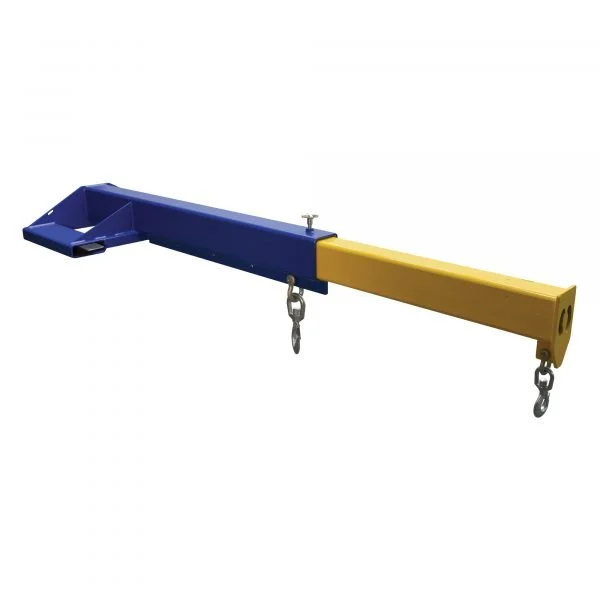
Vestil LM-EBT-8-30 8,000 lbs Economy Telescoping Forklift Boom (30 in Fork Pockets) — example equipment relevant to forklift capacity guide
Vestil LM-EBT-8-30 8,000 lbs Economy Telescoping Forklift Boom (30 in Fork Pockets) — view product

Warehouse and industrial teams in the US, Canada, and Asia should use the exact manufacturer data plate and local operator rules. This article supports equipment planning; it does not replace a capacity plate, engineering approval, or trained operator.

Table of Contents

Forklift Capacity Guide: Factors That Change Capacity

Decision factorWhat to check
Load centerGreater horizontal distance increases overturning moment.
Lift heightCapacity may fall as mast height increases.
AttachmentWeight and forward offset require a revised data plate.
Load shapeLong or uneven loads need specific evaluation.

1. Rated Capacity Is Conditional

A truck described as 5,000 lb or 2,500 kg is rated under conditions shown on its data plate. The plate should identify load center, lift height, mast, tire configuration, attachments, and other limitations. Operators must use the plate installed on that truck.

Never assume two visually similar forklifts have the same residual capacity. Model, mast, counterweight, tires, carriage, and attachment can change the result.

2. Understand the Load Center

Load center is the horizontal distance from the fork face to the load center of gravity. A uniformly distributed 48-inch-deep load has a nominal 24-inch center. A deeper or forward-shifted load creates more overturning moment and reduces available capacity.

Real loads may have an offset center of gravity. Machinery, coils, tanks, and long materials require more than a pallet assumption.

3. Read Every Line on the Data Plate

Locate the truck model and serial number, rated capacity, load center, maximum height, mast specification, attachment, tire type, and warnings. If the plate is damaged, unreadable, or does not match the installed configuration, remove the truck from that lift until corrected.

Only the manufacturer or authorized qualified party should provide revised capacity information after modifications.

4. Account for Attachments and Carriage Weight

Side shifters, fork positioners, clamps, rotators, booms, and extensions add weight and often move the load forward. Both effects reduce residual capacity. Fork extensions also require correct support and load placement.

Do not subtract attachment weight from headline capacity as the only calculation. Geometry matters, and the revised plate is the controlling reference.

5. Consider Lift Height, Mast, and Travel

A truck may carry a load low but have a lower rating at full height. Mast deflection, visibility, aisle width, floor condition, ramps, wind, and dynamic forces influence the operating plan.

Travel with the load low and stable, follow site speed rules, avoid turning on grades, and maintain clearance from edges and pedestrians.

6. Match Truck Type to the Facility

Capacity is only one selection factor. Compare aisle width, lift height, surface, indoor emissions, charging or fuel infrastructure, duty cycle, attachments, and service support. Counterbalance, reach, rough-terrain, and telehandler designs serve different environments.

For imported or multi-region equipment, confirm local certification, labels, units, and training requirements.

Forklift Load Planning Checklist

  • Read the exact truck data plate.
  • Measure load weight and center of gravity.
  • Confirm attachment on the capacity plate.
  • Check capacity at required lift height.
  • Inspect forks, tires, mast, and hydraulics.
  • Plan route, aisle, ramp, and pedestrian controls.
  • Use a trained and authorized operator.

Frequently Asked Questions

Can forklift capacity be calculated from a formula?

A moment calculation can illustrate why capacity changes, but safe operation must use the manufacturer-approved data plate for the exact configuration.

Do fork extensions reduce capacity?

They can change load placement and leverage. Use only approved extensions and follow the truck and extension limitations.

What happens when the load center increases?

The overturning moment increases, so available load weight generally decreases. Obtain approved residual-capacity data.

Trusted Resources and Next Steps

Review the OSHA powered industrial truck guidance and use the capacity plate for the exact machine.

Bottom line: Treat forklift capacity as configuration-specific, verify load center and lift height, and never operate from a generic chart when the data plate is available. Browse the forklift and material-handling range, or visit the HarfanTools knowledge center for more equipment guides.

Forklift Capacity Rules and Units by Region

US workplaces should follow OSHA requirements, while Canadian operations must follow the rules of their province or territory and applicable CSA practices. Training, inspection, and site procedures are jurisdiction-specific, but the truck’s data plate remains the controlling source for rated capacity. Never convert a catalog number into permission to lift; attachments, mast height, load center, tire condition, and uneven floors can all reduce the safe operating margin.

Across Asia, capacity may be shown in kilograms and load-center distances in millimeters rather than pounds and inches. Convert units carefully and use the plate fitted to the exact truck, not a similar online model. Imported attachments should be included in an updated capacity assessment by the manufacturer or qualified supplier. Battery voltage, charger compatibility, fuel availability, emissions rules, aisle width, and local technician coverage also influence which forklift will remain productive and compliant.

Practical Review for forklift capacity guide

When researching forklift capacity guide, start with the real operating requirement rather than a headline specification. This is especially important for evaluating loads, attachments, lift heights, and warehouse operating conditions. Record the normal workload, peak demand, available utilities, operating environment, operator skill level, and the result the equipment must deliver. A written requirement makes supplier quotations easier to compare and reduces the risk of paying for capacity that the application cannot use.

Use forklift capacity guide as a decision framework, then verify load weight, load center, lift height, attachment weight, mast configuration, and residual capacity. Published ratings should be checked at the same operating point and under comparable conditions. Ask the supplier to identify assumptions, included accessories, consumables, installation needs, and any derating that applies. A short demonstration with representative material or loads is more valuable than comparing a single maximum number.

Pre-purchase verification checklist

  • Confirm actual load weight and the horizontal and vertical load center.
  • Use the data plate for the installed mast, carriage, tires, and attachments.
  • Check residual capacity at the required lift height, not nominal capacity alone.
  • Review aisle width, floor rating, visibility, operator training, and site rules.

A complete forklift capacity guide review should also compare total ownership cost. Include planned maintenance, wear parts, energy or fuel, downtime, training, inspection, and service response—not only the purchase price. For buyers in the United States and Canada, verify electrical certification, emissions rules, safety documentation, parts availability, and warranty coverage. Buyers across Asia should additionally confirm local voltage and frequency, ambient-temperature performance, import support, freight dimensions, and regional service capability.

Before approving the order, document the chosen forklift capacity guide specification and the evidence behind it. Keep the supplier data sheet, test result, capacity calculation, accessory list, delivery scope, and acceptance criteria together. This creates a practical record for purchasing, commissioning, operator training, and future replacement decisions.

Complete Buying and Implementation Playbook for forklift capacity guide

A defensible forklift capacity guide decision connects the application, site, operator, supplier, and service plan. Begin by describing what a successful work cycle looks like: the input condition, expected output, time available, operating hours, environmental limits, and acceptable variation. Record both the routine case and the most demanding credible case. This prevents a vendor from sizing only for an easy demonstration and gives purchasing teams in the United States, Canada, and Asia a common basis for evaluating different brands.

1. Establish a measurable operating baseline

Observe the current process before requesting quotations. Measure cycle time, delays, rework, labor involvement, energy or fuel use, consumable use, material variation, and the frequency of peak conditions. Interview the operator, maintenance technician, safety representative, and production owner separately; each person sees a different constraint. Photographs, sketches, utility readings, and a short sample log help suppliers understand the site without relying on assumptions.

Convert observations into minimum, normal, and peak requirements. Minimum values protect quality and safety; normal values determine efficiency; peak values show whether reserve capacity is required. Avoid combining unrelated maximum values into an impossible worst case. Instead, identify realistic duty cycles and simultaneous events. This produces a specification that is demanding enough to protect the buyer without forcing every supplier toward an unnecessarily large and expensive model.

2. Turn requirements into a supplier-ready specification

The specification for forklift capacity guide should separate mandatory requirements from preferences. Mandatory items include capacity at the stated operating point, site utilities, safety provisions, physical interfaces, environmental range, and required documentation. Preferences may include lower noise, easier controls, remote monitoring, or a particular accessory. Ask vendors to mark every requirement as compliant, noncompliant, or requiring clarification and to attach evidence for important ratings.

Do not compare a catalog maximum from one vendor with a continuous rating from another. Request the curve, test condition, tolerance, derating rule, and applicable standard behind each important number. Identify whether accessories, guards, filters, hoses, batteries, chargers, controls, foundations, fluids, software, freight, installation, and training are included. A clear boundary-of-supply table often prevents more cost and delay than negotiating a small discount.

3. Investigate the four application-critical checks

Check 1: Confirm actual load weight and the horizontal and vertical load center

Confirm actual load weight and the horizontal and vertical load center. Ask the supplier to show the source of its claim and explain the conditions that would change the result. Record the model, configuration, accessory, test material or load, measurement method, and responsible person. If the item affects capacity, safety, or product quality, place it in the acceptance plan rather than leaving it as a sales discussion. Evidence can be a certified data sheet, calculation, reference installation, sample result, or witnessed demonstration.

Check 2: Use the data plate for the installed mast, carriage, tires, and attachments

Use the data plate for the installed mast, carriage, tires, and attachments. Ask the supplier to show the source of its claim and explain the conditions that would change the result. Record the model, configuration, accessory, test material or load, measurement method, and responsible person. If the item affects capacity, safety, or product quality, place it in the acceptance plan rather than leaving it as a sales discussion. Evidence can be a certified data sheet, calculation, reference installation, sample result, or witnessed demonstration.

Check 3: Check residual capacity at the required lift height, not nominal capacity alone

Check residual capacity at the required lift height, not nominal capacity alone. Ask the supplier to show the source of its claim and explain the conditions that would change the result. Record the model, configuration, accessory, test material or load, measurement method, and responsible person. If the item affects capacity, safety, or product quality, place it in the acceptance plan rather than leaving it as a sales discussion. Evidence can be a certified data sheet, calculation, reference installation, sample result, or witnessed demonstration.

Check 4: Review aisle width, floor rating, visibility, operator training, and site rules

Review aisle width, floor rating, visibility, operator training, and site rules. Ask the supplier to show the source of its claim and explain the conditions that would change the result. Record the model, configuration, accessory, test material or load, measurement method, and responsible person. If the item affects capacity, safety, or product quality, place it in the acceptance plan rather than leaving it as a sales discussion. Evidence can be a certified data sheet, calculation, reference installation, sample result, or witnessed demonstration.

4. Review failure modes before selecting a model

Risk review is a practical part of forklift capacity guide, even for a small purchase. Using nominal capacity without load-center, height, mast, or attachment derating can reduce stability and create a load-handling condition the data plate does not permit. Rate each failure by safety impact, production impact, likelihood, and ease of detection. Then decide whether the response belongs in equipment design, an accessory, a site control, operator training, preventive maintenance, or a spare-parts plan.

Ask what happens after a sensor fault, blocked flow, overload, utility interruption, empty consumable, emergency stop, or incorrect operator setting. Safe recovery should be clear and repeatable. Also examine the consequences of foreseeable misuse and the method for isolating stored energy during service. Include alarms, interlocks, protective devices, and inspection points in the quotation comparison so that a low purchase price does not hide an incomplete safety scope.

5. Compare total cost rather than purchase price

Build a three-to-five-year ownership model using expected annual hours. Include delivered price, tax or duty, freight, rigging, installation, utility upgrades, training, energy or fuel, consumables, scheduled parts, wear items, calibration, inspections, software fees, and disposal. Estimate downtime cost separately because service response can be more important than a small difference in efficiency. State every assumption so the model can be revised when workload or local prices change.

Request a recommended spare-parts list with price, lead time, shelf life, and replacement skill level. Distinguish parts the buyer should stock from parts a regional service center promises to hold. Ask for labor rates, travel charges, warranty exclusions, preventive-maintenance options, and escalation contacts. For imported equipment, evaluate exchange-rate exposure and freight for heavy or hazardous components. These details make the forklift capacity guide comparison financially realistic.

6. Validate regional compatibility

Check operator-training rules, inspection records, emissions or battery requirements, aisle and fire-code constraints, attachment approval, and local parts and tire support. Never assume that a model sold under the same name has identical motors, controls, emissions equipment, plugs, manuals, warranties, or certifications in every market. Put the destination country and installation address on the quotation and require the supplier to confirm the exact regional configuration in writing.

For the United States, verify the applicable electrical listing, workplace-safety documentation, engine or environmental requirements, pressure or lifting rules where relevant, and access to authorized service. Canadian buyers should additionally confirm Canadian certification marks, bilingual documentation where required, cold-weather suitability, and provincial inspection or occupational requirements. The final authority depends on the equipment and jurisdiction, so use a qualified local professional for regulated installations.

Across Asia, voltage and frequency vary by country and sometimes by region. Confirm phase, plug or disconnect, control voltage, ambient temperature, humidity, altitude, dust or rain exposure, fuel quality, language, communications bands, and import documentation. Check whether warranty work is performed locally or requires international approval. A distributor with technicians and stocked parts near the installation can provide more value than a lower-priced unit with no practical support route.

7. Design the acceptance test before issuing the order

The acceptance plan for forklift capacity guide should state who supplies the test load or material, which instruments are used, the operating sequence, warm-up period, sampling duration, pass limits, allowed adjustments, and the evidence delivered afterward. For this application, Confirm the final data plate, handle a representative test load at required height, check braking and steering, inspect warning systems, and document operator familiarization. Both sides should approve the procedure before shipment whenever failure would cause costly installation delays.

Separate factory acceptance, delivery inspection, installation checks, site acceptance, and operator handover. At delivery, record packaging condition, serial numbers, configuration, accessories, manuals, and damage. Before operation, confirm foundations, clearances, utilities, fluids, guards, fasteners, alignment, and settings. During the site test, use representative conditions and record measured values. Close every deviation with a named owner and due date before final payment or handover.

8. Prepare maintenance and support before commissioning

Schedule fork and chain inspections, tire and brake checks, mast lubrication, hydraulic inspection, battery or engine care, attachment checks, and capacity-plate review after changes. Convert manufacturer intervals into calendar or operating-hour tasks and assign each task to a role. Identify special tools, lubricants, calibration equipment, safe-isolation steps, and environmental disposal needs. Load the schedule, part numbers, inspection forms, and service contacts into the site maintenance system before production begins.

Stock only the spares justified by failure impact, usage rate, lead time, and shelf life. Critical low-cost items usually deserve local stock; expensive assemblies may be better covered by a service agreement or confirmed regional inventory. Review maintenance records after the first month and again after the first full service interval. Early data often reveals unrealistic intervals, training gaps, difficult access, or consumable usage that was not visible during selection.

9. Train operators around decisions, not only controls

Training should explain correct setup, normal indicators, operating limits, quality checks, safe shutdown, emergency response, daily inspection, and the symptoms that require maintenance. Include hands-on practice with the real material or load. Ask each operator to demonstrate the task rather than only signing an attendance sheet. Supervisors need enough knowledge to recognize when production pressure is pushing equipment outside its intended duty.

Create a concise workstation guide using photographs of the installed configuration. Show acceptable and unacceptable conditions, required personal protective equipment, inspection points, adjustment limits, and escalation contacts. Keep the full manual available but do not expect operators to search it during a developing problem. Refresher training should follow incidents, major repairs, configuration changes, long shutdowns, or repeated quality deviations.

10. Preserve evidence for the next purchasing cycle

Close the forklift capacity guide project with a controlled equipment record: approved specification, quotation clarifications, drawings, calculations, certificates, test results, serial numbers, software versions, spare-parts list, warranty terms, training records, and maintenance baseline. Record why the selected option won and which compromises were accepted. This information speeds troubleshooting and gives the organization a stronger starting point when expanding or replacing the equipment.

After three to six months, compare actual capacity, quality, downtime, consumable use, energy or fuel, operator feedback, and maintenance hours with the business case. Share the result with purchasing, operations, maintenance, and the supplier. A short post-implementation review turns one purchase into reusable knowledge and prevents the same sizing, contracting, or support mistakes from appearing at another site.

Final Questions About forklift capacity guide

What evidence completes the review?

A complete forklift capacity guide file contains the approved operating requirement, supplier compliance response, regional configuration, total-cost comparison, risk controls, acceptance result, training record, and maintenance baseline. The final forklift capacity guide recommendation should cite measured or published evidence for every requirement that affects capacity, safety, quality, or regulatory compliance.

When should the decision be reviewed again?

Revisit forklift capacity guide whenever the workload, material, site utility, accessory, control software, safety rule, supplier support, or installation environment changes. Also review the forklift capacity guide record after the first major service interval. Actual operating data can reveal a better setting, spare-parts policy, inspection frequency, or specification for the next purchase.

\n
HarfanTools expert support

Need help choosing industrial equipment?

Compare professional tools, review specifications and find equipment suited to your operation.

Leave a Reply

Your email address will not be published. Required fields are marked *