No products in the cart.
Plate Compactor vs Rammer: Which One Should You Use?
Compare plate compactors and rammers by soil type, lift depth, trench width, vibration, maneuverability and paving or backfill application.
 Written byHarfanTools Editorial Team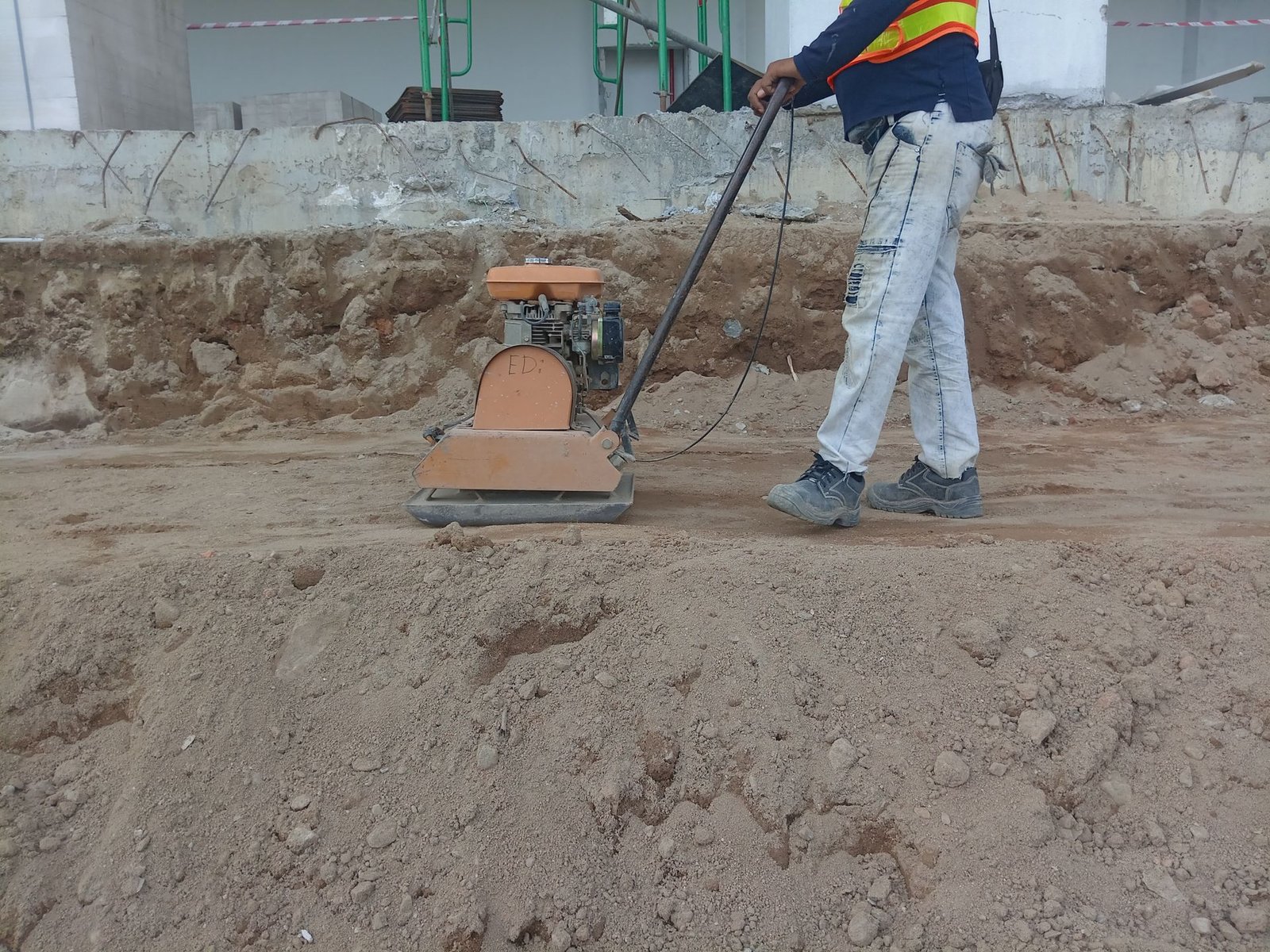
plate compactor vs rammer is primarily a soil and access decision. Vibratory plates excel on granular soil and broad surfaces, while upright rammers concentrate impact in narrow trenches and cohesive or mixed soil. Using the wrong machine can leave weak zones even when the surface looks firm.
Compaction specifications depend on soil, moisture, lift thickness, required density, and testing method. Contractors across North America and Asia should follow the project geotechnical specification rather than relying only on machine passes.
Plate Compactor vs Rammer: Quick Selection
| Decision factor | What to check |
|---|---|
| Sand and gravel | Vibratory plate compactor |
| Cohesive soil in a trench | Rammer where specification permits |
| Paver installation | Plate with appropriate protective mat |
| Deep or structural fill | Engineered lifts, testing, and larger equipment as required |
1. How a Plate Compactor Works
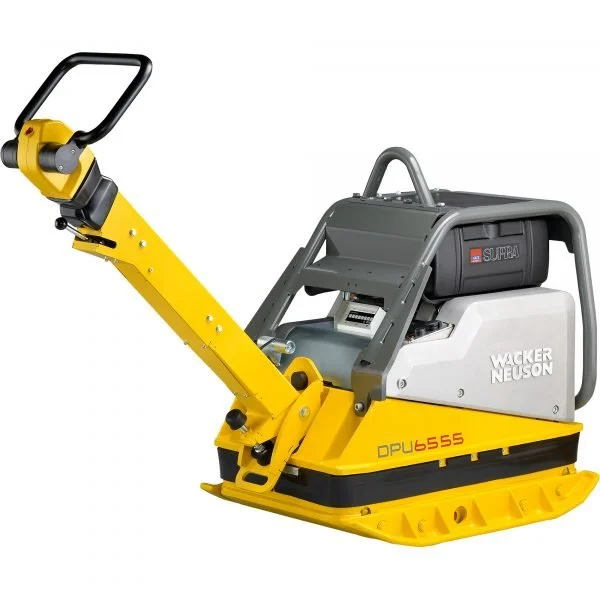
A plate uses a vibrating base to rearrange particles and remove voids. Forward plates are maneuverable on small flatwork; reversible plates provide greater force and allow the operator to change direction without turning; heavier remote or hydraulic units serve demanding work.
Plates are especially effective on granular material because vibration helps particles settle into a dense arrangement.
2. How a Rammer Works
A rammer delivers high-impact vertical blows through a compact shoe. Its narrow footprint reaches trenches, foundations, and confined backfill. The impact action can be effective on cohesive and mixed soils that require kneading and force.
Rammers are not ideal for every granular surface or delicate paver. Operator fatigue and control should be considered during extended use.
3. Identify Soil Before Choosing Equipment
Granular soils such as clean sand and gravel respond well to vibration. Cohesive soils containing clay depend more on impact, moisture, and lift control. Mixed fill requires project-specific evaluation.
A handful test is only a rough field indicator. Structural work should use the soil classification and testing specified by the geotechnical professional.
4. Control Moisture and Lift Thickness
Soil that is too dry may not bind; soil that is too wet can pump and lose strength. Compact material in consistent lifts within the equipment and project limits. Adding more passes cannot always correct an excessively thick lift.
Track placed depth, compacted depth, moisture condition, pass count, and test results. Rework failed areas before adding the next layer.
5. Compare Force, Plate Size, and Access
Centrifugal force, frequency, amplitude, plate area, machine weight, and travel speed influence performance. A larger plate covers more area but may bridge low spots or fail to fit around utilities.
For rammers, compare shoe width, blow rate, stroke, balance, and transport design. Select the smallest footprint that still achieves the required density efficiently.
6. Operate Safely Around Trenches and Utilities
Inspect the work area for buried services, unstable edges, overhead hazards, slopes, and pedestrian traffic. Use hearing, eye, foot, hand, and respiratory protection as required. Manage hand-arm vibration and rotate tasks.
Do not compact beside an unsupported excavation edge or structure without an approved plan. Machine vibration can affect adjacent utilities and fresh construction.
Compaction Equipment Checklist
- Identify soil classification.
- Confirm required density and test method.
- Set moisture range and lift thickness.
- Choose plate or rammer for soil and access.
- Record pass pattern and test results.
- Locate utilities and protect excavation edges.
- Inspect isolators, guards, controls, and fluids.
Frequently Asked Questions
Can a plate compactor compact clay?
A heavy reversible plate may work on some mixed soils, but cohesive clay often responds better to impact or kneading equipment. Follow the project specification.
How many passes are required?
There is no universal number. Soil, moisture, lift depth, machine force, and target density must be verified by the specified test.
Can I use a plate compactor on pavers?
Yes, with a compatible protective mat and correct machine setup after the base is prepared. Follow the paver and machine guidance.
Trusted Resources and Next Steps
For silica-producing surface work near the compaction area, use the silica dust prevention guide and applicable OSHA requirements.
Bottom line: Use a plate for broad granular work and a rammer for confined cohesive or mixed-soil applications, then verify density through controlled lifts and testing. Browse the compaction equipment range, or visit the HarfanTools knowledge center for more equipment guides.
Compaction Choices for Regional Soil and Weather
In the US and Canada, granular base for paving commonly favors a reversible or forward plate compactor, while narrow utility trenches with cohesive soil often favor a rammer. Freeze-thaw cycles make lift thickness, moisture control, and drainage especially important; compacting a thick wet layer cannot create a stable base. Rental availability may be the most economical choice for occasional work, provided the machine size and centrifugal force match the job.
Across Asia, monsoon moisture, tropical clays, reclaimed fill, and restricted urban access can change the choice. A rammer can work effectively in confined cohesive backfill, while a plate is typically better on sand, gravel, and interlocking-paver bases. Do not compact saturated soil simply to meet a schedule. Use a project specification or field test where density is critical, plan safe transport, and confirm that local rental or service providers stock belts, isolators, filters, and replacement plates.
HarfanTools product guidance
Need help choosing industrial equipment?
Compare professional tools, review specifications and find equipment suited to your operation.