No products in the cart.
Commercial Lawn Mower Buying Guide: 9 Best Checks
Choose a commercial lawn mower using route design, acreage, deck, drive, power, safety, operator comfort, service and lifetime cost.
 Written byHarfanTools Editorial Team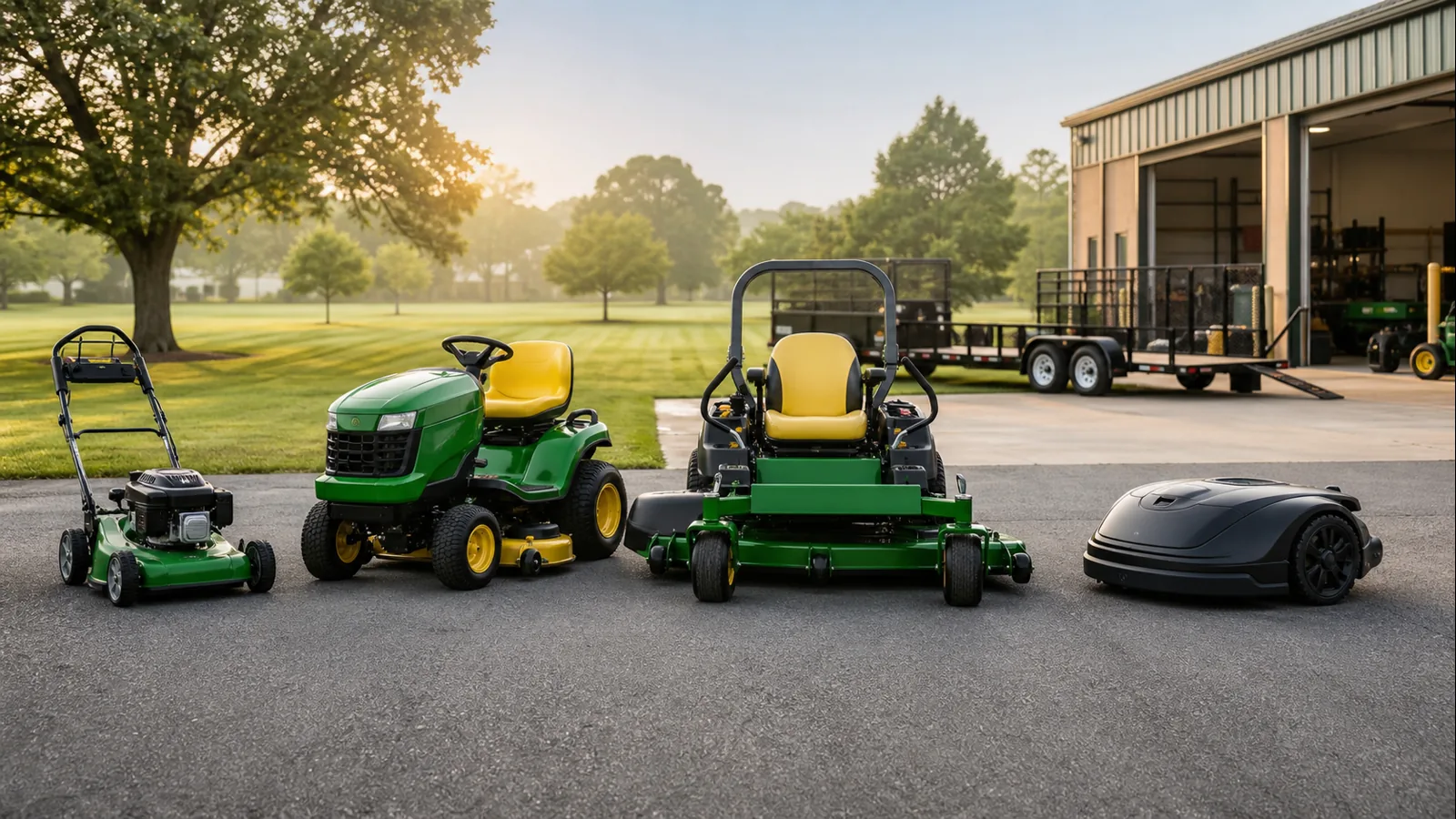
commercial lawn mower buying guide helps landscapers, schools, municipalities, resorts, campuses, and property managers specify a machine from measurable route requirements. Commercial duty is defined by hours, terrain, serviceability, and uptime—not by a decal or engine size.
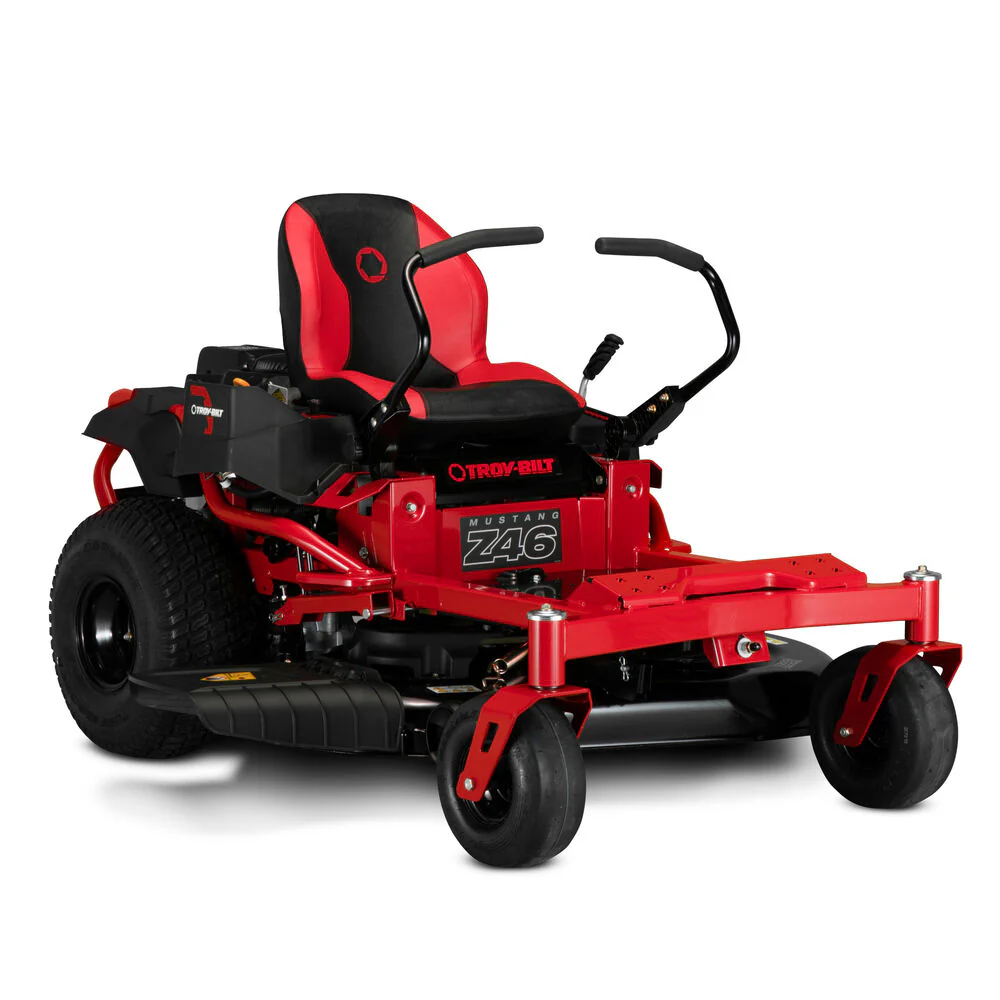
A productive fleet may combine walk-behind, stand-on, riding, zero-turn, robotic, battery, and gasoline equipment. Buyers in the United States, Canada, and Asia should map properties and service support before choosing a platform.
commercial lawn mower buying guide: Quick Answer
Build a route profile, separate open acreage from constrained zones, choose deck and platform by access and terrain, verify continuous drive and cutting capacity, test operator controls, then calculate cost per productive hour with parts and downtime. Standardize only where one platform genuinely fits multiple routes.
| Decision factor | Best-fit guidance | Verify before buying |
|---|---|---|
| Tight or high-detail route | Commercial walk mower | Access, fatigue, and transport. |
| Obstacle-heavy level acreage | Zero-turn mower | Drive duty, deck, and slope limits. |
| Attachments and mixed utility | Lawn or garden tractor | Approved implements and residual traction. |
| Quiet autonomous maintenance | Robotic or battery system | Coverage, charging, security, and support. |
1. Map Routes, Acreage, and Access
Measure turf, gates, trailer loading, storage, slopes, obstacles, pedestrian areas, discharge restrictions, and travel between sites. Group properties by operating pattern instead of buying one machine for the average.
Record target completion time and labor. A wide mower that cannot enter half the route creates extra loading and handwork; a compact mower on open fields wastes productive hours.
2. Choose the Right Operator Platform
Walk mowers provide control in constrained areas, stand-on machines simplify frequent mounting, zero turns maximize maneuverability on suitable turf, tractors add approved utility attachments, and robots automate frequent light cutting.
Test visibility, emergency dismount, slopes, curbs, transport, and the full shift. Productivity claims should include trimming and repositioning, not only straight-line speed.
3. Match Deck Construction and Width
Compare fabricated or stamped construction, steel thickness, spindle protection, baffles, anti-scalp features, blade access, washout, discharge control, mulching, and collection. Size width to gates, trailer, contours, and grass volume.
Commercial decks need predictable cut quality at a productive pace. Run peak turf and inspect clipping distribution, blade overlap, scalping, and debris control around people and vehicles.
4. Verify Engine, Motor, and Energy Capacity
Gas systems require adequate torque, cooling, filtration, fuel capacity, and emissions compliance. Battery systems require enough pack energy, discharge capability, thermal control, charging throughput, and safe storage.
Compare capacity at high ambient temperature and in dense growth. Build a refueling or charging plan that matches crew breaks and route logistics with reserve for delays.
5. Inspect Transmission and Hydraulic Duty
Identify transaxle, pump, wheel motor, oil, filter, cooling, service interval, and machine-weight rating. Sealed residential drives may not tolerate daily heat and load even when the mower looks substantial.
Test tracking, low-speed control, braking, response on grades, and heat after sustained work. Price hoses, filters, belts, wheel motors, and drive components before purchase.
6. Evaluate Safety and Site Risk
Follow slope limits, rollover instructions, seat or operator-presence systems, blade controls, guarding, parking procedures, lighting, and transport requirements. Map drop-offs, water, traffic, bystanders, and thrown-object zones.
A roll bar is useful only when configured and used according to the manual, including seat-belt instructions. Train every operator on the exact model and document authorization.
7. Test Comfort Across a Full Shift
Seat suspension, platform isolation, control adjustment, grip effort, visibility, heat, noise, vibration, and entry affect quality and fatigue. A five-minute demo cannot reveal a poor control position or harsh ride.
Use regular operators of different sizes, record discomfort and control problems, and compare sound data. Lower-vibration or quieter equipment can reduce long-term exposure and improve communication.
8. Plan Parts, Maintenance, and Downtime
Review daily access, grease points, deck lift, blade removal, belt routing, filters, diagnostic tools, software, batteries, tires, and wash procedures. Ask the dealer which parts are stocked and the normal repair turnaround.
Standardizing blades, filters, batteries, or drive systems can reduce inventory, but avoid forcing a platform onto an unsuitable route. Track failure hours and service labor for replacement decisions.
9. Calculate Cost Per Productive Acre
Include equipment, financing, trailer changes, fuel or electricity, batteries, maintenance, blades, tires, labor, training, insurance, downtime, and resale. Divide by realistic productive acres or hours, not engine hours alone.
Model growth peaks, rain delays, seasonal storage, and route expansion. The best commercial lawn mower buying guide result is a documented fleet decision that remains defensible when utilization changes.
How to Compare commercial lawn mower buying guide Options Objectively
Start with a written duty profile instead of a brand shortlist. Record the property or workpiece, normal and peak workload, operating hours, access limits, available utilities, climate, operator experience, and the result that must be achieved. For this commercial lawn mower buying guide decision, the most useful quotation is one that states its assumptions and identifies every included battery, charger, cord, blade, bit, accessory, guard, transfer device, or consumable.
Then run a representative acceptance test. Use the regular operator, typical material or turf, the accessories that will be used in production, and enough time to expose heat, battery, filtration, traction, or duty-cycle limits. Record setup time, productive time, interruptions, finish quality, consumable wear, energy or fuel use, and operator feedback. A short controlled test makes commercial lawn mower buying guide comparisons more defensible than a catalog specification alone.
commercial lawn mower buying guide for the United States, Canada and Asia
United States buying notes
US commercial buyers should review state and local emissions or noise rules, dealer territory, transport regulations, and worker exposure. CPSC riding mower guidance remains relevant to property risks, while NIOSH recommends comparing noise data when purchasing equipment.
Canada buying notes
Canadian fleets should plan intense spring growth, wet turf, winter storage, cold battery conditions, corrosion, and seasonal dealer capacity. Confirm Canadian certification, emissions, charger, recall, and warranty coverage rather than assuming a US fleet package transfers unchanged.
Asia buying notes
Asian operations may face year-round growth, monsoon rain, extreme heat, narrow landscaped access, soft ground, dense populations, and long parts lead times. Verify local voltage and frequency for charging, engine and battery cooling, corrosion protection, noise constraints, and technician coverage.
Nine-Step Commercial Mower Procurement Checklist
- Map every route and access constraint.
- Choose platform by work pattern.
- Size deck to turf, gates, and transport.
- Verify continuous power and energy logistics.
- Identify drive-system duty and service.
- Assess slopes, bystanders, and transport risk.
- Run a full-shift operator evaluation.
- Confirm parts, technician, and warranty support.
- Calculate cost per productive acre or hour.
Frequently Asked Questions About commercial lawn mower buying guide
What makes a lawn mower commercial grade?
Commercial duty usually means stronger decks and frames, serviceable drive systems, improved cooling and filtration, longer-life components, operator features, and support for high annual hours. Verify components, not the label.
Is a zero turn always best for commercial mowing?
No. It is excellent on suitable level, obstacle-heavy turf, but walk, stand-on, tractor, or robotic platforms may fit slopes, access, attachments, or autonomous schedules better.
How many hours should a commercial mower last?
There is no universal life. Design, maintenance, terrain, operator behavior, storage, parts support, and repair economics matter more than one hour threshold.
Should a commercial fleet choose battery or gas?
Choose by route. Battery can suit noise-sensitive sites with good charging; gas remains practical for long remote shifts. A mixed fleet often fits diverse contracts.
How should bids compare mower productivity?
Use representative properties and record total labor from unloading through final trimming and cleanup. Straight-line speed is not total route productivity.
Trusted Resources and HarfanTools Next Steps
Review CPSC riding mower safety and the NIOSH Buy Quiet program. Compare HarfanTools zero turn, riding, walk, and robotic mower collections, plus the published zero turn buying guide.
Bottom line: Buy from route evidence: access, terrain, deck, continuous duty, operator safety, energy logistics, parts support, and cost per productive acre.
HarfanTools product guidance
Need help choosing industrial equipment?
Compare professional tools, review specifications and find equipment suited to your operation.