
No products in the cart.
Push vs Self Propelled Lawn Mower: 7 Best Differences
Compare push and self-propelled lawn mowers by yard size, slope, effort, traction, control, maintenance and total cost.
 Written byHarfanTools Editorial Team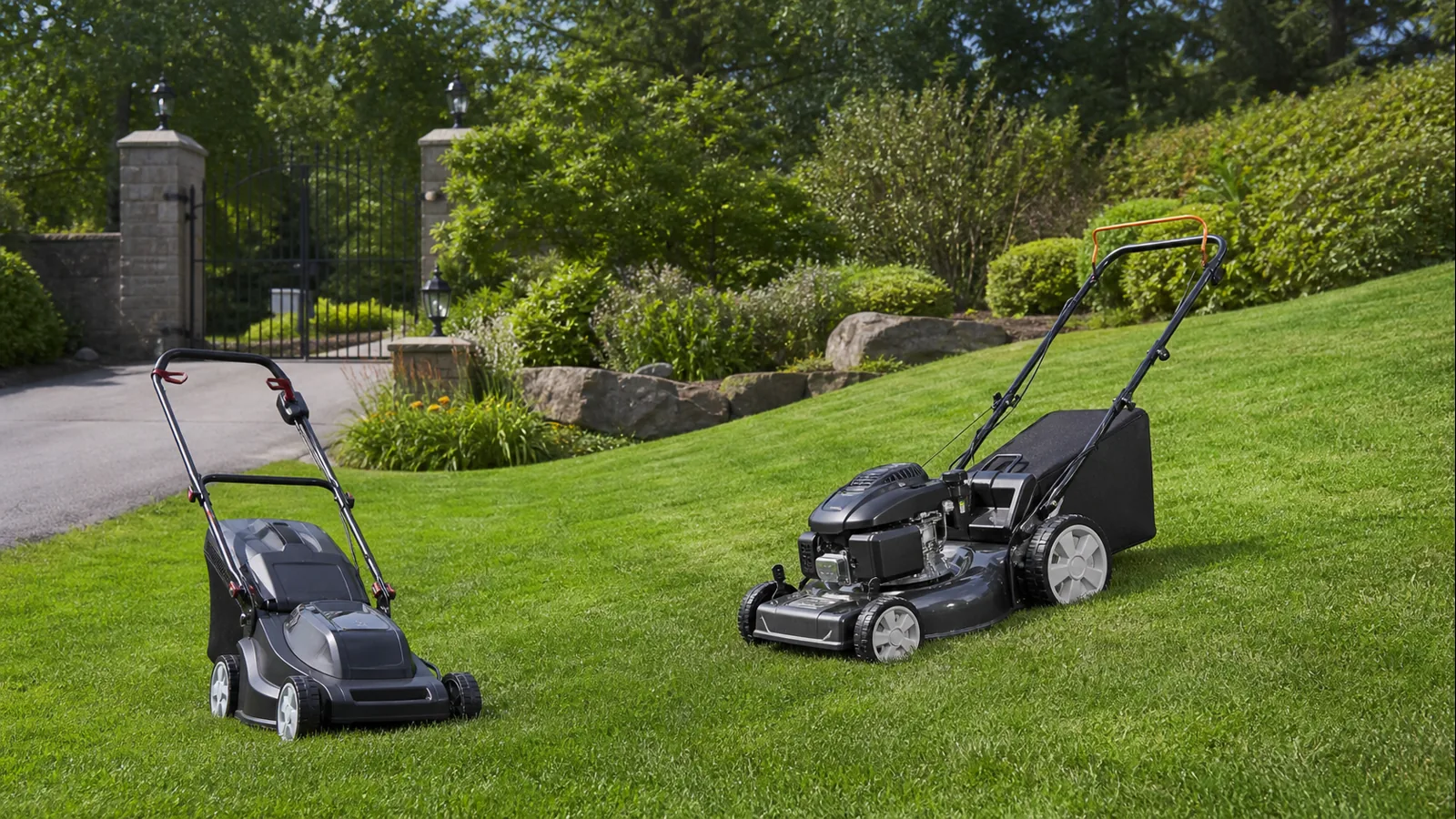
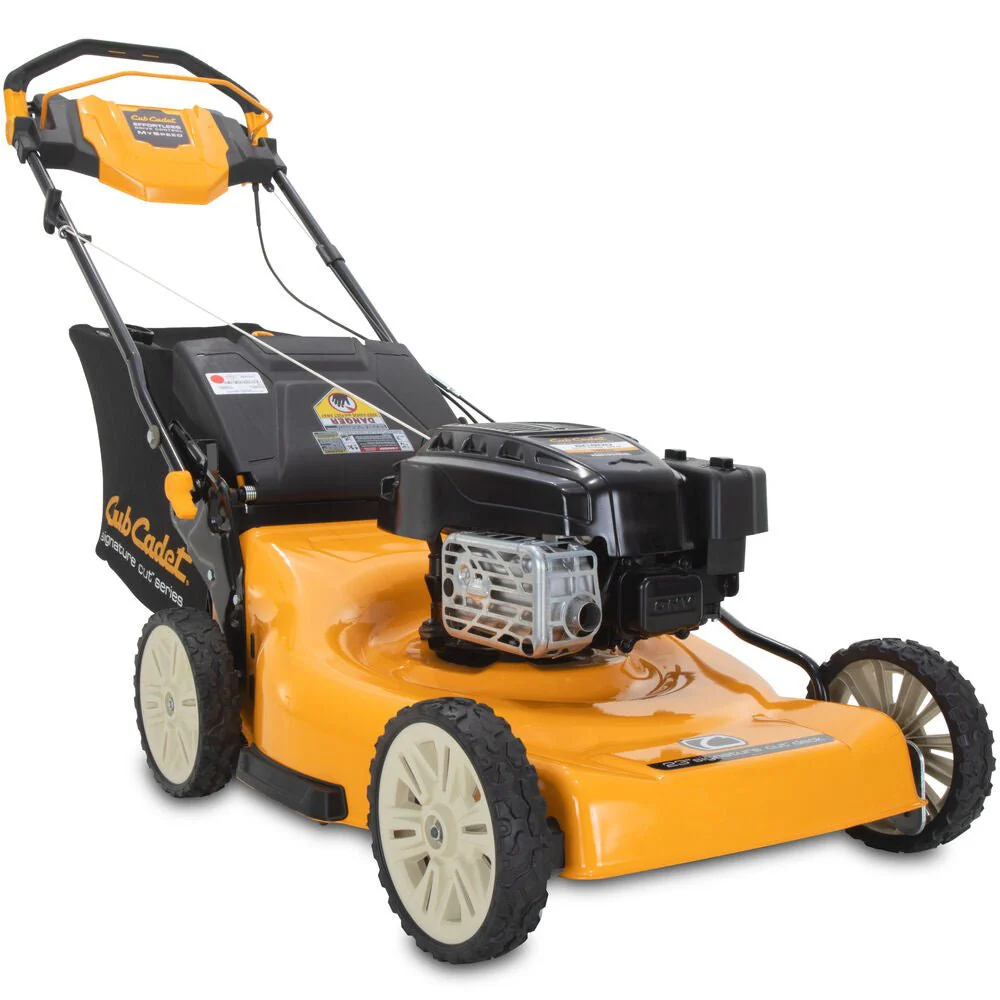
push vs self propelled lawn mower comes down to how much work the wheel-drive system should remove from the operator. Both types power the blade; a push mower relies on the operator for forward motion, while a self-propelled mower drives its wheels at one or more selectable speeds.
Property size matters, but slope, turf condition, obstacles, operator strength, machine weight, transport, and weekly frequency are equally important. The best choice for a small flat US lawn may not suit a wet Canadian slope or a tightly landscaped tropical property in Asia.
push vs self propelled lawn mower: Quick Answer
Choose a push mower for small, level lawns where low weight, simple maintenance, and precise manual control are priorities. Choose self-propelled for larger areas, slopes, dense grass, heavier machines, or multi-hour work. Variable-speed rear-wheel or all-wheel drive deserves a test on the actual terrain.
| Decision factor | Best-fit guidance | Verify before buying |
|---|---|---|
| Small flat lawn | Push mower | Total weight and turning effort. |
| Slope or long route | Self-propelled mower | Traction, speed range, and slope limits. |
| Tight beds and frequent backing | Light push or easy-disengage drive | Reverse drag and wheel resistance. |
| Commercial walk mowing | Variable-speed self-propelled | Transmission duty and service parts. |
1. Yard Size and Mowing Time
A push mower can be efficient on a compact open lawn, especially when it is light and the grass is cut regularly. As area, obstacles, or travel distance increase, the physical work of moving the machine becomes a larger share of the job.
Time a representative section rather than relying on acreage labels. Include turns, emptying the bag, repositioning, trimming, and transport. A self-propelled drive can reduce fatigue, but an excessively fast minimum speed may reduce cut quality or control.
2. Slopes, Traction, and Drive Layout
Front-wheel drive turns easily because the operator can lift the front wheels, but it may lose traction when the bag adds rear weight or the lawn climbs. Rear-wheel drive usually maintains better traction on slopes. All-wheel drive can help on varied terrain but adds complexity and cost.
No drive layout makes a steep or wet slope safe. Follow the mower manual, work across or up and down slopes only as directed for that machine type, wear suitable footwear, and stop when traction is uncertain.
3. Operator Effort and Ergonomics
Self-propel drive reduces pushing force, particularly with a heavy steel deck, full catcher, or thick turf. The operator still steers, turns, stabilizes, and controls the machine. Test handle height, bail force, speed control, vibration, and whether the mower pulls faster than a comfortable walking pace.
A light push mower can be easier to maneuver around beds and load into a vehicle. For crews with different heights and abilities, adjustable handles and variable speed may create more value than maximum drive speed.
4. Control Around Obstacles and Edges
Push mowers respond directly to the operator and can be easy to feather around trees, corners, and narrow strips. Some self-propelled systems continue pulling briefly or resist rolling backward until the drive fully disengages.
During a demonstration, make repeated three-point turns, back away from a wall, cross a path, and mow along a bed edge. Inspect turf for wheel scuffing and verify that the drive lever can be modulated without an awkward grip.
5. Machine Weight, Transport, and Storage
Drive components add weight. Battery packs, larger engines, steel decks, and bagging systems add more. Measure the storage door, vehicle opening, ramp angle, and lifting requirement before choosing.
A foldable handle saves space only when controls and cables tolerate repeated folding. Commercial buyers should inspect tie-down points and avoid securing the mower through fragile handles or control cables.
6. Maintenance and Repair Differences
A push mower has fewer drivetrain parts. A self-propelled model adds belts, cables, gears, transmissions, wheel drives, or electronic controls. These parts are reliable when correctly used but require inspection and may be damaged by pulling the mower backward with the drive engaged.
Ask for the drive-system model, adjustment procedure, lubricant requirements, wheel replacement cost, and common failure parts. Test whether belts and cables can be serviced without removing most of the deck.
7. Purchase Price and Lifetime Value
The self-propelled premium is justified when it saves meaningful time or fatigue. It may not pay back on a tiny flat yard where a lighter push machine is faster to move and store.
Compare cost per mowing hour across the expected ownership period. Include drive repairs, fuel or batteries, blades, bags, maintenance labor, and the value of a machine that every regular operator can control confidently.
Bagging, Mulching, and Side Discharge
Drive choice does not determine clipping performance. Deck airflow, blade design, grass condition, bag capacity, and ground speed matter more. A self-propelled mower can help maintain a steady pace, but driving too quickly through dense grass can still leave clumps or uncut blades.
Confirm whether the mower changes modes without loose plugs or tools. For humid regions, inspect how easily the deck clears and how safely it can be cleaned after use.
How to Compare push vs self propelled lawn mower Options Objectively
Start with a written duty profile instead of a brand shortlist. Record the property or workpiece, normal and peak workload, operating hours, access limits, available utilities, climate, operator experience, and the result that must be achieved. For this push vs self propelled lawn mower decision, the most useful quotation is one that states its assumptions and identifies every included battery, charger, cord, blade, bit, accessory, guard, transfer device, or consumable.
Then run a representative acceptance test. Use the regular operator, typical material or turf, the accessories that will be used in production, and enough time to expose heat, battery, filtration, traction, or duty-cycle limits. Record setup time, productive time, interruptions, finish quality, consumable wear, energy or fuel use, and operator feedback. A short controlled test makes push vs self propelled lawn mower comparisons more defensible than a catalog specification alone.
push vs self propelled lawn mower for the United States, Canada and Asia
United States buying notes
US suburban buyers often compare a light push mower for compact lots with self-propelled machines for larger or sloped lawns. Measure gates and storage, check local noise windows, and review the CPSC walk-behind mower safety guidance. Commercial crews should include route time and operator exposure in the decision.
Canada buying notes
Canadian spring growth, damp turf, rolling properties, and seasonal storage can favor additional traction, but wet slopes remain hazardous. Confirm cold-storage instructions for batteries, stabilize or drain fuel as directed, and verify Canadian warranty support before buying a US model.
Asia buying notes
Compact urban gardens may reward a light, maneuverable push mower, while resorts, campuses, and tropical estates may justify self-propelled commercial duty. High humidity, monsoon rain, tight paths, corrosion, and parts availability should be checked with drive type and deck width.
Seven-Step Push vs Self Propelled Selection Checklist
- Measure lawn area and the longest continuous pass.
- Map slopes, soft ground, and obstacles.
- Test the regular operator at every speed.
- Check turning, backing, and transport effort.
- Inspect drive-system service access.
- Compare cut quality at a realistic pace.
- Calculate total cost per mowing hour.
Frequently Asked Questions About push vs self propelled lawn mower
Does self-propelled mean the mower cuts by itself?
No. The drive moves the wheels, but the operator must steer, control speed, avoid hazards, and manage the cutting path.
Is a self-propelled mower worth it for a small yard?
It can be if the yard is sloped, the mower is heavy, or pushing is difficult. A light push mower is often simpler on a small flat lawn.
Which drive is best for hills?
Rear-wheel or all-wheel drive may provide better traction than front-wheel drive, but the mower manual and site conditions control what slopes are safe.
Can a self-propelled mower be pushed manually?
Most can, but resistance varies. Test the exact model with the engine or motor off and while pulling backward.
Does self-propelled use more battery?
Yes, wheel drive consumes energy. The effect depends on speed, slope, machine weight, grass, and how often the drive is engaged.
Trusted Resources and HarfanTools Next Steps
Read the CPSC walk-behind mower fact sheet and CCOHS rotary mower safety guidance. Compare walk lawn mowers and use the riding mower vs zero turn comparison when the property may justify a riding platform.
Bottom line: A push mower rewards light weight and simplicity; a self-propelled mower earns its premium through lower effort and steadier travel on larger or more difficult lawns.
HarfanTools product guidance
Need help choosing industrial equipment?
Compare professional tools, review specifications and find equipment suited to your operation.
4 Comments