Compressor

Compare shop and industrial compressors by required airflow, operating pressure, duty cycle, power supply and air-treatment needs. Start with our industrial air compressor buying guide; automotive repair facilities can also use the automotive shop compressor guide before comparing available equipment.

Showing 65–80 of 82 results

Sort:
Show:
Sort:
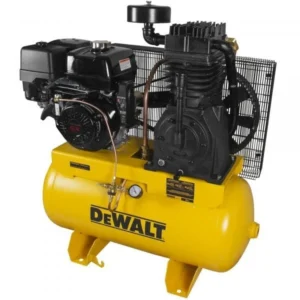
  • The DXCMH1393075 is designed for field operations where electrical power is unavailable or impractical. Its main strength is high airflow in a portable gas-driven platform, allowing it to run multiple pneumatic tools at the same time.

    Key performance characteristics:

    • Strong airflow for framing, nailing, and impact tools
    • Stable pressure output for continuous jobsite use
    • Engine-driven independence for remote work
    • Durable cast iron pump designed for harsh environments
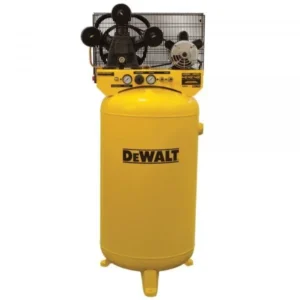
  • The DXCMLA4708065 is designed for steady, continuous shop air supply rather than peak portable performance. Its strength lies in its large tank capacity combined with a low-RPM cast iron pump, which allows it to:

    • Maintain stable pressure during tool use
    • Reduce compressor cycling frequency
    • Support multiple intermittent air tools at once

    Typical use cases include:

    • Automotive repair shops
    • Tire service centers
    • Maintenance departments
    • Light fabrication and metalworking
    • Painting and spray applications (moderate duty)

    It is not intended for heavy continuous tools like large sandblasting systems or industrial grinders running nonstop.

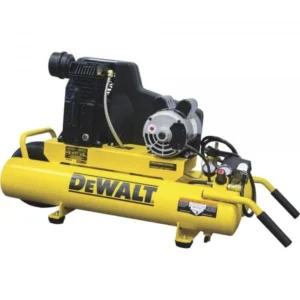
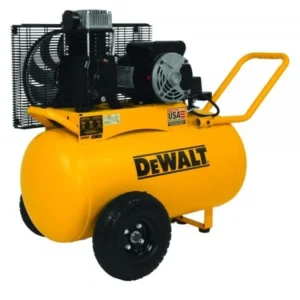
  • Dewalt DXCMTA1980854.SAN: Built for job-site mobility, this wheelbarrow-style compressor provides a low center of gravity and rugged pneumatic tires for easy transport over rough terrain.
    • Drive Strength: 1.9 HP Electric Motor
    • Airflow Volume: 170 L/min (6.0 SCFM @ 90 PSI)
    • Pressure Peak: 150 PSI (10.3 Bar)
    • Storage Build: 8 Gallon Twin Tank
    • Elite Module: Heavy-Duty Cast Iron Cylinder
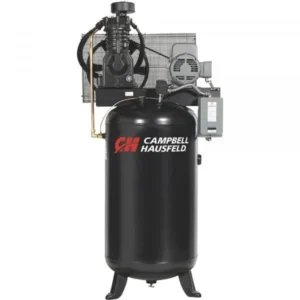
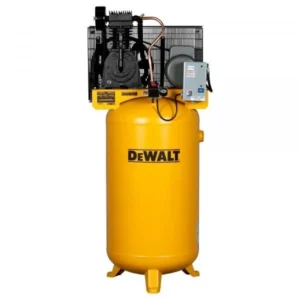
  • The DXCMV5018055 is built for users who need serious shop air capacity without moving into large industrial screw compressor systems. Its biggest advantage is its high airflow for a 5 HP class compressor (~18 CFM) combined with a large 80-gallon tank, which helps:

    • Reduce pressure drops during tool use
    • Support multiple intermittent air tools
    • Improve recovery time compared to smaller compressors
    • Maintain stable pressure during workshop demand peaks
  • The DXCMV5048055.1 is designed for serious shop workloads, not light DIY use. Its combination of high CFM output and large air storage capacity allows it to:

    • Run multiple pneumatic tools at the same time
    • Maintain stable pressure under intermittent heavy load
    • Reduce compressor cycling due to large tank reserve
    • Improve efficiency compared to single-stage compressors
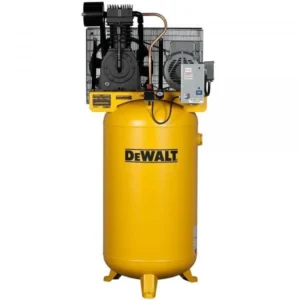
  • The DXCMV7518075 is designed for serious workshop air demand, bridging the gap between small shop compressors and full industrial screw systems.

    Its performance strengths include:

    • Stable airflow for multiple pneumatic tools at once
    • High-pressure storage (175 PSI) for longer tool runtime
    • Lower cycling frequency due to large 80-gallon tank
    • Improved efficiency from two-stage compression
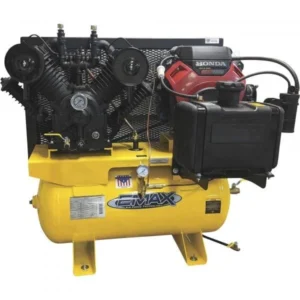
  • The EGES1860ST is built for serious mobile air demand, especially where multiple pneumatic tools must run simultaneously. Its high CFM output allows it to support:

    • Framing nailers and roofing tools
    • Impact wrenches and air ratchets
    • Light sandblasting setups
    • Industrial maintenance tools in the field

    Key performance strengths:

    • High airflow for multi-tool operation
    • Stable pressure under continuous jobsite load
    • Engine-driven independence (no electrical supply needed)
    • Low RPM pump reduces wear and heat buildup
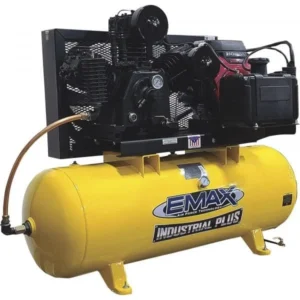
  • The EGES24120T is designed for high-demand jobsite air systems, capable of running multiple pneumatic tools simultaneously. Its major advantage is the combination of:

    • Very high airflow (near 60 CFM class)
    • Large 120-gallon storage buffer
    • Gas engine independence (no electrical supply required)

    This makes it suitable for operations where multiple technicians are using air tools at once.

    Typical applications include:

    • Heavy construction and framing crews
    • Roadwork and infrastructure maintenance
    • Industrial field service trucks
    • Sandblasting (light to medium duty setups)
    • Large multi-tool pneumatic systems
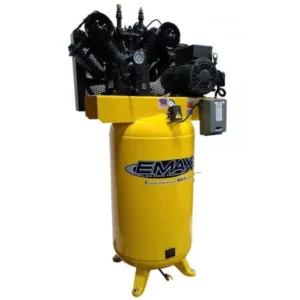
  • The EI07V080V1 is built for serious shop air demand, offering significantly higher airflow than typical 7.5 HP compressors. Its strength comes from:

    • High airflow (~31 CFM) suitable for multiple pneumatic tools
    • Two-stage compression for improved efficiency and cooler operation
    • Pressure-lubricated pump system for longer lifespan
    • Large 80-gallon tank to stabilize pressure during peak demand

    Typical applications include:

    • Automotive repair shops
    • Tire service centers
    • Light fabrication and welding shops
    • Maintenance facilities
    • Multi-tool workshop environments

    It is not intended for continuous heavy-duty industrial processes like large-scale sandblasting or production-line compressed air systems.

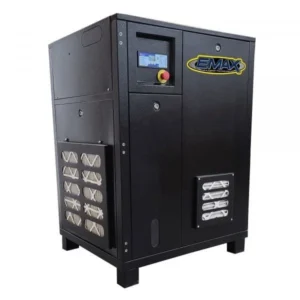
  • The ERI0050001 is designed for steady, non-stop air demand, which is where rotary screw technology performs best. Instead of cycling on and off like piston compressors, it runs continuously at controlled RPM, providing:

    • Stable airflow without pressure spikes
    • Lower noise compared to reciprocating compressors
    • Reduced vibration and mechanical wear
    • Better efficiency in constant-demand environments

    It is especially useful where air demand never fully stops, such as:

    • Small manufacturing lines
    • CNC machines (light duty)
    • Packaging equipment
    • Continuous workshop air systems
    • Multi-tool pneumatic stations
  • The ERI0050801 is designed for constant air demand environments, where piston compressors would normally cycle on and off. Instead, the rotary screw system:

    • Produces steady, non-pulsating airflow
    • Eliminates frequent start/stop cycling
    • Reduces mechanical wear and heat stress
    • Improves efficiency in long runtime applications

    This makes it ideal for:

    • Small manufacturing facilities
    • Continuous workshop air systems
    • Packaging and assembly lines
    • CNC light-duty operations
    • Multi-tool pneumatic stations
  • The ERIK150003 is designed for continuous industrial air demand, where piston compressors would fail due to cycling limits and heat buildup. The rotary screw system provides:

    • Constant airflow without pressure dips
    • No start/stop cycling (reduces wear significantly)
    • High efficiency at long runtime
    • Much quieter operation than reciprocating compressors

    Its ~60 CFM output allows it to support:

    • Multiple CNC machines
    • Automated production equipment
    • Packaging lines
    • Multi-user workshop air systems
    • Continuous pneumatic tooling
  • The ES10V080V1 is designed for high-output shop environments where noise reduction is important. Compared to standard 10 HP piston compressors, it offers:

    • Much lower perceived noise (intake silencing system)
    • Stable airflow for multiple pneumatic tools
    • Reduced vibration due to low-RPM pump operation
    • Strong 38 CFM output suitable for demanding shop tasks

    Typical applications include:

    • Automotive repair shops
    • Tire and service centers
    • Fabrication and welding shops
    • Maintenance facilities
    • Multi-tool pneumatic workstations
  • The ESP05V080I1PK is designed for quiet, stable, and clean compressed air delivery in professional environments.

    Typical applications:

    • Automotive workshops
    • Tire and detailing shops
    • Small fabrication facilities
    • Paint and finishing systems
    • Light industrial maintenance
    • Shops requiring quiet operation indoors
  • The ESP10A080V1 is designed for high-output workshop environments where noise control matters. Compared to standard 10 HP compressors, its key advantage is not only airflow but also:

    • Much lower intake noise (the loudest part of piston compressors)
    • Stable high-volume airflow (~38 CFM class)
    • Reduced vibration due to low-RPM pump design
    • Better suitability for indoor or attached-shop installations
  • The ESP10A120V1 is designed for high-demand shops where airflow stability and reduced noise are equally important. Compared to 80-gallon versions, the key advantage is its larger air reservoir, which provides:

    • Longer tool runtime before compressor restart
    • Reduced cycling frequency (less wear on motor and pump)
    • More stable pressure during peak air demand
    • Better performance for multiple simultaneous tools

    Typical applications include:

    • Automotive service centers
    • Tire and repair shops
    • Fabrication and welding facilities
    • Paint and finishing systems (moderate duty)
    • Multi-user pneumatic tool stations